
The Last Resistance to Incarnation
Surprised by JoyThis thread follows Lewis's move from abstract theism to Christian belief, focusing on the increasing concreteness that he both feared and accepted.
increasing Bearing strength in each event
 decreasing
Bearing strength in each eventdecreasingGod as a Living Presence

God as a Living Presence
Abstract Thought Awakens
Lewis could no longer treat Spirit as a theory that remained passive toward him. The idea became a presence that addressed him as Lord and demanded more than intellectual agreement.
Private Autonomy Threatened
The change struck at his deepest wish not to be interfered with. A God who could command him offered no protected inner territory.
The Demand for All

The Demand for All
Reservations Exposed
Lewis had imagined that philosophical virtue could remain reasonable and manageable. Once it became a command, he could not guarantee that obedience would spare him pain or inconvenience.
No Compromise
The demand was no longer a negotiation with reality. Lewis understood that he was being asked for complete surrender rather than a limited adjustment to his habits.
Reluctant Prayer
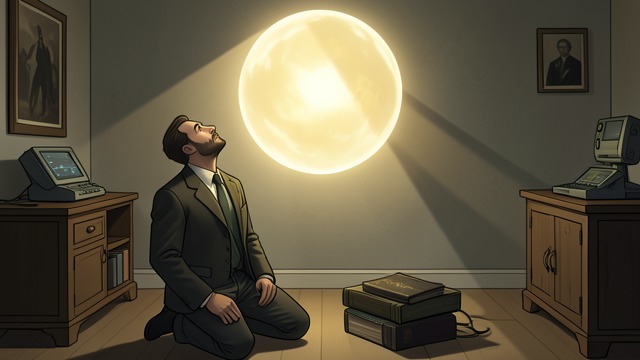
Reluctant Prayer
Admission of God
After nights of feeling the approach of the presence he had resisted, Lewis admitted that God was God and knelt in prayer. He remembered himself as a deeply reluctant convert.
Compulsion as Mercy
Only later did he understand the event as divine humility and mercy rather than mere defeat. What felt like compulsion had released him from the self-enclosure he had defended.
Obedience Without Reward
Obedience Without Reward
A Limited First Faith
Lewis initially accepted theism without a settled belief in an afterlife or Christianity. He focused on obeying God because of what God was, not because of promised benefit.
A Deliberate Training
The absence of reward and punishment suited his concern that self-interest might corrupt obedience. Lewis later treated this period as a formative discipline rather than a completed religious understanding.
The Incarnation Accepted
The Incarnation Accepted
Religion Comes to Maturity
Lewis compared the Gospels with pagan myths and histories. Their particular, historical character suggested that the pattern of myth had become fact in the life of Christ.
A Further Surrender
He resisted the Incarnation because it brought God nearer in a more concrete and compelling way. During the journey to the zoo, he recognized Christ as the Son of God.
Trinity Term 1929 at Magdalen
The nights before Lewis's surrender in 1929
Trinity Term 1929
The first months after Lewis's conversion to theism
On the journey to Whipsnade Zoo, after theism
