Belfast
Surprised by JoyBelfast is the birthplace and early home of C. S. Lewis, and the point from which his memoir measures the sharp differences between Ireland and England. The city’s significance lies less in a catalogue of streets than in the family, domestic world, and landscape he associates with it—and in the force of its absence when he is sent away to school.
Birth and Family Background
Lewis was born in Belfast in the winter of 1898, the younger of two sons by about three years. His family joined markedly different inheritances: his father’s Welsh, working-class roots and rise into a professional family, and his mother’s Hamilton background, with generations of clergy, lawyers, and sailors. Lewis recalls the contrast not only as genealogy but as temperament. His father’s family, as he describes it, was emotionally demonstrative; his mother’s was cooler, critical, and more inclined toward happiness. His mother’s tranquil affection and his father’s emotional volatility helped form his early discomfort with intense feeling.
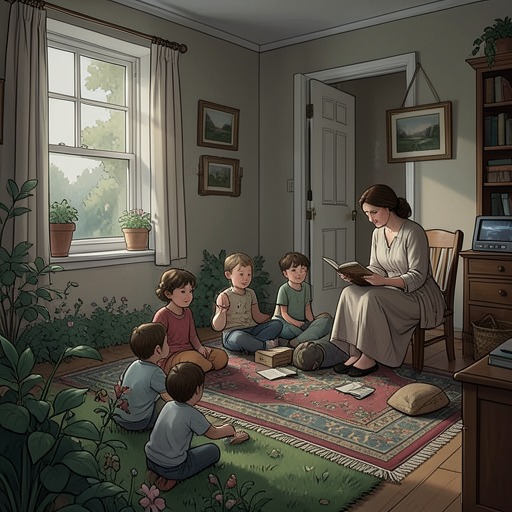
Belfast was also a setting for an unusually bookish household. Lewis’s mother, a mathematics student and graduate of Queen’s College, Belfast, began teaching him French and Latin before her death. His father, a gifted speaker with political interests, had a different literary temperament. Their contrasting pursuits made the family home an early meeting place for learning and imagination.
The New House and Childhood Surroundings
In 1905, when Lewis was seven, his family left the semidetached villa where he had been born for a much larger house farther into what was then the countryside. They continued to call it the New House. Its scale transformed a child’s sense of the world: Lewis remembered long corridors, empty sunlit rooms, upstairs quiet, attics to explore alone, and the distant sounds of cisterns and pipes. He regarded the house as almost a character in his story and as a formative part of his childhood.
The New House also held his father’s accumulated books. There were volumes throughout the home, from the study and drawing room to the landing and the attic; nothing was forbidden to Lewis. On rainy afternoons he could take book after book from the shelves, with the expectation that each might open onto something unfamiliar. Belfast thus signifies not only family origin but an expansive domestic world in which solitude, exploration, and reading were closely joined.
Leaving Ireland
When Lewis was sent to school in England, departure made the contrast between Belfast and his new surroundings vivid. On the crossing, his father was deeply moved at the quay, while Lewis felt chiefly embarrassed and self-conscious. Once aboard, however, his brother showed him the ship, and the lights on the water, engine-room warmth, and movement down the lough gave the separation an unexpected excitement. As the lights of home receded, they seemed to stand for everything he had known.
His first impressions of England were hostile. The flat Lancashire landscape seemed to shut him away from the sea and high ridges familiar from County Down; fences, brick farmhouses, large fields, and unfamiliar accents all seemed wrong to him. He later said that it took years to recover from this initial hatred. Belfast therefore remains an implicit measure of belonging: the landscape and home he left made England’s differences feel like confinement rather than mere novelty.
Belfast in the Memoir
The memoir’s Belfast is at once a specific birthplace and a remembered world assembled from family character, books, domestic space, and the nearby landscape. Its importance becomes clearest through departure: leaving home exposes the assumptions of childhood, while recollection gives those surroundings a lasting shape. Belfast anchors the narrative’s account of Lewis’s beginnings before school, religious doubt, and later intellectual change carry him far beyond it.