Bookham period
Surprised by JoyThe Bookham period was the 1914–1916 interval in which C. S. Lewis lived and studied with Kirkpatrick at Great Bookham. It joined an unusually ordered daily life to an unsettled intellectual one: Homer, the countryside, and close friendship became durable sources of pleasure, while the certainty of materialism began to weaken under the pressure of occult writing and questions about how knowledge itself could be justified. The period did not amount to Christian conversion, but it helped reshape the terms in which Lewis would later consider religion and reality.
A New School and a New Companion
Lewis left Wyvern for Great Bookham in the summer of 1914, as the First World War began. His brother, serving in France, became an occasional visitor on leave rather than a daily companion. Between 1914 and 1916, those visits brought Lewis journeys to Ireland in first-class railway carriages and sleeping cars, luxuries that made the crossings especially memorable. He recalled the phosphorescence of a ship’s wake, a mast steady against the stars, dawn and sunset over cold gray-green water, and the shifting outlines of land as a ship approached. The journeys gave his memory an unusually rich store of images from the sea.
The separation from his brother also marked a change in Lewis’s closest companionship. At Bookham, Arthur became his chief companion. The two shared a sensibility that made conversation unnecessary at times: on a walk, a glance, pause, or nudge could show that they were responding to the same mood in the countryside. Their friendship answered a need Lewis had not known how to express. His brother’s leaves, meanwhile, revived their boyhood closeness for the short periods available; both tacitly set aside the strains that had developed before the war, and Lewis welcomed the return of their earlier companionship.
The Bookham Pattern
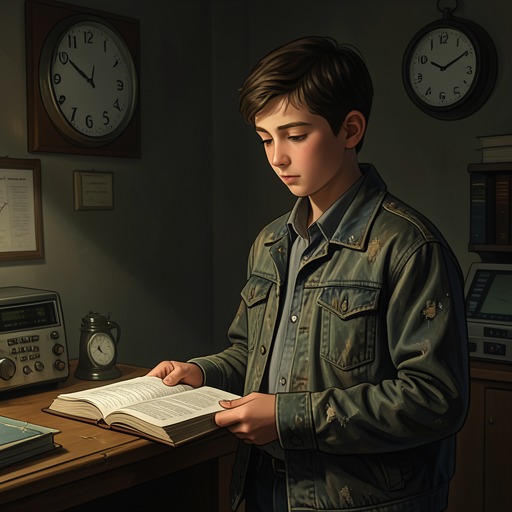
The routine of life with Kirkpatrick became Lewis’s enduring model of a normal day. Breakfast was at eight, work began at nine, and reading or writing continued until one. After lunch, Lewis went out walking, usually alone. He believed that talking distracted from the sounds and silences of the outdoors, and that walking with a friend worked only when the friend shared his taste so completely that a word was unnecessary. He aimed to return in time for tea, which he often took alone when Mrs. Kirkpatrick was out. Reading and eating, by contrast, could be happily combined: Boswell, Herodotus, and Lang’s history of English literature were among the books he found suited to the table. Work resumed at five and continued until seven, followed by the evening meal and conversation or lighter reading.
This schedule mattered to Lewis not merely as a practical arrangement but as a form of attention. Surrey during term and County Down during holidays offered different beauties, and he later credited their contrast with helping free him from the impulse to compare and rank places. His preferred response was first to receive what was there—to look and listen without dwelling on what might have been elsewhere. In retrospect, he connected that discipline of receptive attention with the kind of training required for Christian life, though at Bookham it was grounded in daily work, reading, and walks.
Classical Reading and Literary Discovery
Kirkpatrick’s teaching made intensive reading central to the period. Greek and Latin authors, compositions, and French lessons with Mrs. Kirkpatrick extended Lewis’s education, but Homer was the great undertaking. Teacher and pupil worked through the whole Iliad and then read the Odyssey in full. Lewis described the poems’ music and their “clear, bitter brightness” as becoming part of him. His youthful, romanticized response, influenced by William Morris, later gave way to a more mature appreciation; he did not regard the early reading as wasted, since it had established a lasting intimacy with the poems.
Lewis’s earlier encounter with Arnold’s Sohrab and Rustum at Campbell College offers a contrast that clarifies the Bookham reading. He had first loved Arnold’s poem without knowing its Homeric echoes, and later came to Homer partly through its resemblance to Sohrab and Rustum. His experience suggested that a reader could enter European poetry at different points, with one work opening the way to another. At Bookham, the same receptive practice developed through sustained contact with Greek literature, rather than through the recognition of scholarly parallels alone.
Materialism Under Pressure
Lewis later described his outlook during the period as a sharp division: he cared for the gods and heroes, the Garden of the Hesperides, Lancelot, and the Grail, yet believed in atoms, evolution, and military service. His earlier movement away from Christianity had been encouraged by the burden of trying to force vivid “realizations” into prayer, by doubts prompted by classical accounts of pagan religion, and by an intellectual pessimism that judged the universe badly designed. That background did not disappear at Bookham; the new doubts came from another direction.
Yeats stood apart among the poets Lewis was reading because Lewis discovered that he took the supernatural seriously. Reading Yeats’s prose as well as his poetry, Lewis encountered the claim that a world of beings beyond the material one could exist and that contact between the worlds was possible. Maeterlinck brought him into contact with Spiritualism, Theosophy, and Pantheism. Lewis did not simply assent to these beliefs, but their presence in the work of writers he considered responsible introduced a disturbing possibility: perhaps reality was not exhausted by the material world. The old occult interests associated with his earlier school experience returned, not as proof of Christianity but as pressure against the confidence of materialism.
That pressure later acquired a philosophical form through Lewis’s disputes with Owen Barfield. Barfield challenged Lewis’s “chronological snobbery”—the assumption that an idea was discredited simply because it belonged to the past—and exposed what Lewis came to see as an inconsistency in their realist position. They treated the sense-revealed universe as ultimate reality while also claiming objective authority for abstract thought, moral judgment, and aesthetic value. Lewis concluded that he could not preserve those claims while reducing mind to a merely subjective by-product of the physical world. He was driven to give up realism and consider a universe fundamentally mental, with logic participating in a cosmic Logos. The Bookham period thus appears in retrospect as a threshold: not a settled religious destination, but a time when materialism began to lose its power to explain the very acts of thought and judgment on which it relied.
An Unfinished Turn
The period’s intellectual change did not follow a simple line from unbelief to Christian faith. Lewis’s early Christian belief at Belsen had involved prayer, Bible reading, and attempts to obey his conscience; later, he became an apostate with relief. At Bookham, belief in God returned as an open question rather than a renewed commitment to the church. In his correspondence with Griffiths, both men believed in God and were willing to learn from pagan as well as Christian sources. Lewis increasingly asked where the hints contained in pagan religion had reached their maturity, rather than treating Christianity as one true religion set arbitrarily among a thousand false ones.
Read retrospectively, Bookham gathers together several kinds of formation without making them identical: literary pleasure, disciplined attention to landscape, friendship, challenges to materialist assumptions, and a more respectful approach to religious traditions. Homer did not itself restore Christian faith, and Lewis’s openness to supernatural claims did not yet settle his theology. The period’s significance lies instead in the questions it made harder to dismiss—and in the habits of reading, argument, and attention through which those questions could keep working.