Castlereagh Hills
Surprised by JoyThe Castlereagh Hills are the low ridge Lewis remembered seeing from his nursery windows, where he and his brother called them the “Green Hills.” Their importance in his memoir lies less in their scale or distance than in the longing they awakened: before he was six, Lewis understood them as a beautiful place that could be seen but not reached, an early source of the desire he later named Sehnsucht.
Setting and Childhood View
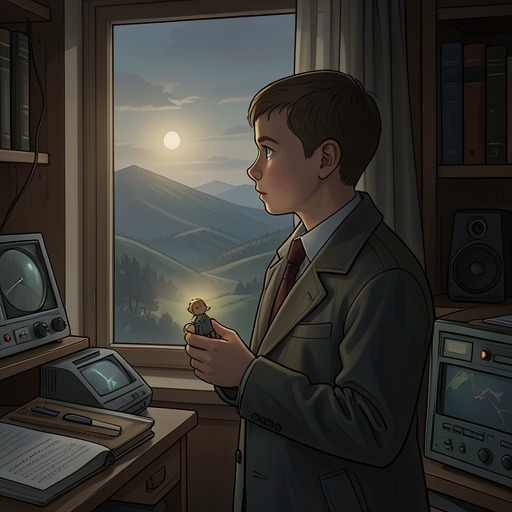
The hills formed a low line on the horizon beyond the nursery windows. They were not very far away, but to the children they appeared quite unattainable. That contrast between actual proximity and imagined remoteness made the view more than a feature of the landscape: it became an object of yearning.
The Green Hills and Sehnsucht
Lewis recalls that the hills taught him longing. He connects this childhood feeling with Sehnsucht, a word that gives a name to desire for something distant and not yet possessed. The memory is strikingly early: he says that the hills had made him, before the age of six, a votary of the Blue Flower. In his account, the landscape thus belongs to the beginning of an imaginative disposition, not merely to the scenery of childhood.
Place in Lewis’s Recollection
The remembered hills stand alongside his brother’s toy garden as one of the rare early experiences that shaped his imagination. The toy garden first made nature feel cool, dewy, fresh, and exuberant; the Green Hills, by contrast, gave form to distance and longing. Lewis says that his imagination of Paradise would retain something of the toy garden, while the hills taught him the desire that made him a votary of the Blue Flower. Together, these memories show how ordinary childhood sights became lasting imaginative touchstones.