Chartres
Surprised by JoyChartres was the small preparatory school where C. S. Lewis’s education took hold, he made his first real friends, and the process by which he ceased to be a Christian began. Situated near Wyvern College and overshadowed by its prestige, Chartres formed both a place of academic discovery and the threshold to a more powerful school hierarchy.
Setting and school life
In January 1911, just turned thirteen, Lewis travelled with his brother to Wyvern: his brother entered the College, while Lewis went to Chartres. The two schools were close enough that the College loomed over Chartres. Younger pupils were sometimes taken there to watch matches and sports or the finish of the Goldbury Run, encounters that made the older boys and their privileges an object of fascination.
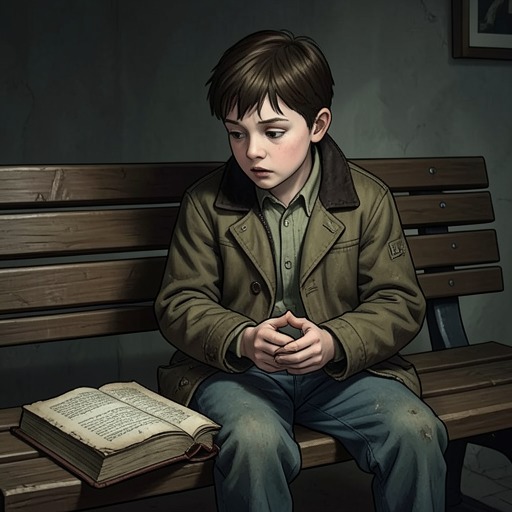
Chartres itself was a tall white building farther up the hill than the College. It had fewer than twenty boarders and, Lewis recalled, was quite unlike Oldie’s school. He found the boys adequately cared for and the food good, though they grumbled about it. School life nevertheless brought its share of intense friendships, factions, quarrels, settlements, and upheavals; Lewis remembered sometimes coming out at the bottom and sometimes at the top of these small-boy contests.
Education and early friendships
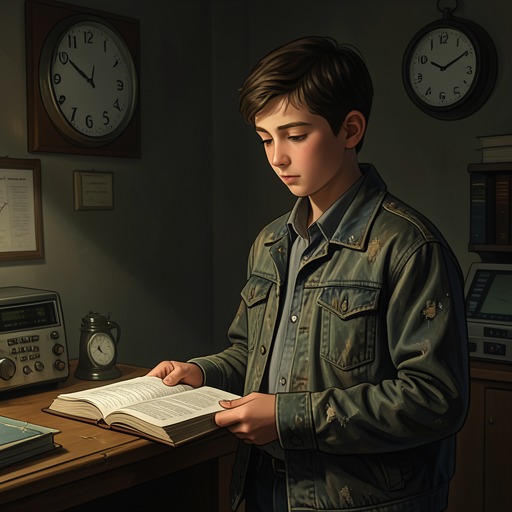
Lewis described Chartres as the place where his education really began. Under the headmaster, Tubbs, whom he remembered as clever and patient, he rapidly found his footing in Latin and English. His progress was substantial enough for him to be regarded as a promising candidate for a scholarship at Wyvern College.
The school also marked a change in his social life: at Chartres he made his first real friends. That experience belonged to a broader transition in which the landscape around Wyvern helped ease his quarrel with England. The blue plain and green, peaked hills became a delight, and Wyvern Priory was the first building he perceived as beautiful. Chartres therefore stands in his recollection beside both an emerging intellectual confidence and a newly receptive response to place.
The College hierarchy in the background
Although Lewis attended Chartres rather than the College, the prestige of Wyvern College shaped the preparatory school’s horizon. The senior boys known as Bloods made a particular impression on him: athletic prowess, long membership, and the right clothes, slang, interests, and social manner could secure entry into their school aristocracy. In this system, social standing in the outside world mattered less than success within the school.
At the College, prefects were nearly all Bloods, so the same group joined social prestige to official authority. Their special liberties and dignities strengthened that position. The boys who might have led a revolt were, instead, often hoping to advance into the privileged group themselves. Lewis’s account of this structure explains why Chartres’s visits to the College could turn the senior school into an alluring spectacle for younger pupils, even before they experienced its rules directly.
Religious change and retrospective significance
Lewis located a more consequential change at Chartres: he ceased to be a Christian. He was careful about the chronology, saying that the process had not begun when he arrived and was complete shortly after he left. He distinguished what he knew about its conscious causes from what he only suspected about its unconscious ones, presenting the change as a gradual process rather than a single neatly dated incident.
His retrospective account begins with Miss C., Chartres’s matron, whom he remembered as exceptionally kind, capable, and companionable. Lewis, an orphan, felt a particular affection for her. He also describes her as seeking spiritual direction through Theosophy, Rosicrucianism, Spiritualism, and the wider Anglo-American occult tradition. He stresses that she did not intend to undermine his faith. In his account, Chartres is thus associated not with deliberate religious opposition but with a formative encounter whose consequences exceeded the matron’s intentions.
The school’s significance extends beyond Lewis’s personal education and religious change. Looking back on public-school life, he argued that its deepest harm lay not simply in the privileges of the Bloods or the burdens imposed on junior boys, but in the near-total dominance of social advancement. The pursuit of position, he wrote, fostered ingratiation, calculated friendships, and the abandonment of relationships that offered no advantage. Chartres stands at the beginning of this trajectory: a comparatively small school where Lewis learned and formed friendships, yet lived beneath the powerful social order of the College that he would later scrutinize.