Lewis's mother
Surprised by JoyLewis's mother was a well-read, mathematically gifted woman whose tranquil affection helped define the emotional climate of her sons' early home. Her prolonged illness and death, when Lewis was a child, altered that home into a place of fear and estrangement; in retrospect, he describes the loss as the end of settled happiness and security, while distinguishing his disappointed prayer for her recovery from any genuine religious awakening.
Background and Character
The memoir sets Lewis's mother against the very different temperament of Lewis's father. She was cheerful and tranquil in her affection, while his emotional life rose and fell more dramatically. Lewis remembered this contrast from his earliest years and says it helped foster in him a distrust of emotion as uncomfortable, embarrassing, and potentially dangerous. The recollection makes her presence important not only as a parent but as one half of a domestic emotional pattern that shaped her son's early response to feeling.
She was among the educated, bookish people of her time and place. A promising mathematician in her youth, she earned a B.A. from Queen's College, Belfast, and began teaching Lewis French and Latin before her death. She read novels avidly; Lewis thought the Meredith and Tolstoy books he inherited had been bought for her. Her intellectual life is described through these concrete details rather than through a sustained account of her views, and the memoir explicitly says that Lewis could recall almost nothing about her religion from personal memory.
Her literary tastes also differed from her son's emerging romantic interests. Lewis says neither parent shared his allegiance to the kind of literature he chose for himself, and his mother, he had been told, cared for no poetry at all. This remembered difference belongs to a wider portrait of a childhood that was not, in his account, shaped by intense religious or imaginative instruction from her.
Illness and the Changing Home
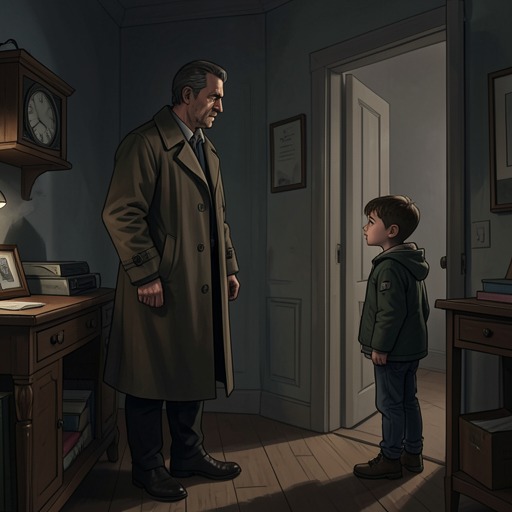
Lewis recalls a night when he was ill with headache and toothache and cried because his mother did not come to him. She could not: she was ill herself, and doctors, voices, and movement filled the house. His father, in tears, came to explain something the child's mind had not previously imagined. Her cancer followed a course Lewis later describes as an operation at home, apparent recovery, recurrence, increasing pain, and death. His father, he adds, never fully recovered from the loss.
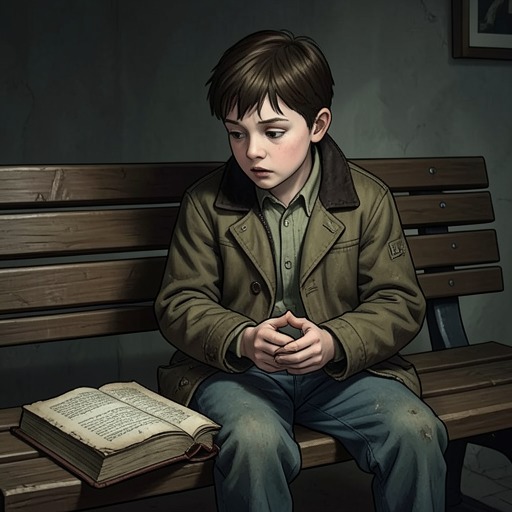
For the boys, bereavement began before their mother's death. As nurses, delirium, and morphia progressively removed her from their daily life, the household itself became strange and menacing, filled with unfamiliar smells, midnight noises, and whispered conversations. Lewis's account stresses the child's experience of a long alteration in ordinary life, rather than presenting the loss as a single moment of news.
The crisis also widened the distance between the children and their father. Under anxiety, his already unsteady nerves and uncontrolled emotions gave way to an unpredictable temper; Lewis remembers him speaking wildly and acting unjustly. The boys did not know how to ease his suffering, and Lewis later wonders whether they might have done better. Instead, he and his brother increasingly relied on each other, trusting one another when the rest of the household no longer felt like home. Their growing closeness was the good result he identifies within an otherwise painful change.
Death and Childhood Grief
Lewis was taken into the bedroom where his mother lay dead, ostensibly to see her. He recalls understanding the experience differently: he was being made to see the dead body, and death itself seemed a total disfigurement. Terror overwhelmed grief. He could not understand descriptions of dead bodies as beautiful, and he reacted with horror to the coffin, flowers, hearse, and funeral arrangements.
That response extended to mourning's public forms. Lewis even lectured his aunt Annie, his mother's maternal uncle's Canadian wife, about the absurdity of mourning clothes. Looking back, he connects his resistance to funeral ceremony with a continuing distaste for public and collective occasions and an ineptitude for formality. The episode shows how a child's immediate recoil from the funeral's conventions became, in the adult narrator's interpretation, part of a lasting disposition.
Prayer and the Loss of Security
When his mother's case was declared hopeless, Lewis recalled being taught that prayers offered in faith would be granted. He therefore tried, by force of will, to believe that his prayer for her recovery would succeed. After she died, he shifted to believing that a miracle would occur. Neither expectation was fulfilled, but he says the disappointment produced no religious upheaval: he was accustomed to things not working and thought no further about it.
In retrospect, he explains that this attempted faith had treated God as a magician required to restore the former state of affairs, not as a savior or judge whose presence might have consequences beyond the requested cure. His recollection distinguishes a child's effort to secure his mother's return from a relationship with God grounded in love, awe, or fear. The episode is therefore significant as a failed, narrowly instrumental prayer, not as the start of his religious life.
Her death nevertheless marked a decisive change in the memoir's account of Lewis's childhood. All settled happiness and dependable security disappeared with her. There would still be fun, pleasures, and further experiences of Joy, but the old sense of safety did not return. The adult narrator compares the change to a continent sinking, leaving a life of sea and islands in place of the once-reliable ground. Lewis's mother thus remains central to the memoir not through an elaborate account of her later actions, but through the emotional and domestic world her presence sustained—and the lasting absence her death created.