Lewis’s Christian awakening at Belsen
Surprised by JoyLewis’s Christian awakening at Belsen was the first point at which Christianity became an active practice rather than a belief he merely professed. The church’s teaching moved him to pray, read the Bible, and try to obey his conscience; in retrospect, he distinguished this beginning from both his later abandonment of faith and his eventual conversions to theism and Christianity.
The Church and the First Effective Belief
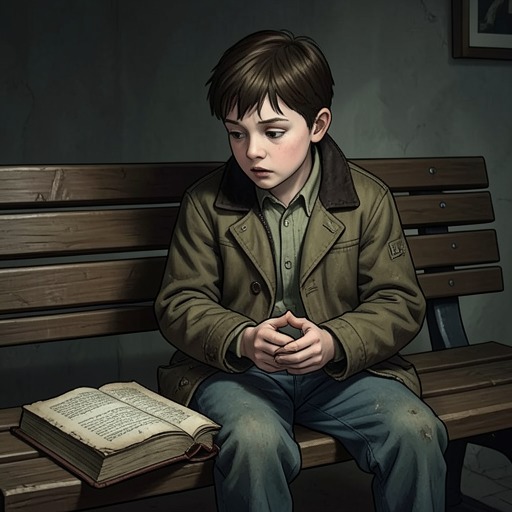
At Oldie’s school, Lewis was taken to church twice every Sunday. The services were high Anglo-Catholic, and he consciously resisted their unfamiliar rituals: as an Ulster Protestant, he associated them with the English atmosphere he disliked. Candles, incense, vestments, and hymns sung on the knees may nevertheless have affected him unconsciously. He judged the decisive influence to be the preaching. For the first time, he heard Christian doctrines, rather than general moral uplift, taught by men who plainly believed them. Since he was not skeptical of those doctrines, the preaching gave life to what he would already have said he believed.
This change was accompanied by fear, especially fear for his soul. On blazing, moonlit nights in the curtainless dormitory, the sound of other boys breathing in their sleep remained vivid in his memory. Lewis later considered this fear wholesome, even necessary, and traced his subsequent attention to Hell not to the supposed Puritanism of his Ulster childhood but to the Anglo-Catholicism he encountered at Belsen. The account does not present fear as a passing sensation alone: it marked a practical turn in his religious life.
Prayer, Scripture, and Conscience
Lewis began seriously to pray, read the Bible, and attempt to obey his conscience. Religion was also discussed among the boys, as he remembered it, with gravity and without hysteria or the shamefacedness he associated with older boys. These practices and conversations gave his awakening an ethical and communal dimension, though the central change was in his own daily conduct.
The memoir deliberately stops short of treating this beginning as a permanent conversion. Lewis says that he would explain later how he went back from it. That retrospective qualification matters: Belsen established an effective belief and a pattern of religious practice, but neither guaranteed that he would retain his faith nor made his subsequent changes inevitable.
Apostasy and the Limits of the Beginning
Lewis later became an apostate, relinquishing Christianity with relief rather than a sense of loss. His account connects that reversal to more than one pressure. The effort to force vivid imaginative and emotional “realizations” into every prayer became a nightly burden, producing weariness and despair and casting gloom over the whole evening. He also encountered classical religious ideas, particularly in Virgil, presented by teachers and editors as false without an account of how Pagan religion might relate to Christianity. He began to question why Christianity should be treated as the sole true exception among religions.
His materialist and pessimistic convictions also worked against belief. Later, writing of his conversion to theism in 1929, Lewis carefully specified that he had then surrendered to God, not yet to Christianity, and knew nothing of the Incarnation. The distinction prevents the Belsen awakening from being confused with the later stages: childhood religious practice, apostasy, theistic surrender, and Christian commitment were separate points in a long and uneven history.
Retrospective Meaning
The memoir’s sequence gives Belsen lasting importance without making it the endpoint of Lewis’s religious story. The awakening supplied an early experience of doctrine becoming lived practice, while its later reversal exposed the difference between having once believed and continuing to believe. Lewis’s account preserves both sides: he regarded the beginning’s effects as good, yet acknowledged that he later left the faith.
His eventual movement toward Christianity followed further changes in how he understood religion and myth. By the time he came to accept Christian claims, he had begun asking whether Pagan religions were preparations or prophetic dreams whose hints reached maturity elsewhere. He came to see the Gospels as neither simply myths nor ordinary histories, but as the place where myth had become fact and God had become man. That later judgment belongs to a different stage from Belsen; its contrast clarifies why the first awakening is significant as a beginning, not as a completed conversion.