Lewis’s apostasy at Chartres
Surprised by JoyLewis’s apostasy at Chartres was not a single declaration but a slow, uneven loss of Christian faith, completed shortly after he left the school in 1913. Its decisive significance lies in how the memoir separates religious change into distinct stages: an earlier belief made effective through worship and prayer, the relief of leaving Christianity, a later surrender to theism, and finally the recognition of Christ as God. Chartres did not simply replace faith with a settled alternative. It exposed how occult fascination, anxious religious practice, classical learning, and pessimism could pull in different directions while all making Christianity easier to abandon.
Chartres and the break with earlier belief
Chartres brought real pleasures and genuine beginnings. Lewis describes it as the place where his education properly began: under the patient headmaster, Tubbs, he advanced in Latin and English and became a promising scholarship candidate. He made his first real friends there, and the landscape helped heal his earlier quarrel with England: the blue plain below the school, the green hills behind it, and Wyvern Priory, the first building he had recognized as beautiful. Against these gains, he places the more consequential change: at Chartres he ceased to be a Christian.
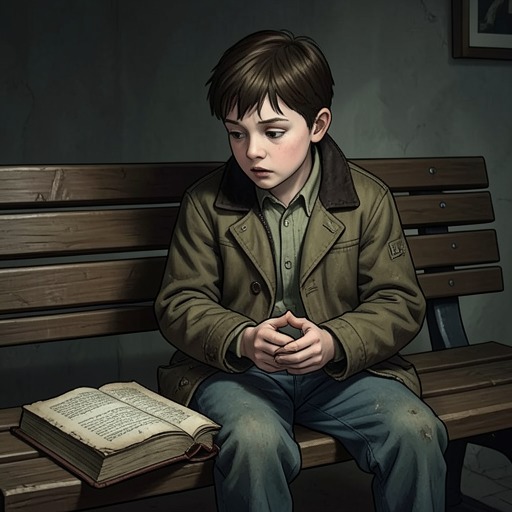
This change followed, rather than preceded, an earlier period of active belief at Oldie’s school. There, twice-weekly Sunday services introduced him to Christian doctrines preached by men who evidently believed them. Though the Anglo-Catholic rituals initially struck him as alien to his Ulster Protestant upbringing, the doctrines brought to life what he had already thought he believed. Fear for his soul accompanied this awakening, especially on bright moonlit nights in the curtainless dormitory. He began praying seriously, reading the Bible, trying to obey his conscience, and discussing religion with other boys in a grave but untroubled way. His account of apostasy therefore begins from a remembered religious practice, not from indifference to religion.
Lewis is careful about the chronology at Chartres: his loss of faith had not begun when he arrived, but the process was complete very soon after he left. He cannot reconstruct its stages precisely, and distinguishes what he knows about conscious causes from what he suspects about less conscious ones. The uncertainty matters. In retrospect, the apostasy appears as a confluence rather than a neatly ordered argument, and no single influence can be made responsible for the whole change.
Occult attraction and the weakening of belief
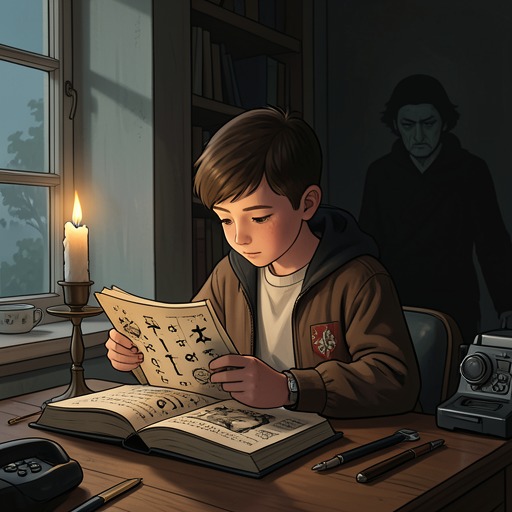
Lewis begins his explanation with Miss C., the school matron, while refusing to blame her. She was loving, selfless, and especially dear to him as an orphan; she comforted boys when they were ill and was cheerful company when they were well. In Lewis’s retrospective account, however, she was spiritually immature and searching for a way of life through Theosophy, Rosicrucianism, Spiritualism, and the broader Anglo-American occult tradition. She did not intend to undermine his faith and could not know how combustible the subject would be for him.
Before these conversations, Lewis had imagined strange beings and other worlds without believing they were real. His invented worlds of Animal-Land and India made the distinction especially clear to him: because he knew himself to be their creator, he could not take them for realities. Miss C.’s occult interests introduced a different possibility—that marvels might exist in the world around him, and that visible reality could conceal vast, unmapped regions beyond his simple theology. The new idea did not merely extend his imaginative life; it attached belief to the imagined supernatural.
Lewis describes the resulting attraction as a desire for the preternatural simply for its own sake, a passion for the occult that could make everything else seem uninteresting. He regarded it as a spiritual appetite, potentially more powerful than the desire for power that he associated with magicians. At the same time, occult speculation loosened the firm outlines of his Christian creed. As ideas about supernatural realities became vague and speculative, he found that the same vagueness spread to doctrines he had once treated as stern truths. Belief shifted toward personal feeling and speculation, and the retreat felt liberating: the fear associated with his earlier religious awakening receded, while the new intellectual atmosphere seemed to ask nothing that had to be obeyed.
Lewis explicitly distinguishes Miss C.’s influence from his own response. She had offered ideas innocently, and he later attributed the destructive effect to the way his own desire to escape religion seized on them. The distinction prevents the account from treating the matron as a deliberate corrupter; she was both a source of affection and, unintentionally, the occasion for an attraction that Lewis struggled with again later.
Prayer, education, and pessimism
The occult attraction took hold in part because Lewis had already become desperate to escape a practice of prayer that he had turned into an intolerable burden. As a child, he had been instructed not merely to say prayers but to attend to their meaning. When he became a serious believer at Oldie’s, he tried to follow this instruction. But after each prayer an accusing inner voice questioned whether he had truly concentrated, whether he had done so as well as on the previous night, and whether he ought to begin again. He answered those doubts by making vivid imaginative and emotional “realization” a condition for allowing each clause of a prayer to count.
The standard he imposed was impossible to verify and impossible to produce by sheer effort. Night after night, he tried to force the vividness he demanded from himself, and each attempt left him uncertain whether he had succeeded. The obligation threatened to become an infinite regress: even the preliminary prayer for a good realization might itself need to be realized. Lewis remembers the physical circumstances of the torment—the cold oilcloth, the chimes marking the quarters, the night passing, and the weariness of trying to summon an experience by will. The dread of bedtime spread gloom across the evening; he thought that continuing along the same path might have driven him mad. In retrospect, this false religious duty supplied an unconscious motive for shedding the faith that had given rise to it.
Classical study provided a separate, conscious source of doubt. Reading the ancient writers, especially Virgil, confronted Lewis with extensive religious thought. Teachers and editors treated those beliefs as false without explaining how Pagan religion might have anticipated or been fulfilled by Christianity. Lewis perceived a double standard: religion in general appeared to be a natural, widespread error, while Christianity alone was declared true by exception. Since Christianity seemed to belong to the same broad human phenomenon as other religions, he wondered why it should be exempt from the judgment applied to them—and was already eager not to preserve that exemption.
A further pressure came from intellectual pessimism. Lewis was not necessarily unhappy, but had come to regard the universe as, on balance, regrettable. He connected this attitude with what he called an argument from undesign: a world so frail and faulty seemed unlikely to have been designed by God. He later acknowledged that he never made a logical system connecting this thought to his occult interests. They moved him in different moods, but both worked against Christianity. The memoir thus presents apostasy as a convergence of motives rather than a consistent philosophical position: one influence made supernatural possibility alluring, while another made the created world seem evidence against its divine author.
Departure, aftermath, and return to belief
Looking back, Lewis calls his departure from Christianity a gradual process whose fluctuations he can no longer trace. He dropped his faith without a sense of loss and with considerable relief. The account resists a simple conversion-in-reverse narrative: his disbelief was not a single counter-doctrine that answered every religious question, but a release from what had become oppressive, aided by intellectual habits and attractions that did not fit into one argument.
The school period also contained changes that complicate any account of it as pure spiritual harm. Miss C. had awakened Lewis’s affections and helped weaken the anti-sentimental inhibition bred by earlier experiences. Her spiritual searching, though disastrous in its main effect on his faith, included elements of disinterested spirituality from which he believed he had benefited. When she and a much-loved assistant master left at the same time, the good effects of her presence withered while the bad ones remained. Lewis contrasts the hearty, boyish Sirrah, who could treat a run in sleet as a rough joke, with his successor Pogo. The change in school influences belongs to the memoir’s wider account of the Chartres years, but Lewis does not identify it as the cause of his apostasy.
Nor did leaving Christianity amount to a permanent rejection of every form of the supernatural or of religious thought. Years later, Yeats’s belief in magic and Maeterlinck’s engagement with Spiritualism, Theosophy, and Pantheism unsettled the materialism that had followed Lewis’s apostasy. The renewed possibility that there might be “something else” revived the occult excitement first stirred at Chartres. Separately, his long disputations with Owen Barfield dismantled his chronological snobbery and challenged the realist assumption that sensory experience alone disclosed ultimate reality. Lewis came to think that the claims he made for logic, moral judgment, and aesthetic value could not be sustained on that basis, and was driven toward the view that mind belonged to the ultimate structure of the universe.
The later return to belief did not simply reverse the Chartres apostasy. In 1929, in a room at Magdalen, Lewis admitted that God was God, knelt, and prayed. He identifies that moment as conversion to theism, not yet to Christianity: he knew nothing of the Incarnation and had no belief in a future life. His surrender was reluctant, and he understood it as the end of his hope to keep his life under his own control. Only afterward did religious plurality begin to look different to him. Pagan traditions could be understood as preparation or prophecy rather than merely false rivals, and the Gospels appeared to him as historical accounts in which myth had become fact. That later Christian conclusion gives the Chartres episode its place in the memoir: not an inevitable first step toward faith, but a real departure whose causes and consequences had to be reconsidered before belief could return in a different form.