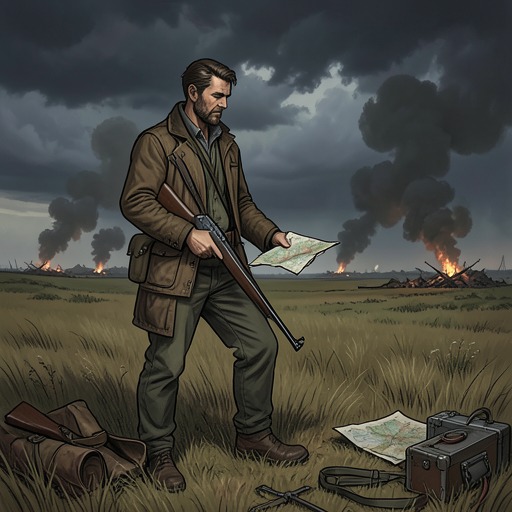
Liu Yiushu was injured in Montbeliard South
Surprised by JoyLewis’s wounding near Mount Bernenchon in April 1918 was more than a battlefield injury: in the moment after he was hit, he thought he had stopped breathing and was dying, an experience that later gave personal force to his understanding of the self as distinct from the self encountered through introspection. The injury belongs to the First World War service that began when he reached the front-line trenches on his nineteenth birthday in November 1917.
Military Context
After ordinary training, Lewis was commissioned as a Second Lieutenant in the Somerset Light Infantry. He saw most of his service in villages before Arras, including Fampoux and Monchy, and was wounded near Lillers at Mount Bernenchon in April 1918. The memoir gives this injury a particular place among his war experiences, while explicitly setting aside other military episodes as largely irrelevant to the story being told.
The Moment of Wounding
Just after being hit, Lewis found—or believed he found—that he was no longer breathing. He concluded that death had come, but recalls neither fear nor courage: neither seemed appropriate to what was happening. Instead, the proposition that a man was dying stood before his mind with the dry, factual, unemotional quality of a statement in a textbook. He adds that the moment was not even interesting. The account’s restraint makes the episode striking: the wound is rendered not as a scene of heroic feeling but as an encounter with a fact observed almost at a distance.
Later Meaning
Years afterward, Lewis read Immanuel Kant’s distinction between the Noumenal and Phenomenal self. The earlier experience of believing himself to be dying made that distinction more than an abstraction. He felt that he had encountered a fully conscious “I” whose connections with the “me” of introspection were loose and transitory. The wound thus returns in the memoir as an episode of thought as well as bodily harm: a sudden crisis later becomes experiential evidence for a distinction Lewis had previously met in philosophy.
Place in the Memoir
Lewis separates this moment from the other consequences and anecdotes of his service. He mentions having been wounded by an English shell and recounts other incidents only to explain that they do not bear on the book’s subject; the near-death experience is one of two moments he singles out as consequential. Its significance lies not in a detailed account of the injury or its treatment, which the memoir does not provide, but in the way it altered the meaning of a later philosophical idea.