Somerset Light Infantry
Surprised by JoyThe Somerset Light Infantry, the old XIIIth Foot, was the regiment in which the memoirist served as a Second Lieutenant during the First World War. His account places his commission after military training and follows his service from the front line near Arras to his wounding in April 1918; the regiment also anchors a contrast between hardship accepted as hardship and the school suffering that had been disguised as education.
Formation and Commission
After a brief and abnormal term at Oxford, the memoirist enlisted and entered a Cadet Battalion billeted at Keble. He completed what he describes as the ordinary training course, relatively mild by the standards of a later war, and received a commission as a Second Lieutenant in the Somerset Light Infantry. The passage gives no account of the regiment’s wider organization or operations; its focus is the young officer’s movement from training into active service.
Front-Line Service
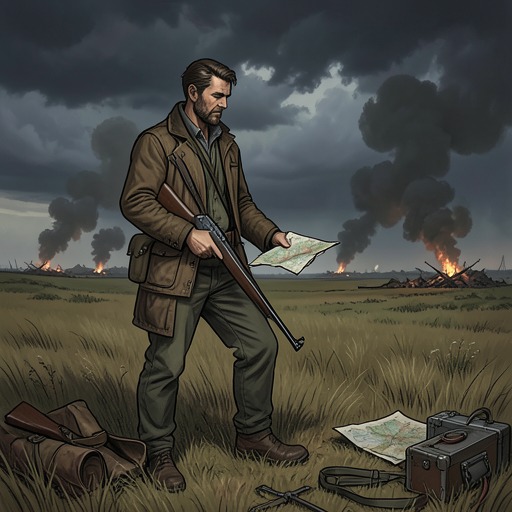
The memoirist reached the front-line trenches on his nineteenth birthday in November 1917. He spent most of his service in villages before Arras, specifically Fampoux and Monchy, and was wounded at Mt. Bernenchon, near Lillers, in April 1918. These places and dates give his service a precise personal chronology: enlistment and commissioning led, within a short period, to trench duty and then to a wound that marked the end of this account of his frontline experience.
The Army in Retrospect
The memoirist says that army life was detestable, but emphasizes that its unpleasantness was openly acknowledged. No one pretended that service ought to be enjoyable; it was treated as an odious necessity and an interruption of ordinary life. In his comparison, this frankness made tribulation easier to bear than the misery at Wyvern, where oppressive conditions were presented as part of a proper school experience. Shared recognition of hardship could foster comradeship, whereas concealed resentment had characterized the school setting.
He also found his military elders and superiors kinder than the senior boys at Wyvern. He suggests that the age difference mattered: adults dealing with a nineteen-year-old did not need the self-assertion of thirteen-year-olds. He further speculates that his own expression had changed since his school years, perhaps after reading Phantastes, and that it may have invited pity or kindly amusement. The regiment’s significance in the memoir therefore lies not only in its place in his wartime service, but also in the contrast it makes possible between acknowledged hardship and suffering imposed under a claim of ordinary discipline.