a treaty with reality
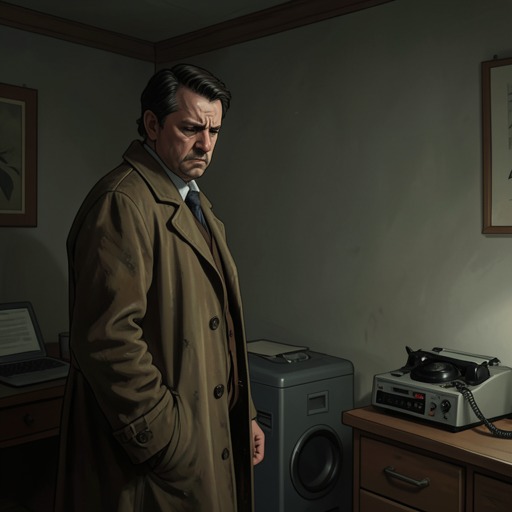
Surprised by Joy“A treaty with reality” is C. S. Lewis’s name for an attempted settlement with circumstances he could neither control nor wholly ignore. First applied to the First World War, it describes his decision to accept future service while setting limits on how much of the war he would admit into his present life. In retrospect, the expression also exposes the deeper habit behind that boundary: Lewis’s wish to reserve some part of himself from interference. His eventual recognition of God, as he narrates it, brings that strategy to an end.
The wartime boundary
As the First World War continued on the Continent, Lewis began to expect that it would last until he reached military age. In Ireland, where there was no conscription, the law had not made the decision for boys of his age; he therefore chose to serve. He did not regard the choice as grounds for self-congratulation. Instead, he felt that having decided to serve later absolved him from taking further notice of the war in the meantime.
That distinction shaped his “treaty”: his country would have him on a specified date, and he would serve if necessary, but until then he meant to live his own life. He accepted that the army might eventually have his body, while refusing to give the war his mind in advance. The practical consequence was a deliberate refusal to read war reports or make more than a formal contribution to conversations about the conflict. His friend Arthur, whose heart condition disqualified him from service, faced no corresponding decision.
Lewis acknowledged that observers might call this stance shameful, incredible, or a flight from reality. He answered that it was instead a frontier fixed between an obligation he had accepted and a present he wanted to preserve. His unhappiness at school helped explain the strategy: allowing the coming term to invade the holidays, he thought, would make the present unbearable. He also described an internal tension between what he called the Hamilton in him and the Lewis, with the former guarding against the self-tormenting tendencies of the latter.
What the agreement excluded
The boundary did not mean that Lewis thought the war unimportant. He argued that following it from a distance could waste time and mental energy: reports of fighting could be distorted as they passed through military and journalistic channels, and accounts could be contradicted the next day. Without military knowledge or reliable maps, he believed, a reader might invest intense fear and hope in uncertain information, only to have to revise what he thought he knew.
He extended the argument beyond wartime. Lewis opposed encouraging schoolboys to read newspapers, because much of what they encountered as teenagers would later prove false in emphasis or interpretation, or cease to matter. He feared not only the burden of relearning but also the habits such reading could cultivate: a taste for sensationalism and a restless movement from one item to the next. The treaty thus served as an intellectual rule as well as an emotional defence: not every public event, simply by occurring, had to command his attention.
From frontier to refusal of interference
The phrase later acquired a more personal meaning. Lewis recalled that his attraction to a materialist account of the universe was bound up with his history and temperament. His earlier period of Christian faith had involved fear, which he later believed he had magnified in memory; he was also more intent on avoiding pain than pursuing happiness. Materialism seemed to promise limited liabilities, whereas the Christian universe offered no final escape. Above all, he hated authority and what he called interference. He wanted some inner territory that belonged to him alone.
Against that background, the treaty represents more than a decision to keep war news at a distance. It expresses a wish to negotiate the terms on which reality could make claims upon him: to accept certain limits while preserving a protected remainder. Lewis eventually recognized that this wish had also favored his preference for materialism. He tried, however, to accept the perceived cost of that view: that apparent beauty and value were subjective, and that what he cared about belonged to a world of appearances. He associated this effort with a lesson from Kirkpatrick about intellectual honesty and the shame of choosing inconsistency.
The end of compromise
In Lewis’s later account, his philosophical New Look brought a temporary end to the idea of negotiating with reality. He describes learning to accept the universe wholly, without reservations, and says this outlook gave him peace. The important reversal is that the earlier treaty had preserved a boundary, whereas this acceptance renounced the very possibility of keeping reality at a distance. The expression therefore marks both a strategy and its eventual failure: a self-protective limit that Lewis came to see as incompatible with complete acceptance.
The distinction became decisive when an abstract philosophical idea of Spirit became, in his account, a living presence that addressed him as Lord. He understood that his recent effort to live by his philosophy still contained reservations: he had assumed that his ideal of virtue would not lead to anything intolerably painful, and that he could remain reasonable in a comfortable sense. Now the demand, as he describes it, was total surrender, not a compromise calibrated to his wishes. The old wish to call his soul his own could no longer govern the terms.
Lewis places his capitulation in Trinity Term 1929, after repeated nights alone in his room at Magdalen. He admitted that God was God, knelt, and prayed, describing himself as a reluctant convert. The episode gives the expression its fullest retrospective force: what had begun as a frontier against the claims of war becomes an image of the limits Lewis tried to place around reality itself, and of the surrender through which, in his narrative, those limits were finally relinquished.