
Innocence Under Suspicion
The A.B.C. MurdersThis thread explores the poisoning atmosphere of accusation and the relief that comes when the investigation distinguishes suspicion from guilt.
increasing Bearing strength in each event
 decreasing
Bearing strength in each eventdecreasingA Marriage Creates Suspicion

The First Accusation
Franz’s reputation
Franz Ascher’s threats and drinking make him a natural suspect. Neighbors have already built a story in which his violence must lead to murder.
Suspicion is not certainty
Poirot observes that Alice was struck from behind while serving someone. The physical arrangement weakens the convenient accusation.
Donald’s Threats Resurface

A Lover Under a Cloud
Old words remembered
Donald’s violent jealousy and threats make him seem capable of killing Betty. Megan worries that the past will condemn him.
A broader frame
The ABC warning shows that a stranger may be responsible. The letters unintentionally shield Donald from a false accusation by offering another suspect.
The Innocent Misidentified

Downes and Earlsfield
A near-identical appearance
The killer’s mistake places George Earlsfield in the path of an attack apparently intended for Roger Downes. One innocent man dies; another becomes a potential next target.
Accidental danger
The scene reveals how arbitrary violence can reach those with no personal connection to the killer. The supposed alphabet is not a moral explanation.
Cust Bears the Blame

A Living Accusation
Confession without memory
Cust believes he committed the crimes because of the planted evidence and his illness. His sincere plea of innocence coexists with a sincere belief in guilt.
Poirot’s objection
Poirot refuses to equate evidence with a complete account. Cust’s psychological vulnerability makes the accusation especially dangerous.
Suspicion Lifted
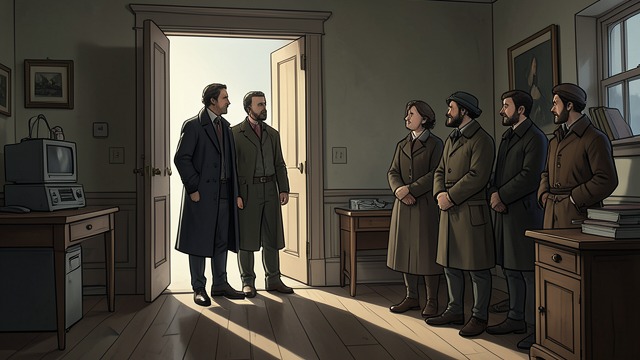
Innocence Recovered
The truth assigned
Poirot exposes Clarke as the planner and murderer. Franz, Donald, and Cust are no longer required to carry the guilt of crimes they did not commit.
The cost remains
Clearing the innocent does not erase the suffering caused by suspicion. The ending underscores why an explanation must be complete, not merely persuasive.
June 22, 1935
July 25, 1935
September 11, 1935
After the Doncaster murder
After Franklin Clarke is arrested
