
The Obvious and the Overlooked
The A.B.C. MurdersThis thread traces the novel’s repeated lesson that plain details can outweigh elaborate theories when they are examined in their proper context.
increasing Bearing strength in each event
 decreasing
Bearing strength in each eventdecreasingAn Impression Explained

Poirot’s Unease
More than instinct
Poirot senses that the letter is wrong but cannot initially name the detail behind his impression. Later he admits that experience can collect clues before conscious reasoning explains them.
An early mistake
He lets the feeling remain vague instead of testing its components. The first failure is not lack of intelligence but failure to examine what seemed obvious.
A Guide in Plain Sight

The Object Everyone Sees
A conspicuous clue
The railway guide is plainly present at the shop, yet its purpose remains uncertain. Investigators focus on who brought it rather than why it must be seen.
Surface and meaning
The guide is both a real clue and a theatrical prop. Its most obvious function—to advertise an ABC pattern—conceals the larger purpose of diverting attention.
The Motif Repeats

Stockings as a Pattern
A detail nearly missed
Stockings appear in a neighbor’s complaint, a mother’s gift, and Thora’s memory of a salesman. Each instance seems unimportant by itself.
The obvious connection
Poirot brings the repeated detail together and recognizes a travelling seller as a likely observer of the victims’ surroundings. Attention, not complexity, unlocks the lead.
A Letter Misaddressed

A Mistake With Purpose
The address examined
The letter’s incorrect destination initially appears to be bad luck. Hastings casually suggests it may have been intentional.
Plain logic
Poirot eventually sees that the letter could not be made to go astray if sent to police. The simple postal fact explains why the warnings were sent to him.
Hastings’s Obvious Insight
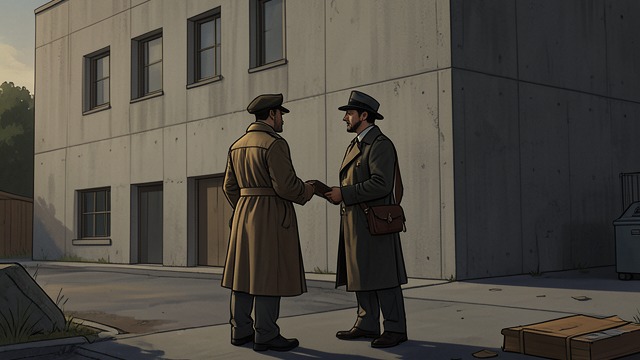
The Case Turns
No hidden subtlety
Poirot recognizes that a direct remark from Hastings has supplied the solution’s missing part. The observation works because it ignores more elaborate speculation.
A method made explicit
The final explanation emphasizes looking carefully at ordinary facts: who benefits, why the letters need a private address, and what the obvious error accomplishes.
June 1935, during the first conversation
June 22, 1935
September 1935, after Thora’s recollection
July 30, 1935, reconsidered later
Near the ending
