Clarke's failed suicide attempt
The A.B.C. MurdersFranklin Clarke’s failed suicide attempt turns his exposure into a final struggle over who controls the ending: after Hercule Poirot lays out the evidence against him, Clarke draws a pistol and tries to shoot himself, only for the weapon to click harmlessly. Poirot reveals that it had been unloaded and returned to Clarke’s pocket by a skilled associate, and detectives from Scotland Yard enter to take him into custody.
The confrontation before the attempt
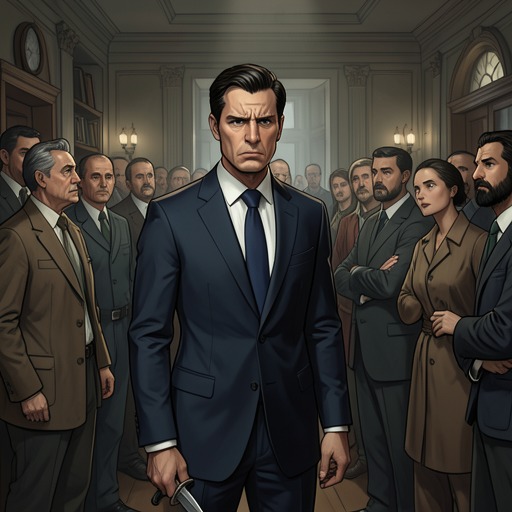
The attempt follows a cumulative presentation of evidence. Poirot identifies the lead-weighted stick found in a cupboard at Combeside, the witnesses who recognized Clarke leaving a cinema when he was supposed to be at the Doncaster race-course, and the people who placed him at Bexhill and at the Scarlet Runner Roadhouse with Betty Barnard on the evening she was killed. He gives particular weight to the fingerprint Clarke left on Alexander Bonaparte Cust’s typewriter: an object Clarke could not have handled innocently if, as he claimed, he had no connection to it.
Clarke remains still for a moment, then acknowledges defeat with a gambling phrase: “Rouge, impair, manque!—you win, M. Poirot! But it was worth trying!” The admission marks the point at which the contest of detection becomes an immediate physical danger. In the next movement, Clarke rapidly produces a small automatic pistol from his pocket and holds it to his head.
The pistol fails
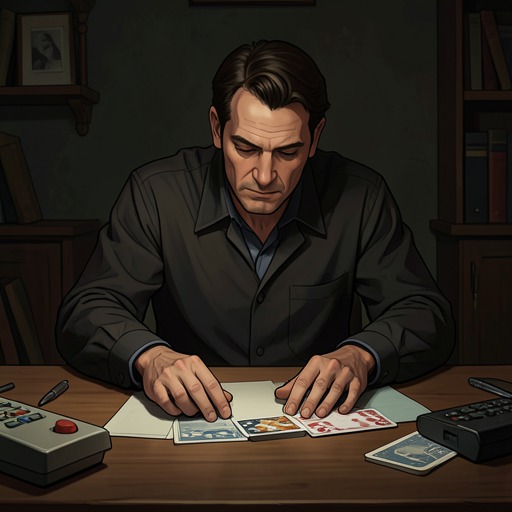
Arthur Hastings cries out and flinches, expecting the shot. No report follows; the hammer merely clicks. Clarke stares at the pistol in astonishment and swears. The failed discharge is not chance: Poirot explains that he had a new manservant that day, a friend who was an expert sneak thief. The man removed the pistol from Clarke’s pocket, unloaded it, and returned it without Clarke noticing.
The intervention denies Clarke the quick death he has attempted to choose. Poirot connects that denial to Clarke’s earlier account to Cust of near escapes from drowning, telling him that he was born for another fate. The remark shifts the scene from the mechanics of the weapon to the consequence of survival: Clarke will not escape the judgment that follows his exposure by ending his life at that moment.
Arrest and narrative consequence
Clarke responds with rage, calling Poirot a foreigner and clenching his fists, but he does not regain control of the encounter. Two detectives from Scotland Yard emerge from the adjoining room; one is Inspector Crome, who gives the formal warning that anything Clarke says may be used as evidence. Poirot replies that Clarke has already said enough, then condemns the crime as neither above-board nor sporting, rejecting the insular superiority Clarke has displayed.
The failed attempt therefore completes the confrontation without resolving it through suicide: the pistol has been rendered useless, the police are present, and Clarke remains answerable for the murders. Its sharp reversal also echoes the case’s wider pattern of apparent control giving way to exposure. Clarke tries to turn his final moment into an act of his own choosing, but Poirot’s concealed intervention and the detectives’ arrival place the ending back in the hands of investigation and law.