Foxes
The A.B.C. MurdersFoxes become a recurring moral image in Hercule Poirot’s account of the murders. A children’s rhyme about catching a fox and locking it in a box gives him a language for distinguishing a hunt, however cruel, from the deliberate confinement of a man made to believe he is guilty of crimes he did not commit. The animal is not simply a clue to the murderer’s method: it is the figure through which Poirot condemns the lasting harm done to Alexander Bonaparte Cust.
The rhyme and its refrain
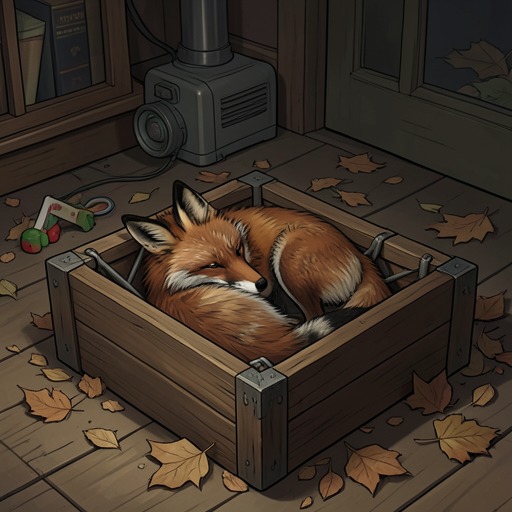
As Poirot and Arthur Hastings return towards their car, they stop to watch children singing. Poirot cannot catch the words, and Hastings listens until he makes out the refrain about catching a fox, putting it in a box, and never letting it go. Poirot repeats the words, but the rhyme does not strike him as harmless. His face turns grave, and he calls the idea terrible.
The children’s song places two actions side by side: catching an animal and making its capture permanent. In Poirot’s response, the second action carries the greater moral weight. The repeated refrain later gives him a compact way to describe what has happened to Cust: the man is not merely pursued but shut into a condition from which he cannot escape.
Poirot’s comparison with the hunt
Poirot develops the image by asking Hastings about fox-hunting in England. He describes the sequence of the sport: hunters wait at the covert, the tally-ho sounds, and the fox runs across country, over hedges and ditches, sometimes doubling back while the hounds follow. Hastings corrects Poirot’s use of the word “dogs,” but the details remain focused on pursuit and escape, ending in the fox’s death.
When Hastings suggests that the hunt sounds cruel, Poirot rejects the idea that the fox enjoys it. Yet, in his comparison, even a swift death is preferable to being confined in a box forever. This is not a general account of animal experience; it is the ethical contrast Poirot draws from the rhyme. A hunt has a pursuit and an end. The box represents an unending sentence, and thus makes captivity, rather than the chase, the image’s central horror.
Cust as the hunted animal
Near the resolution, Poirot turns the figure of the fox onto Cust’s movements after the murder. He describes Cust as a hunted animal who returns to his lodgings in London, where he is known and thinks himself safe. Cust has taken the murder knife with him and hides it behind the hall stand, an act Poirot calls stupid. When Cust is warned that the police are coming, Poirot casts the ensuing flight as the animal’s last run.
Poirot also considers why Cust went to Andover: he suggests that Cust may have felt a morbid desire to see the scene of a crime he believes he committed, although he remembers nothing of it. With no money left and worn out, Cust’s feet bring him to the police station. The sequence makes the animal comparison more than a description of fear. Cust’s apparent return to the place of the first crime and his arrival at the police station are understood through Poirot’s image of a creature driven onward, with the authorities closing in.
The box as a moral judgment
The image’s full meaning emerges when Hastings connects Poirot’s words to his earlier rebuke of Cust’s conduct as unsporting. Poirot agrees that the conduct was abominable, specifying that the worst cruelty was not simply the murder of Cust’s brother but the act of condemning an unfortunate man to a living death. He returns to the rhyme’s fox, box, and refusal to release the captive, and calls that treatment no sport.
The distinction identifies the crime behind the misleading appearance of a hunt. Cust seems to be the hunted criminal, and the fox image initially follows his desperate movements. Poirot’s judgment reverses that impression: Cust is also the person trapped by another man’s scheme, made to carry guilt and danger that belong elsewhere. Megan Barnard’s deep sigh and disbelief follow Poirot’s explanation. The rhyme therefore gathers pursuit, false guilt, and lasting confinement into one image, while the final emphasis falls on the human cost of keeping the supposed fox in the box.