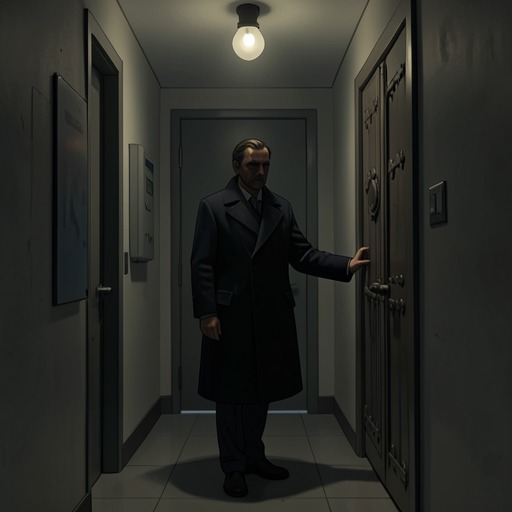
Lady Charlotte Clarke
The A.B.C. MurdersLady Charlotte Clarke, the chronically ill wife of Sir Carmichael Clarke, becomes an important but easily discounted witness in the inquiry into her husband’s death. Her accusation that Thora Grey concealed a meeting with a stranger complicates the household’s account, while her jealousy and illness leave others uncertain how far to trust her judgment.
Position in the Household
Lady Charlotte is married to Sir Carmichael Clarke and lives within the household where Thora Grey serves as his secretary. Franklin Clarke describes Grey as especially valuable to his brother and says Sir Carmichael was fond of her, while insisting that their relationship was entirely proper. This closeness becomes a source of tension after Sir Carmichael’s death, when the question arises of whether Grey should remain in the household.
Accusation Against Thora Grey
During questioning, Lady Charlotte firmly calls Grey a liar. She explains the basis for her accusation: Grey had said that no strangers came to the house, but Lady Charlotte says she herself saw Grey from a window, speaking with a man she did not recognize at the front doorstep. She places the encounter at about eleven in the morning on the day Sir Carmichael died. Her account supplies a specific contradiction to Grey’s statement, though the evidence here does not establish the stranger’s identity or the purpose of the meeting.
Jealousy, Illness, and Conflicting Judgments
Franklin says his sister-in-law had become jealous of Grey and had objected when Grey’s continued presence was considered after Sir Carmichael’s death. He attributes at least some of Lady Charlotte’s suspicions to her illness and the morphia she was taking, relaying Nurse Capstick’s view that these circumstances should temper blame. His account presents her jealousy as a possible distortion of events rather than proof that her observation was false.
Hastings initially sees Lady Charlotte’s attitude as part of a general hostility toward Grey because she is good-looking. Poirot rebukes that easy interpretation: Hastings, he suggests, is inclined to sympathize with attractive young women, while he himself is disposed to give a sick older woman the benefit of the doubt. He points out that Lady Charlotte was not the only person whose judgment of Grey mattered, and raises the possibility that she had seen clearly while Sir Carmichael, Franklin, Nurse Capstick, and Hastings had failed to do so. The exchange keeps her accusation open to scrutiny instead of allowing either her illness or Grey’s attractiveness to settle the question.
Narrative Role
Lady Charlotte’s testimony illustrates how personal rivalry and physical illness can complicate the assessment of a witness without making her evidence automatically worthless. Her reported sighting is concrete and tied to the morning of Sir Carmichael’s death; its significance lies in the gap between what Grey reportedly said and what Lady Charlotte says she observed. The narrative also exposes Hastings’s own susceptibility to romantic assumptions, as Poirot redirects attention from Grey’s appearance to the substance of Lady Charlotte’s claim.