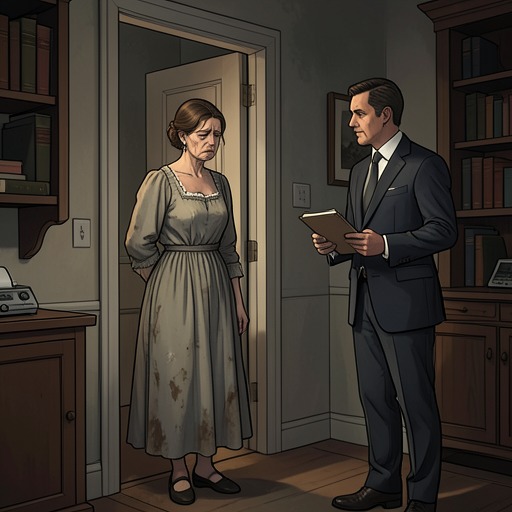
Murder as a matchmaker
The A.B.C. MurdersMurder as a matchmaker is the idea that murder can produce an unexpected human consequence: people drawn together by a common tragedy may begin a separate drama of affection and attachment. In Arthur Hastings’s account, Hercule Poirot turns that paradox into a way of reading the aftermath of crime, where grief and investigation coexist with the beginnings and complications of romance.
The Idea and Its Narrative Context
Hastings explains that he has departed from his usual practice of recounting only incidents and scenes he witnessed himself. Some chapters are therefore narrated in the third person; he vouches for their events while acknowledging that his accounts of people’s thoughts and feelings involve a degree of poetic licence. He says that Poirot vetted them. This framing matters to the theme: the romantic consequences are not incidental gossip but part of Hastings’s deliberately expanded account of the case.
In his closing reflection, Hastings recognizes that he has described at length the secondary personal relationships arising from the strange series of crimes. He justifies that attention by insisting that the human and personal elements cannot be ignored. He attributes the lesson to Poirot, who had once taught him dramatically that romance can be a by-product of crime. The phrase describes an unintended consequence, not a motive for the murders: violence sets the circumstances, while the relationships develop among those left to respond to it.
Tragedy and the Second Drama
Poirot gives the idea its clearest formulation while talking with Hastings. He remarks that tragedy can start comedy, then asks Hastings to consider three sets of people brought together by a common tragedy. A second drama begins among them, distinct from the first. The contrast does not diminish the seriousness of the crimes. Instead, it places another kind of human action beside them: people may remain capable of attachment even when their immediate connection is a shared catastrophe.
To make the point, Poirot recalls an earlier English case in which he brought two people who loved one another together by having one of them arrested for murder. The arrest is presented as the dramatic circumstance that reveals or enables a connection; it is not evidence that the crime itself makes people love one another. Poirot then generalizes from the example, calling murder a great matchmaker. The saying is deliberately paradoxical: the crime separates victims from the living, yet its investigation can place survivors in one another’s company and alter their relations.
Reading the Signs of Attraction
The conversation turns from the general principle to the people around the present case. Poirot tells Hastings that the tune he has hummed has disclosed his thoughts, and he interprets it as pointing toward a preference between a brunette and a blonde. His reading is partly teasing, but the scene also displays his attention to personal signals beyond the formal clues of detection.
Poirot names the gestures that, in his view, reveal the changing pattern of attraction. He says Franklin Clarke suddenly became attentive and sympathetic toward Megan Barnard, leaning forward to look at her. He also notes that Thora Grey was very annoyed by this attention, while Donald Fraser appeared to be involved in the same developing emotional situation. These observations do not establish the eventual outcome of anyone’s romance; they identify a moment when the relationships have begun to shift and become legible to an observer.
Hastings and Poirot’s Different Readings
Hastings responds that none of the people involved could have been thinking of anything but tragedy. His objection expresses the seriousness with which he regards the immediate losses, and it resists treating grief as merely an opening for romance. Poirot counters by asking Hastings to consider himself, making the exchange personal rather than abstract. Their disagreement is not resolved into a claim that romance cancels mourning. It instead exposes two simultaneous ways of viewing the same aftermath: Hastings emphasizes the tragedy, while Poirot notices the connections forming around it.
The contrast also gives the theme its measure. Poirot’s matchmaking language is witty and provocative, but Hastings’s unease prevents the idea from becoming a simple celebration of crime’s consequences. The relationships matter because they are part of the human story that survives the investigation, not because murder is presented as desirable or because grief disappears when attraction begins.
Significance
The concept links the puzzle plot to the personal relationships that grow in its wake. Hastings’s retrospective defense of those relationships makes them part of the narrative’s intended scope, while Poirot’s remarks give them a memorable interpretive frame. Crime supplies the shared circumstance; attention, sympathy, irritation, and changing attachments supply the separate drama.
The title-like aphorism is therefore both comic and serious. It captures Poirot’s habit of detecting patterns in people as well as in evidence, but it also marks Hastings’s broader understanding of what the story contains. A murder investigation can conclude with an answer to who committed the crimes; the personal consequences continue in the lives and relationships of those brought together by them.