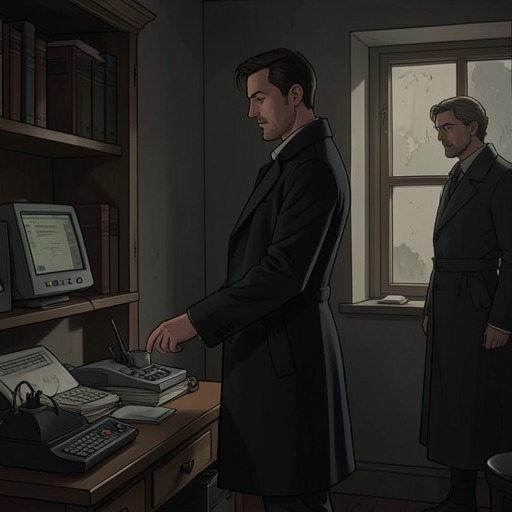
Overlooking the obvious
The A.B.C. Murders“Overlooking the obvious” is the unforgivable error Hercule Poirot names when Arthur Hastings asks what he means. The phrase distills Poirot’s confidence in close attention into a warning against letting an intricate mystery obscure what is directly in view.
Meaning and Context
Poirot introduces the expression while welcoming Hastings back as a prospective partner in a new investigation. He has imagined them hunting together as in former days, but insists that the affair must be unusual and refined; when Hastings jokes that Poirot sounds as though he is ordering dinner at the Ritz, Poirot concedes that crime cannot be summoned to order. He nevertheless trusts in luck or destiny, and says Hastings is destined to stand beside him and prevent the unforgivable error.
Hastings asks what that error is. Poirot answers simply: overlooking the obvious. The brevity gives the warning its force. Rather than naming a particular clue or explaining a case, Poirot states a general danger that can arise in any investigation: a detective may search for subtlety and miss what is plain.
Role in the Partnership
The phrase also explains the function Poirot assigns to Hastings. Poirot presents himself as the investigator who expects a fine, unusual affair; Hastings is to stand beside him and help guard against a basic failure of perception. Their partnership is framed not merely as a reunion for the pleasure of shared work, but as a safeguard against error.
Hastings admits that he turns Poirot’s words over without quite seeing their point. That response gives the exchange a small irony: the warning is clear, but its significance remains, for the moment, unexplained. Poirot’s expression therefore works both as practical counsel and as an early statement of the investigative principle against which a developing mystery can be measured.