Sir Carmichael Clarke
The A.B.C. MurdersSir Carmichael Clarke is a retired throat specialist and renowned collector of Chinese art whose murder gives the A.B.C. killings their true purpose. Though the sequence appears to target victims chosen by alphabetical pattern, his death points Hercule Poirot toward the inheritance that benefits his brother, Franklin Clarke, and ultimately reveals the person behind the campaign.
Identity and Background
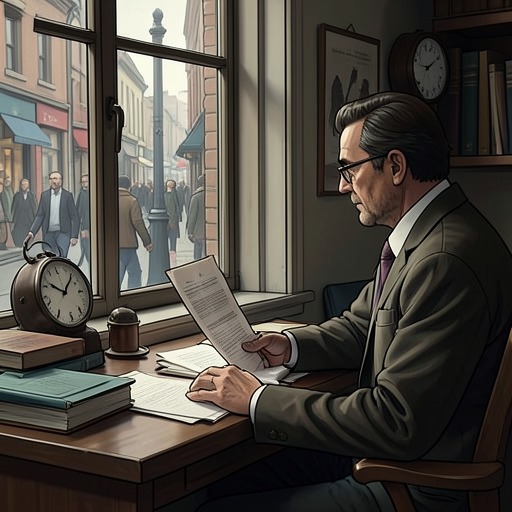
Clarke had once been a very well-known throat specialist. Retirement left him comfortably off, allowing him to pursue a longstanding passion for Chinese pottery and porcelain. When he later inherited a considerable fortune from an elderly uncle, he could expand that interest into a collection that became one of the best-known collections of Chinese art.
He was married, had no children, and lived in a house built for him near the Devon coast. He came to London only rarely, particularly for important sales. His prominence rested less on public celebrity than on professional standing, wealth, and the distinction of his collection.
Home and Last Evening
Clarke’s house, Combeside, stood near Churston on a site of about two acres with an uninterrupted sea view. The house was a modern white rectangle, not especially large apart from two substantial galleries built to house his collection. Its setting belonged to a changing stretch of coast: the area had once been mostly open countryside around a golf links, but recent building had brought small houses, bungalows, and new roads between Churston and Paignton.
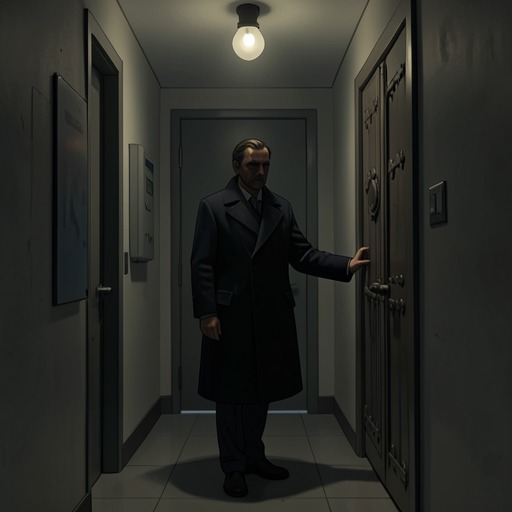
Clarke customarily went for a walk after dinner each evening. When police called after eleven and learned he had not returned, a search party followed the familiar route and found him dead. His death was caused by a heavy blow to the back of the head. An open A.B.C. railway guide had been placed face down on his body, linking the crime to the earlier murders and presenting it as the third in the series.
Family and Household
Clarke was the elder brother of Franklin Clarke. The marriage produced no children, and his wife, Lady Clarke, was seriously ill. The household also included Thora Grey, whose presence Lady Clarke resented. In a later conversation, Lady Clarke recalled that Clarke had praised Grey as brave and hardworking and had wanted her to remain as a comfort to his wife. Lady Clarke said that she rejected the idea, offered Grey three months’ salary, and insisted that she leave; Franklin, she said, had not argued with her decision.
That recollection gives a glimpse of Clarke’s concern for Grey and of the tensions within his household, but the decisive family connection in the murder investigation is his relationship with Franklin. His fortune, not the apparent pattern of the A.B.C. killings, supplies the motive that makes the third murder different from the first two.
Murder and Inheritance
When Inspector Crome reported the killing, he told Poirot that Clarke had been found dead after a blow to the head. The news carried an immediate public consequence: after the murder of Betty Barnard, the death of a wealthy and prominent collector promised an unusually sensational newspaper story. Poirot observed that widespread publicity might accomplish what private efforts had not by drawing the whole country’s attention to the search for A B C.
Franklin initially presented himself as a shocked brother confronting an apparently inexplicable crime. At breakfast with the investigators, he asked whether his brother was really the victim of a homicidal maniac and whether the A.B.C. railway guide had been left beside each of the three bodies. His question treated Clarke’s death as one more instance of the same puzzle. Poirot’s later explanation reverses that understanding: the alphabetical pattern was a device for creating the appearance of a serial killer and diverting attention from the personal motive.
Clarke was immensely wealthy. His wife had a life interest in his money, and after her death the fortune would pass to Franklin. Poirot identifies that inheritance as the crucial fact behind the Churston murder, which he calls the important—and, from the killer’s point of view, the real—murder. The sequence’s apparent randomness concealed a crime directed at a particular family and estate.
Narrative Role and Significance
Clarke’s murder is the hinge on which the mystery turns from a hunt for a supposed homicidal maniac to an inquiry into motive and inheritance. The A.B.C. guide makes his death resemble the earlier killings, but his wealth and the succession arrangements give Poirot a reason to examine who benefits. In the final reconstruction, he connects the methodical planning and the public persona associated with A B C to Franklin Clarke, identifying the brother who stood to inherit.
Clarke is therefore significant less through extended action in the narrative than through what his death changes. The murder brings the killer’s financial objective into view, transforms the apparent serial pattern into cover for a targeted crime, and supplies the decisive link between the sequence of killings and Franklin’s motive.