St Leger race day
The A.B.C. MurdersSt Leger race day is the date around which the Doncaster murder is anticipated and then carried out. Its importance lies in the contrast between the famous public race meeting and Franklin Clarke’s private design: the crowd, the influx of police, and the threat of another alphabetical murder all help make Doncaster a stage on which Cust can be mistaken for the culprit.
The race meeting as a deadline
When the next warning is discussed, Franklin Clarke points out that the St Leger will be run at Doncaster the following Wednesday. Inspector Crome recognizes that the race complicates the investigation, while Clarke proposes that the threatened murder might happen on the course, perhaps during the race itself. The suggestion gives the warning an immediate, public setting, but it is Clarke’s conjecture rather than a confirmed account of where the murder will occur.
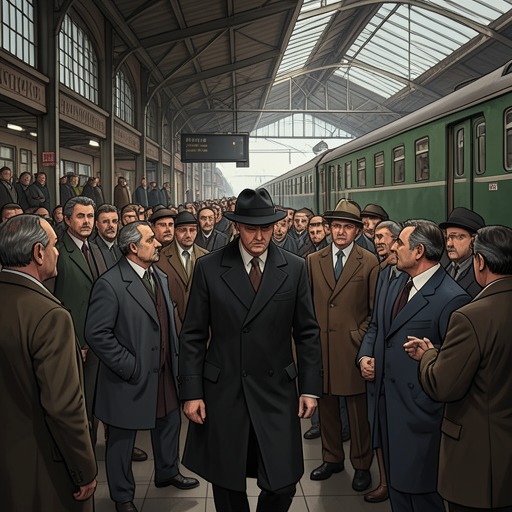
The event’s prominence gives the prediction force. Doncaster is not only the next place in the supposed alphabetical sequence: on race day, it will draw a large audience and an exceptional police presence. A landlady remarks that officers are being sent in by the hundreds and imagines that a person with a name beginning with D might flee rather than risk being there. The race meeting thus amplifies the threat even before the investigators know what the threat conceals.
Cust’s journey to Doncaster
The date is marked in the narrative as “September 11th. Doncaster,” and Hastings recalls that he expects to remember the day. Before setting out, Cust insists that he must keep his engagement and that people must be able to trust him to carry through what he has undertaken. His language of punctuality and business sounds like professional pride, but in the context of the predicted murder it also makes his ordinary journey appear ominous.
Poirot, Hastings, and the others plan an all-day search, patrolling streets in the morning and taking positions at likely points on the race-course later. They divide their coverage because the crowd and the breadth of the site make a single watch insufficient. Hastings joins the effort as an escort to one of the women, acknowledging that he is unlikely to recognize A B C himself. The race meeting therefore shapes not just the setting but the investigators’ practical response.
The date as part of the frame-up
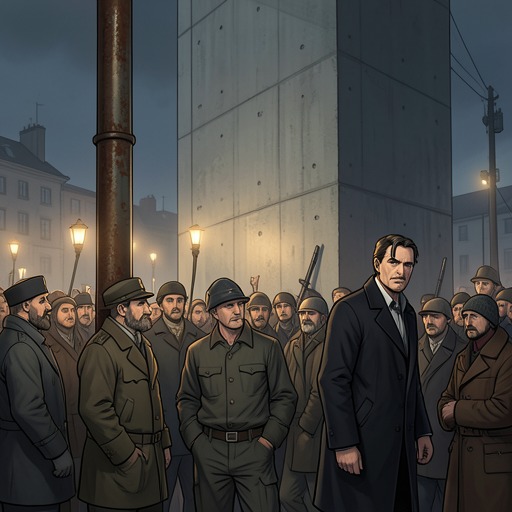
Poirot’s reconstruction explains why the Doncaster date bears so heavily on Cust. The earlier crimes have occurred in places where Cust was present or nearby; because his epilepsy can involve gaps in memory and he is highly suggestible, the apparent pattern encourages him to suspect himself. When he receives the order to go to Doncaster, he connects it to the expected next crime and experiences the coincidence as if it were fate. He loses his nerve, suspects that his landlady is watching him, and tells her he is going to Cheltenham instead.
The St Leger’s crowds make that manipulation especially effective. Clarke does not need the Doncaster victim to have a name beginning with D: Poirot explains that the mismatch would be dismissed as a mistake, while someone in the audience with a D name could be assumed to have been the intended target. The race-day setting supplies a plausible audience for that misdirection and intensifies the appearance that Cust’s presence at the scene completes the alphabetical pattern.
Narrative and thematic significance
The novel uses St Leger race day as a convergence point for public spectacle, police vigilance, and private deception. What appears to be a forecast of a spectacular crime is part of Clarke’s effort to make the sequence of places and Cust’s movements look like evidence against Cust. The date’s significance therefore exceeds the sporting calendar: it brings the suspected pattern to its most conspicuous setting while exposing how effectively a staged coincidence can govern both public fear and an individual’s belief in his own guilt.