The killer’s craving for fame and attention
The A.B.C. MurdersThe killer’s craving for fame and attention is the motive that makes the alphabetical murders more than a sequence of crimes: the murderer does not merely kill, but announces, stages, and claims them. His letters make Hercule Poirot a direct audience for the challenge, while the railway guides and the public response turn the pattern into a spectacle. The police recognize that publicity may be precisely what the killer wants, yet struggle to decide whether withholding it would restrain him or provoke another crime.
The murders as a public performance
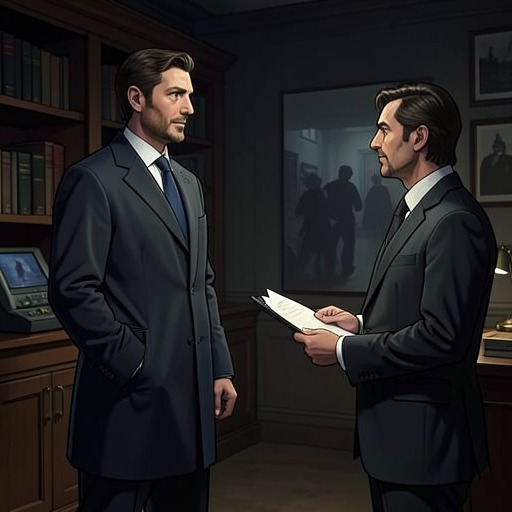
The Assistant Commissioner frames the choice as a question of strategy: reveal the facts and enlist millions of people in watching for the murderer, or work without alerting him to the police’s plans. The dilemma is sharpened by the fact that the letters have already drawn attention to the case deliberately. Publicity could help the search, but it would also enlarge the audience before which the killer performs.
Inspector Crome argues that making the case public would mean playing the murderer’s game. He identifies notoriety, rather than concealment, as the object: the killer wants to make a splash. Dr Thompson agrees with this assessment. The advance letters are thus not incidental warnings. They are part of a method for ensuring that the crimes are noticed and attributed to one self-advertising author.
A challenge addressed to Poirot
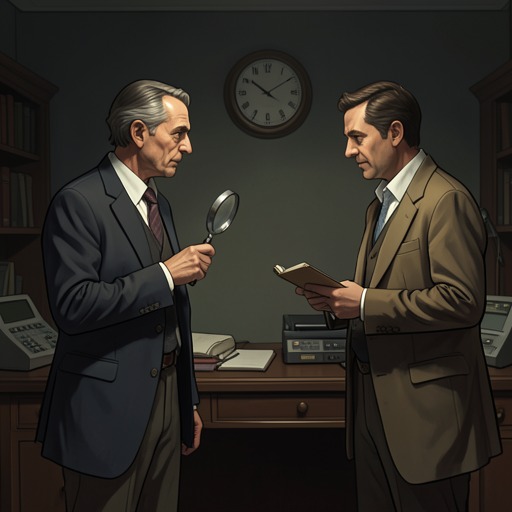
The publicity question is personal for Poirot because the challenge has been sent to him. He tells the Assistant Commissioner that he is an interested party: if he advises suppressing the letters, others may think concern for his reputation is driving him. Public disclosure, by contrast, could serve as a warning. Yet he shares Crome’s conviction that public attention is what the murderer desires. Poirot’s position makes the dilemma unusually exposed: the detective must weigh public safety and investigative advantage while knowing that the contest itself has been staged to include him.
Poirot’s questions extend beyond the attention-seeking letters to the murderer’s need to assert a personality. He considers whether the challenge reflects personal hatred of him, resentment toward a foreigner, or some other injury that might explain the choice of victims. The investigation therefore treats the publicity not simply as noise surrounding the crimes, but as evidence of the murderer’s self-conception and of the relationship he is trying to establish with his audience.
Publicity cannot guarantee restraint
The Assistant Commissioner asks what the murderer might do if denied the satisfaction of publicity. Dr Thompson predicts another crime, intended to force the authorities’ hand. But publishing the case could also lead to another crime: in Thompson’s view, publicity would feed the killer’s megalomania, while suppression would thwart it, and either response might produce the same immediate result. The police cannot assume that silence will end the performance, or that attention will make it easier to control.
Poirot offers a related psychological possibility. Each successful crime may double the murderer’s confidence: convinced that he is clever and the authorities cannot catch him, he becomes increasingly careless and overestimates his own intelligence while underestimating everyone else. Dr Thompson accepts this as a sound account. The craving for recognition may therefore carry its own risk for the killer: the more he succeeds in attracting attention, the more his confidence could erode the precautions that protect him.
From a quiet murder to a national spectacle
The contrast between the first murder’s reception and the later publicity shows how the campaign changes the scale of the case. The inquest into Alice Ascher’s murder receives only a brief report; the letter is not mentioned, the verdict is returned against a person or persons unknown, and the death of an old woman in a side street soon disappears beneath more sensational news. At this point, the public story has not yet caught up with the pattern the killer is making.
After Sir Carmichael Clarke’s murder, the case leaps into prominence. Newspapers fill their pages with reports and supposed clues, announce imminent arrests, publish photographs and interviews, and prompt questions in Parliament. Scotland Yard believes extensive publicity offers the best chance of catching the murderer, and the population of Britain becomes an army of amateur investigators. The Daily Flicker gives the campaign a memorable headline, “HE MAY BE IN YOUR TOWN!” Poirot’s letters are published and reproduced, and reporters repeatedly seek his comment. The murderer’s desire for an audience is answered on a scale that the first murder never achieved.
Attention beyond the investigation
The novel’s later circulation extends this public life of the case. Its 1935 serialization in the Daily Express appeared alongside a column of readers’ proposed solutions. One reader criticized Poirot’s use of the railway guide by comparing train schedules for reaching Churston; Charles Osborne notes that it was Hastings, not Poirot, who selected the midnight train. The episode illustrates how the guide that functions within the murderer’s campaign also invites readers to scrutinize the detective’s reasoning and compete in solving the puzzle.
A later television adaptation of The ABC Murders, with David Suchet as Poirot, was first shown on London Weekend Television on 5 January 1992. That broadcast belongs to the work’s afterlife rather than to the fictional police campaign, but it continues the movement from private crime to public attention. Across the story and its reception, publicity is both the murderer’s desired reward and a force the investigation and its readers must learn to interpret.