At the opening of the supplied story
The Dragonfly Song
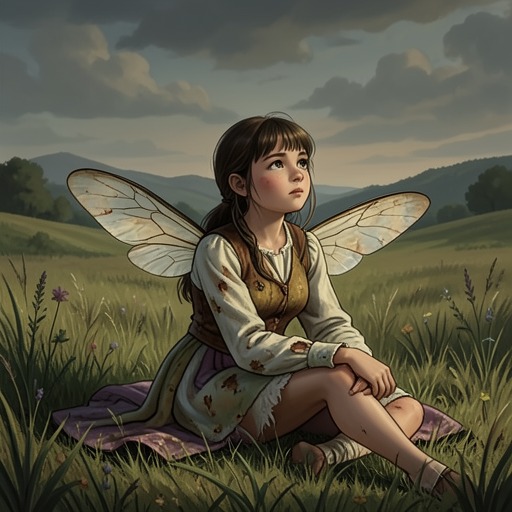
A white butterfly calls attention to the song of the dragonfly, whose celebration of summer and precious hours has moved [Maya](entity:character-recall-character-maya-ccfe93b60cb8). She bids farewell to the lake and flies inland, leaving the waterlilies and the dragonfly’s song behind.
The departure renews her wandering life away from the hive. The song’s gratitude for brief happiness echoes the wonder and uncertainty that will shape her encounters beyond home.
The next morning
Rain in the Bluebell
[Maya](entity:character-recall-character-maya-ccfe93b60cb8) wakes in a canterbury bell to the patter of rain, a sight she has never experienced. The cold and the dwindling pollen make her anxious, but the silver drops on the grass and flowers also fill her with wonder.
From her sheltered perch she watches the grassland waking. The weather turns her thoughts toward the security and familiar routines of the hive, where the rain would bring a quiet day of communal work.
That rainy morning
Longing for the Hive
[Maya](entity:character-recall-character-maya-ccfe93b60cb8) imagines the bees gathered safely together, tending their cells and feeding the young while the queen makes her rounds. She remembers the approval and protection that came with belonging to the community.
Alone in the rain, she sees more clearly the risks of life beyond the hive and wonders how she will eat if the bad weather continues. Even so, she takes pride in the experiences her independent journey has brought her.
Later that rainy morning
The Marching Ants
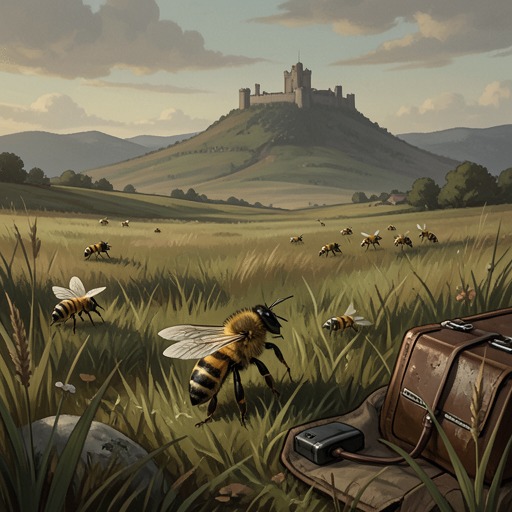
A troop of migrating ants passes through the grass singing about their brief lives and their talent for robbery. Their boldness and military bearing impress [Maya](entity:character-recall-character-maya-ccfe93b60cb8), whose curiosity draws her attention to the small society unfolding below her flower.
Their song fades beneath the leaves, where a grumbling beetle emerges from a hole. The encounter introduces Maya to [Bobbie](entity:character-recall-character-bobbie-907637830392) and to the comic, often harsh negotiations of life among strangers.
That morning
Effie Rejects Bobbie
[Bobbie](entity:character-recall-character-bobbie-907637830392) greets Effie with extravagant tenderness, but she refuses to go hunting with him. She says he misled her by letting her believe he was a rose-beetle when he is actually a tumble-bug, and she objects to his work and to the gossip their association might provoke.
Effie also invokes her recent widowhood and retreats into her hole. Bobbie is left bewildered and heartbroken, exposing the gap between his self-important romantic talk and the unvarnished realities of insect life.
Immediately after Effie leaves
Bobbie’s Forlorn Meal
[Bobbie](entity:character-recall-character-bobbie-907637830392) laments that Effie has rejected him, insisting that she ought to marry him despite her lack of feeling. [Maya](entity:character-recall-character-maya-ccfe93b60cb8) pities him as tears roll down his cheeks.
The sadness does not keep Bobbie from seizing and eating a small earthworm. When its two halves wriggle away in opposite directions, Maya is astonished; Bobbie treats their separation as an unalterable fact of fate.
That morning
Maya Meets Bobbie
[Maya](entity:character-recall-character-maya-ccfe93b60cb8) calls out from her bluebell, and [Bobbie](entity:character-recall-character-bobbie-907637830392) demands to know where the voice is coming from. She identifies herself as a bee, while carefully avoiding any reminder that she overheard his conversation with Effie.
Bobbie props himself up on a buttercup stem so they can see one another and introduces himself as a rose-beetle. Maya knows that this is false, but spares him the embarrassment and lets him keep the pretense.
That morning
Bobbie’s Fall
[Maya](entity:character-recall-character-maya-ccfe93b60cb8) teases [Bobbie](entity:character-recall-character-bobbie-907637830392) about the hole beneath the leaf, and his effort to appear unconcerned sends him tumbling onto his back. Unable to right himself, he panics and cries that he is doomed.
Maya flies through the rain to bend a blade of grass within his reach. Bobbie pulls himself along it and turns over, then credits his own presence of mind rather than her help. A field sparrow arrives before Maya can continue their conversation, and Bobbie disappears.
The following morning
A Sunlit Morning
After the rain, [Maya](entity:character-recall-character-maya-ccfe93b60cb8) wakes in the safe, dry hole she has made in a tree. She has sealed part of the entrance with wax and hidden a small store of honey for difficult days.
The bright morning restores her appetite for adventure. Certain that she will meet a human being, she flies out into the busy, joyful world of insects.
That sunny day
The Hopping Grasshopper
Near a clover flower, [Maya](entity:character-recall-character-maya-ccfe93b60cb8) meets a thin green grasshopper whose powerful hind legs send him springing away and back in astonishing leaps. He teases her about laying eggs and mistakes her for a wasp, provoking her indignation.
Their misunderstanding becomes a lively contest of manners and assumptions. Maya insists on her identity as a bee, while the grasshopper treats the distinctions she values as unimportant.
During their conversation
The Grasshopper’s Argument
The grasshopper defends hopping as a rare and impressive skill, boasting about contests and extraordinary leaps. [Maya](entity:character-recall-character-maya-ccfe93b60cb8) dismisses hopping as a lesser interest than flight, but his confident performance makes her laugh despite herself.
He also gives her his irreverent view of humans: their sounds are crude, and their apparent language is uncertain. His claims leave Maya entertained but unconvinced, and sharpen her desire to judge humanity for herself.
Later that day
Puck on the Leaf
In the shade of a chestnut tree, [Maya](entity:character-recall-character-maya-ccfe93b60cb8) meets a restless fly named [Puck](entity:character-recall-character-puck-218506ed4131). He calls her a simpleton, and her anger briefly gets the better of her: she seizes him and threatens to sting him.
Puck begs for his life and promises to tell her what he knows about humans. Maya releases him, though his arrogance has already made her wary of taking his judgments at face value.
During the same afternoon
Puck’s Human World
[Puck](entity:character-recall-character-puck-218506ed4131) describes growing up inside a human home, where he learned about rooms, mirrors, statues, and the daily habits of its inhabitants. He regards humans as ordinary and insists that flies are the world’s most important creatures.
His account of teasing a sleeping man for sport leaves [Maya](entity:character-recall-character-maya-ccfe93b60cb8) unimpressed. Still, she recognizes that experience can correct a first impression and asks how an insect might safely enter a human house.
At the end of Maya’s conversation with Puck
A Way Into the House
[Puck](entity:character-recall-character-puck-218506ed4131) advises [Maya](entity:character-recall-character-maya-ccfe93b60cb8) to enter when a window is open and to find the light if she loses her way indoors. She parts from him without accepting his careless attitude toward humans.
Maya’s wish to understand people remains strong, but she carries with her both Cassandra’s idealized account of their kindness and Puck’s irreverent doubts. The conflicting stories make her cautious about approaching them.
Later in the summer
Caught in the Web
Flying through a garden toward the jasmine, [Maya](entity:character-recall-character-maya-ccfe93b60cb8) suddenly finds her wings and legs bound by fine, sticky threads. She recognizes that she has blundered into a spider’s web and struggles in terror, only making herself more entangled.
A nearby butterfly mourns her fate but does not help. Maya remembers Cassandra’s warning that a bee caught by a spider is in mortal danger, and the approaching spider makes the threat immediate.
Moments after Maya is trapped
Thekla’s Deception
The spider [Thekla](entity:character-recall-character-thekla-3f3b6bfe10e1) approaches [Maya](entity:character-recall-character-maya-ccfe93b60cb8) and pretends that she intends to free her. Maya apologizes for damaging the web and, believing the offer, stays still while Thekla spins fresh thread around her.
Once Maya is immobilized, Thekla reveals her intention to let the bee weaken before sucking her blood. She drags her captive into the shade, leaving Maya to face a slow death in the web.
Soon after Maya is bound
Bobbie Rescues Maya
[Maya](entity:character-recall-character-maya-ccfe93b60cb8) hears [Bobbie](entity:character-recall-character-bobbie-907637830392)’s familiar call below and summons him for help. He boasts about his strength, then breaks the supporting thread so they both fall to the ground, where he begins to unwrap her.
When [Thekla](entity:character-recall-character-thekla-3f3b6bfe10e1) protests that he is stealing her prey, Bobbie threatens to destroy the entire web. The spider retreats, and Bobbie frees Maya’s wings and legs. After drinking jasmine nectar, Maya flies again, grateful for the beetle who once seemed only a boastful stranger.
After the spider encounter
A More Cautious Maya
The ordeal gives [Maya](entity:character-recall-character-maya-ccfe93b60cb8) a new reason to pause before rushing into danger. In quiet moments she thinks about Cassandra’s warnings and the many risks that remain in the vast world.
Yet when morning brings sunshine, her longing for experience usually overcomes her caution. Her growing knowledge does not end her wandering; it changes how seriously she understands its hazards.
One day after the spider encounter
The Stink Bug
[Maya](entity:character-recall-character-maya-ccfe93b60cb8) tries to make conversation with a flat, motionless insect on a raspberry leaf. The stranger barely responds and leaves behind a foul-smelling drop, revealing itself as a stink bug.
A white butterfly named Fred explains that the insect uses its odor to ensure that others remember it. Maya’s curiosity has earned her an unpleasant lesson in how very different creatures seek attention.
During Maya’s conversation with Fred
Fred’s Transformation
[Maya](entity:character-recall-character-maya-ccfe93b60cb8) admires Fred’s white wings and is astonished when he tells her that he once lived as a caterpillar. He describes becoming a pupa and emerging into sunlight as a butterfly.
His account of folded wings unfolding in warmth resonates with Maya’s own memory of leaving the hive. They share a sense that sunshine can make life feel newly possible, even though Fred’s freedom has made him reluctant to settle anywhere.
Later in the summer
Fridolin’s Family
[Maya](entity:character-recall-character-maya-ccfe93b60cb8)’s acquaintance with Fridolin, a bark-boring beetle, introduces her to the damage his kind can do to trees. He is proud of his many sons, each established in a separate tunnel in the pine where they live.
Fridolin’s industriousness sits uneasily beside the harm his tribe can cause: a large infestation can destroy a tree by cutting through the tissues that carry its sap. Maya begins to appreciate that even small creatures can wield enormous power.
During the windy day in the pine
The Woodpecker’s Tongue
Fridolin explains that a woodpecker can reach insects hidden deep in their tunnels with a long, barbed, sticky tongue. He tells [Maya](entity:character-recall-character-maya-ccfe93b60cb8) how a cousin was pulled from a passage and eaten.
The account frightens Maya, who realizes that a creature need not enter a home physically to make its inhabitants vulnerable. Fridolin’s story gives the forest’s familiar tapping a newly ominous meaning.
During the same windy day
Hannibal Arrives
A long-legged spider named Hannibal climbs the pine, balancing his round body on delicate legs. Fridolin treats him as a learned and harmless visitor, and [Maya](entity:character-recall-character-maya-ccfe93b60cb8), despite remembering [Thekla](entity:character-recall-character-thekla-3f3b6bfe10e1), agrees to speak with him.
Hannibal’s appearance fascinates Maya, who admires how useful his spindly legs are. Their conversation turns from his unusual body to the more painful story of how he lost one of those legs.
During Maya’s conversation with Hannibal
Hannibal’s Lost Leg
Hannibal says a human grabbed him by the leg while he was hunting near a lamp. The leg broke off, allowing him to escape, while the detached limb continued twitching on the human’s paper.
[Maya](entity:character-recall-character-maya-ccfe93b60cb8) doubts that a severed leg can move by itself, and Hannibal takes her question as an insult. When he becomes hostile, she calmly reminds him that she is a bee; Hannibal retreats down the tree, warning her that she will one day be in trouble herself.
As summer continues
Loneliness in the Woods
[Maya](entity:character-recall-character-maya-ccfe93b60cb8)’s travels bring her pleasure and knowledge, but also homesickness and a wish for dependable companionship. Though she is no longer a young, inexperienced bee, she still feels driven to understand human beings before returning to the hive.
She has seen people only at a distance, and their apparent power and intelligence continue to occupy her imagination. Her longing to know humanity becomes the last great question keeping her from home.
During one of Maya’s wanderings
The Sleeping Child
[Maya](entity:character-recall-character-maya-ccfe93b60cb8) mistakes a flash of red beside a brook for flowers and discovers a sleeping child. The child’s golden hair and peaceful face make humanity seem beautiful and gentle to her.
A mosquito arrives, boasts that it has stung the child, and dismisses Maya’s admiration. Maya cannot bear to watch the insect feed again, and flees with renewed confusion about whether humans deserve the reverence she has given them.
Immediately after the child encounter
The Mosquito’s Challenge
The mosquito says that people resist being bitten and mocks [Maya](entity:character-recall-character-maya-ccfe93b60cb8)’s belief that they are good. Maya admits how little she knows, but defends the reciprocal relationship between bees and humans.
She recalls Cassandra’s warning that a bee who stings a human will die. The encounter leaves her unable to reconcile the child’s beauty with the mosquito’s boldness or her own fear of approaching people.
One warm night in midsummer
The Moonlit Awakening
[Maya](entity:character-recall-character-maya-ccfe93b60cb8) wakes to a blue radiance filling her tree hollow. Outside, moonlight silvering the leaves and grass reveals a world she has never seen, while a clear, strange music seems to come from the night itself.
Drawn from her shelter, she realizes that she is seeing the moon and stars for the first time. The nocturnal landscape makes the familiar meadow feel newly mysterious and opens the way to an encounter unlike any in her daytime travels.
That midsummer night
The Snowy Tree Cricket
[Maya](entity:character-recall-character-maya-ccfe93b60cb8) finds a snowy tree cricket making the silvery music. The cricket explains that it lives by night and delights in the beauty of a midsummer evening, while admitting that words cannot explain everything the music expresses.
Maya listens quietly, then flies to the moonlit brook. The cricket’s acceptance of mystery helps her feel that experience need not always be translated into certainty.
Later that midsummer night
The Flower Sprite
Beside the brook, a tiny, luminous humanlike being rises from an iris flower. It unfolds white wings and sings of a soul renewed through beauty and creation, moving [Maya](entity:character-recall-character-maya-ccfe93b60cb8) to tears.
The sprite introduces himself as a flower-sprite and listens kindly as Maya tells him about her wandering and her desire to understand humans. His gentleness makes her feel understood in a way she has rarely experienced.
During their first conversation
The Sprite’s Seven Nights
The sprite explains that flower-sprites live seven nights and must remain in the flower where they are born or die at dawn. He has already left his flower, but describes the transformation of sprites into dew and their eventual return through the life of plants.
He also tells [Maya](entity:character-recall-character-maya-ccfe93b60cb8) that a sprite who leaves a flower to make another creature happy can grant the dearest wish of the first being encountered. Maya, moved by the prospect of helping someone, does not at first realize that she is that first encounter.
Before dawn on Midsummer Night
Maya’s Wish
The sprite asks [Maya](entity:character-recall-character-maya-ccfe93b60cb8) to name her dearest wish. She hesitates, believing she may not deserve such kindness, but finally admits that she wants to see human beings at their best and most beautiful.
He promises that the wish will be granted and takes her hand. The promise transforms her long-running curiosity into a shared journey, though the sprite’s short life makes their time together precious.
During the journey before dawn
The Moonlit Moth
Flying with [Maya](entity:character-recall-character-maya-ccfe93b60cb8), the sprite stops to speak with a large dark moth marked with blue. Maya admires its beauty, and the moth seems quietly touched by her praise, since others have called it dull beside the butterfly.
The sprite asks whether the bat is abroad, and the moth confirms that it has gone to rest. Maya does not learn what a bat is before the sprite hurries her onward, but her open admiration gives the moth a new way to regard itself.
Later that night
The Firefly’s Light
At a jasmine arbor, the sprite asks a firefly to light their way through the dark leaves. He wraps himself in foliage and hides his glowing garments so that the humans inside will not see him and be frightened.
As they climb the vine, [Maya](entity:character-recall-character-maya-ccfe93b60cb8) asks whether people dream. The sprite explains that humans also dream while awake, imagining something more beautiful than ordinary life, and that sprites appear to them in dreams.
Just before dawn
The Lovers in the Arbor
From behind the jasmine, [Maya](entity:character-recall-character-maya-ccfe93b60cb8) sees a boy and girl sitting together beneath the moon. Their stillness, tenderness, and private exchange of affection seem to Maya more beautiful than anything she has ever witnessed.
She decides that humans are most beautiful when they are in love. Lost in watching them, she does not notice that the firefly’s light has gone out and the sprite has disappeared as dawn approaches.
At dawn after Midsummer Night
The Sprite’s Disappearance
[Maya](entity:character-recall-character-maya-ccfe93b60cb8) turns from the lovers and sees the red line of dawn across the horizon. The sprite is gone, and she understands that their meeting has reached its end with the night.
She carries the experience back to her woodland home, where it seems at first like a dream. The encounter has answered her deepest question, but it has also left her with a revelation she has no companion nearby to share.
The next day
Alois the Poet
Feeling alone with the memory of the night, [Maya](entity:character-recall-character-maya-ccfe93b60cb8) wanders into the woods and meets Alois, a seven-spotted ladybird who calls himself a poet. He recites a poem about being gripped by a human finger and asks Maya to judge its artistic merit.
Maya tries to be polite but misunderstands what he wants from her. Alois declares himself satisfied with her praise and departs, leaving Maya to turn her attention back to the field and its playing butterflies.
Later that day
Thomas’s Warning
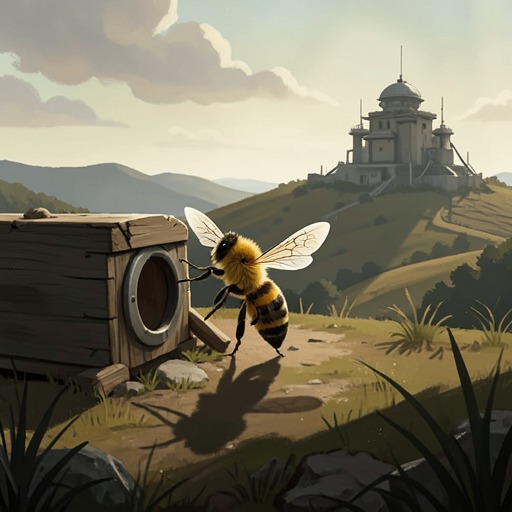
Near an old water-butt, [Maya](entity:character-recall-character-maya-ccfe93b60cb8) meets Thomas, a many-legged millepede who introduces himself as a born doubter. He warns her that a hornet stronghold lies in an old nesting box beside a willow.
Before Maya can escape, a hornet catches her by the neck. Thomas tumbles into the water-butt, leaving Maya in the attacker’s grip as she is carried toward the fortress.
That afternoon
Maya in the Fortress
[Maya](entity:character-recall-character-maya-ccfe93b60cb8) regains consciousness in a dark, foul-smelling chamber inside the [Hornet fortress](entity:location-recall-location-hornet-fortress-30df65520c37). The floor is scattered with dead insects, including bees, and the sight makes the danger of her captivity undeniable.
Through a crack in the wall she sees the hornets gathered around their queen. Their meeting reveals that an attack on the bee city is planned for one hour before dawn, with orders to plunder the hive and capture Queen [Helen VIII](entity:character-recall-character-helen-viii-3a09cd7bacc4) alive.
That night
The Invasion Plan
The hornet queen orders her warriors to attack the bee city at dawn and promises a knighthood to whoever captures [Helen VIII](entity:character-recall-character-helen-viii-3a09cd7bacc4). [Maya](entity:character-recall-character-maya-ccfe93b60cb8) understands that her people will be taken by surprise while they sleep.
Grief gives way to resolve. Maya realizes that she may die regardless, but can still try to warn her people and repay the hive for the home she abandoned.
Late that night
The Escape Begins
After a guard passes, [Maya](entity:character-recall-character-maya-ccfe93b60cb8) bites away at the brittle wall until she can squeeze from her cell into the hall. She creeps toward the moonlit entrance, hiding close to the shadows.
A sentinel stands in the doorway, apparently lost in thought. Maya sees that he has noticed her and realizes that her chance of slipping out unseen has vanished.
Just before dawn
The Sentinel’s Mercy
The sentinel calls [Maya](entity:character-recall-character-maya-ccfe93b60cb8) over and calmly admits that he watched her escape attempt. He says his duty is to keep bees who enter the fortress from leaving alive, but his sadness over a lost love has made him hesitate.
When Maya recognizes [Loveydear](entity:character-recall-character-loveydear-69e0aebf962f) as a dragonfly she knows, she uses that knowledge to bargain for her freedom. The sentinel promises to let her go if she tells him where to find Loveydear, and Maya gives him the location of the waterlilies by the lake.
At dawn
Maya Leaves the Fortress
The sentinel believes [Maya](entity:character-recall-character-maya-ccfe93b60cb8)’s directions and steps aside. He keeps his word, allowing her to fly out of the fortress even though he remains loyal to his people.
Maya wastes no time on thanks: the coming attack makes every moment precious. She launches toward the bee city, relying on instinct and homesickness to guide her through the cold, misty dawn.
At dawn on the planned attack day
The Flight Home
[Maya](entity:character-recall-character-maya-ccfe93b60cb8) flies over the woods, struggling with the cold and with her unfamiliarity with the route home. Remembering her duty to the hive gives her strength, and the familiar lindens of the castle park finally appear through the mist.
She sees the colored entrances of the bee city and heads for the red portal. Her return is both a desperate warning mission and a homecoming she had once thought she might never make.
Shortly before the attack
Maya Reaches the Queen
The sentinels initially try to drive [Maya](entity:character-recall-character-maya-ccfe93b60cb8) away because bees may not enter another city without the queen’s permission. When she gives the password, they recognize her as one of their own and escort her to the royal chambers.
Maya tells [Helen VIII](entity:character-recall-character-helen-viii-3a09cd7bacc4) that the hornets are coming. She asks forgiveness for abandoning her duties, but the queen puts immediate defense first and praises Maya for bringing the warning in time.
Just before sunrise
The Queen’s Orders
[Helen VIII](entity:character-recall-character-helen-viii-3a09cd7bacc4) orders her officers to mobilize the hive and prepare its defenses. She tells [Maya](entity:character-recall-character-maya-ccfe93b60cb8) that the warning has saved the bees and urges the exhausted messenger to rest.
As Maya is taken to recover, the hive fills with signals, officials, and marching soldiers. The queen’s composure and the bees’ swift obedience turn alarm into organized preparation.
Before the hornets arrive
The Hive Prepares
The bee kingdom mobilizes without confusion. Scouts report that the hornets are approaching, soldiers take up positions in ranks, and wax-generators narrow the entrance with strong partitions.
[Helen VIII](entity:character-recall-character-helen-viii-3a09cd7bacc4) plans to let the attackers enter in small numbers before ordering a counterattack. The bees know they face a stronger enemy, but their discipline and unity give them a chance to divide the hornets’ force.
At dawn
The Hornets Enter
A returning scout reports that the hornets are near and that others have been killed. The queen holds her nerve as the enemy reaches the entrance and assumes the hive is asleep.
[Hornets](entity:creature-recall-creature-hornets-f3e657636067) begin entering one by one, followed by a larger force. [Helen VIII](entity:character-recall-character-helen-viii-3a09cd7bacc4) waits until they have committed themselves, then gives the order to defend the realm, and the bees surge into battle.
During the dawn attack
The Battle in the Hive
The fighting becomes a mass of struggling bodies in the hive’s dark corridors. A young bee officer dies in the first clash, but his sacrifice inspires the defenders as they use their numbers and the narrow entrance to isolate the invaders.
The hornets are stronger and their stings wreak terrible damage, yet their venom weakens with use. The bees continue to fight for one another, gradually exhausting and killing the trapped attackers.
Later that morning
The Hornets Withdraw
The battle subsides, and the hornets outside realize that the warriors who entered the hive are dead. Their leader debates whether to continue the attack, but the loss of half his force makes retreat the only sensible choice.
He sends a messenger to ask for the prisoners’ return. [Helen VIII](entity:character-recall-character-helen-viii-3a09cd7bacc4) replies that there are no prisoners, only dead invaders, and refuses to trust the hornets’ promise not to return. The surviving attackers collect their dead and leave without honey or captives.
By midday after the battle
The Cost of Victory
The bees have won, but twenty-one of them are dead and many others are wounded. The hive tends its injured, disposes of its dead, and resumes its ordinary work before noon.
Their quiet return to duty reflects the same collective discipline that carried them through the battle. Victory brings neither celebration nor an escape from grief; each bee bears pride and sorrow privately while serving the community.
During the battle
Maya Comforts a Dying Hornet
A wounded young hornet officer falls near [Maya](entity:character-recall-character-maya-ccfe93b60cb8) while fighting a mass of bees. She sees him still breathing after the defenders move on and offers water and honey, though he refuses to accept gifts from an enemy.
The officer says he must die and soon does so without pleading for mercy. His death makes Maya recognize that her enemies love life and suffer as individuals, too, complicating the simple division between her people and the hornets.
After the battle
Maya’s Account to the Hive
[Helen VIII](entity:character-recall-character-helen-viii-3a09cd7bacc4) summons [Maya](entity:character-recall-character-maya-ccfe93b60cb8) before the assembled court. Maya tells how she learned of the invasion and escaped, recounting her encounters with [Bobbie](entity:character-recall-character-bobbie-907637830392), [Thekla](entity:character-recall-character-thekla-3f3b6bfe10e1), [Puck](entity:character-recall-character-puck-218506ed4131), the flower-sprite, and the lovers she saw beneath the moon.
The court listens closely, especially to the sprite’s song and the story of the hornet fortress. Maya’s experiences beyond the hive, once a cause for separation, become knowledge that her people can share and value.
At the end of the court hearing
Maya Is Pardoned
[Maya](entity:character-recall-character-maya-ccfe93b60cb8) asks [Helen VIII](entity:character-recall-character-helen-viii-3a09cd7bacc4) for forgiveness for leaving the hive. The queen tells her that her loyalty endured and that her warning has repaid her earlier desertion many times over.
Helen VIII pardons Maya and appoints her to remain at her side, helping conduct the affairs of state. The wandering bee’s hard-won knowledge is thus turned toward the welfare of the community she once left behind.
After the battle and in the years that follow
Maya’s New Place
[Maya](entity:character-recall-character-maya-ccfe93b60cb8) becomes a respected and beloved member of the bee community, where her experiences help serve the nation. She sometimes visits Cassandra, now living on pension honey, and shares her adventures with younger bees.
Her return does not erase the freedom and discovery of her years outside the hive. Instead, the knowledge gained through wandering finds a new purpose in service, joining independence to belonging.