Mona Mars's concealment at Realito
The Big SleepMona Mars’s concealment at Realito is a staged disappearance designed to make her seem to have fled with Rusty Regan. Eddie Mars hides her in a foothill house and assigns Lash Canino to guard her, using the apparent affair as cover for Regan’s unexplained absence. The arrangement redirects suspicion, keeps a deeper secret from the police, and shows how an invented account can gain force when a person’s location and the available evidence are controlled.
Purpose and Background
Mona’s hiding place matters because Regan has disappeared and Eddie has a reason to keep the police from learning where Regan went or why. As Philip Marlowe later explains to Vivian Regan, Eddie knows that people already associate him with bad blood between himself and Regan. By hiding Mona and placing Canino with her, Eddie encourages the inference that she left with Regan, making the disappearance look like a private elopement rather than a matter requiring further investigation.
The ruse is not merely an effort to keep Eddie from being suspected of murder. Marlowe’s reconstruction is that Eddie knew where Regan had gone and wanted to prevent the police from finding out. A convincing explanation for Regan’s absence could keep them satisfied without disclosing the underlying reason or destination. Eddie’s use of Mona therefore serves a larger purpose: it turns a concealed fact into a plausible story that can defer scrutiny.
The Hideout and Its Discovery
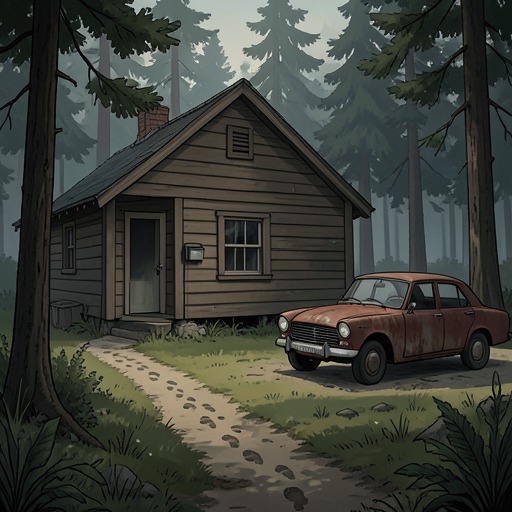
The route to the hideout becomes part of the evidence. Harry Jones recounts that he and Agnes Lozelle saw Mona riding with Canino in a brown coupe on Foothill Boulevard. Agnes recognized her as Eddie’s wife; Jones identifies Canino as the short, dark man accompanying her. They followed the coupe as it turned onto a road toward the foothills, near a garage and paint shop run by Art Huck. Beyond the garage stood a frame house, with a cyanide plant farther along the foothills.
Jones and Agnes watched the house from the road. After the coupe turned in and did not reappear, Jones approached the property after dark and saw lights on inside, a radio playing, and the coupe parked outside. This account supplies Marlowe with a possible location, but not certainty that Mona is still there: he warns Agnes that the occupants may have moved since the observation. The information is both concrete and time-sensitive, acquired through surveillance and sold to Marlowe rather than obtained through an official search.
Marlowe follows the lead to Realito, where the Cypress Club stands in an old, sprawling mansion amid Monterey cypresses. The club’s outwardly shabby appearance and its distance from ordinary city streets mark a shift from public visibility to controlled access. The hideout itself is about forty miles from Los Angeles, as Jones describes it, and its isolation makes the staged absence harder to test. The place functions not simply as a refuge but as a component of the deception: Mona’s removal from view allows an apparent flight to stand in for evidence of where she has gone.
Concealment, Protection, and Risk
Mona herself recognizes the consequence of the arrangement. When Marlowe reaches her, she asks why he has come and points out that, had she not hidden there, the police would have been certain Eddie murdered Regan. Her words show that the ruse has worked as intended: by separating Mona from public view and associating her with Regan, the arrangement makes Eddie’s possible responsibility appear less obvious. Marlowe answers that Eddie did murder Regan, directly contradicting the cover story that her hiding place has helped sustain.
The concealment also places Mona in a dependent position. Canino guards her, and her location is known to people who can use it as leverage. Agnes and Jones turn their knowledge into a sale: Jones asks Marlowe whether he would pay to learn where Eddie’s wife is, and Agnes agrees to disclose the location when the money is in hand. Information about Mona thus circulates through the same compromised network of watchers, protectors, and intermediaries that makes her disappearance possible.
Eddie’s account, later described by Captain Gregory, is that he knew Canino as a reliable protection man and had hired him for protection, while claiming not to know his criminal “hobbies.” Gregory says Eddie admitted hiding his wife at Realito and arranging for Canino to guard her. This account distinguishes Eddie’s acknowledged actions from the more expansive explanation Marlowe gives Vivian: the concealment is admitted, but Eddie’s purpose and knowledge remain matters of interpretation within the investigation.
What the Cover Story Conceals
Marlowe’s explanation links Mona’s staged disappearance to a wider struggle over what the police will know. He tells Vivian that Eddie used her apparent departure with Regan to keep the authorities from discovering where Regan had gone. Marlowe also says Eddie put Regan’s abandoned car in the garage at the place where Mona had been living. The car and the hidden wife reinforce one another as planted circumstances, encouraging a conclusion about flight while diverting attention from the undisclosed facts.
The concealment exemplifies the novel’s concern with the difference between an event and its public account. In another case, Marlowe withholds parts of his story from Captain Cronjager, while the next morning’s newspapers publish a version of the earlier killings that leaves out key connections. Here, too, the truth does not become publicly available simply because someone has found a clue. The apparent evidence can be arranged to support a false explanation, and access to the real location depends on private knowledge and bargaining.
Mona’s concealment at Realito is therefore both a physical hiding and a managed narrative. A guarded foothill house, a sighting on a road, and a car left in a garage help convert absence into the appearance of elopement. Marlowe’s account to Vivian exposes the purpose of that construction: not simply to shelter Mona, but to keep the explanation of Regan’s disappearance under Eddie’s control.