Realito
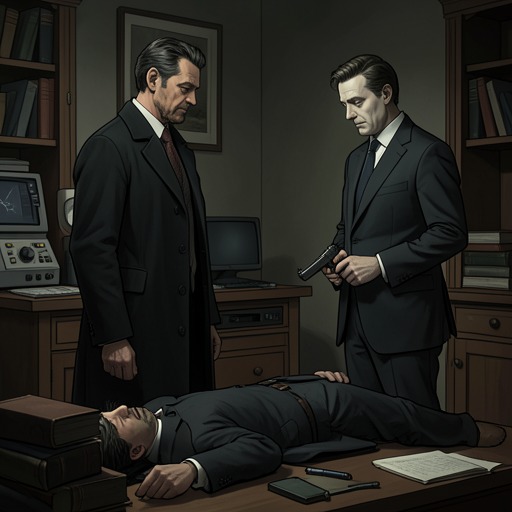
The Big SleepRealito is a small town north of Los Angeles, encountered on the rain-soaked road to a frame house where Mona Mars is being kept under the watch of Lash Canino. Its position between the city, orange-growing country, and bare foothills gives it a practical role in the investigation: it is a recognizable threshold on the route to a hidden place, but its surrounding roads and rural properties also make pursuit and concealment possible.
Setting and Approach
The novel first identifies Realito through the account of Agnes Lozelle, who describes following Mona and Canino’s brown coupe along Foothill Boulevard and toward a road near the town. From there, the route leads to a small garage and paint shop run by Art Huck, with a frame house beyond it. Agnes reports that she and Joe Brody watched the house from the road; the lights were on, a radio was playing, and the coupe stood outside. Her account places Realito not at the center of the hideout itself but close enough to serve as a landmark on the way to it.
Marlowe drives north through Pasadena and into orange groves during a heavy rain. The highway passes a small town of packing houses, sheds, and railway sidings before climbing toward the foothills. Two yellow vapor lights and a neon welcome sign identify Realito in the darkness. The town’s shops, drugstore, movie theater, and bank briefly interrupt the open agricultural landscape; beyond it, empty fields and the dark foothills close in again.
Realito and the Hideout
About a mile beyond Realito, Marlowe’s car gets two flat tires after striking heavy galvanized tacks scattered near the road’s edge. He notices a yellow light on a side road and infers that it may lead to Art Huck’s garage. There he confirms the name on the building, sees light beneath the closed doors, and spots a brown coupe in the drive of the frame house nearby. The journey has changed from a drive through public, legible places into a cautious approach to a secluded property associated with Canino.
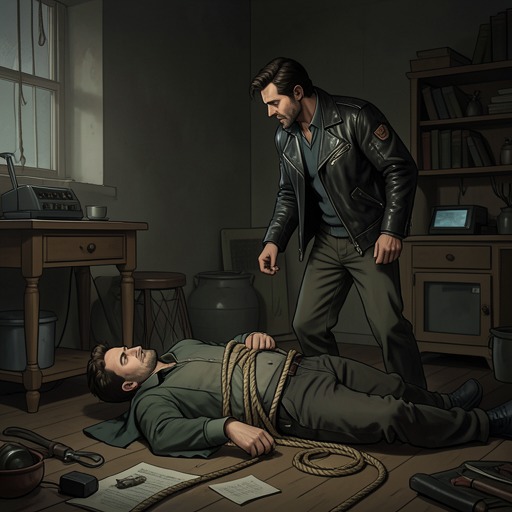
The garage and house sit in a sparse foothill setting, with the garage showing the highway only a blank side wall and the house set back behind trees. This arrangement makes the location useful for secrecy: a passing traveler would not readily see what lay beyond the roadside. The flat tires and concealed weapons compartment in Marlowe’s car also make the approach a point of immediate danger, linking the route through Realito to the confrontation that follows at the hideout.
Narrative Significance
Realito connects the metropolitan investigation to a more isolated terrain where the usual city landmarks and lines of observation fall away. The route from Los Angeles passes through Pasadena, orange groves, a working town, and finally open fields and foothills; each shift moves Marlowe farther from ordinary public space and closer to a place controlled by Canino. The town’s sign offers a clear name in the darkness, but it does not resolve the uncertainty beyond it: the decisive location lies off the highway, behind the garage and the frame house.
Realito therefore functions as both a geographic marker and a narrative threshold. It situates the search for Mona Mars within a specific rural corridor, while the nearby hideout turns that corridor into a passage toward concealed power and violence. The contrast with the Sternwood estate’s cultivated grounds and visible oilfield wealth is telling: here the landscape is less an emblem of inherited status than a network of roads, work sites, and secluded buildings through which people can be followed, hidden, or ambushed.