
The Making of Blue-Eyed Beauty
The Bluest EyeThis flow traces how white-centered images teach a child to treat blue eyes as the condition for beauty, belonging, and even safety.
increasing Bearing strength in each event
 decreasing
Bearing strength in each eventdecreasingThe Primer’s Perfect House
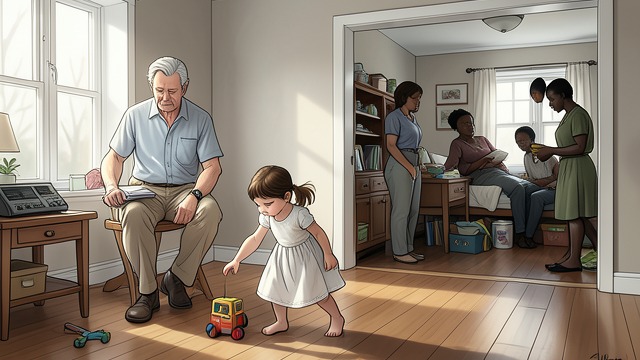
A House Made into a Standard
The Primer’s promise
The opening repeats an idealized family scene: a neat house, a happy family, and a girl repeatedly invited to play. As punctuation and spacing disappear, the cheerful lesson turns into an oppressive chant. The form makes the primer’s world feel less like one possible life than a standard that insists on its own universality.
The measure of exclusion
Against the MacTeer household’s cold, crowded rooms and the Breedlove storefront, the primer’s comfort acquires racial and economic force. Its tidy happiness offers no place for the children whose lives do not resemble it. The contrast establishes a central question: who gets to be recognized as beautiful, lovable, and at home?
The primer is not merely a children’s text in this narrative. It is one mechanism by which a narrow image of family and beauty becomes ordinary, and against which the later longing for Blue eyes takes shape.
The Unwanted Doll
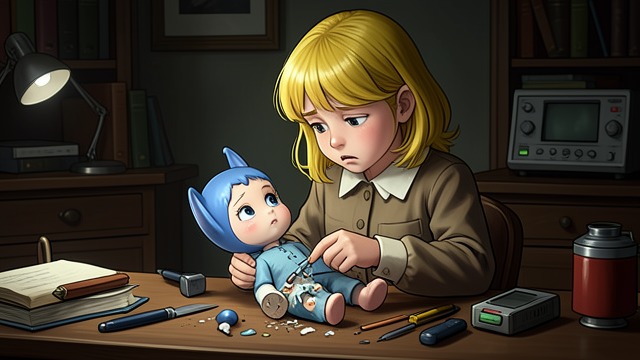
A Gift That Teaches
The doll as instruction
Claudia receives blue-eyed, yellow-haired dolls as if adults already know what every girl should desire. Instead of feeling affection, she studies their faces and dismantles them, trying to locate the charm that everyone else seems to recognize. Her response exposes the gap between the public declaration of beauty and a child’s uncoerced experience.
Desire displaced
The doll’s importance lies not only in its appearance but in the social agreement surrounding it: adults, shops, and popular images all treat it as naturally lovable. Claudia’s impulse to destroy it becomes an attempt to test that agreement, though she does not yet understand the forces behind it.
Her later accommodation to the same standards does not mean those standards become true. The episode shows how a child can resist an imposed ideal and still be gradually trained to participate in it.
Mary Jane’s Sweetness
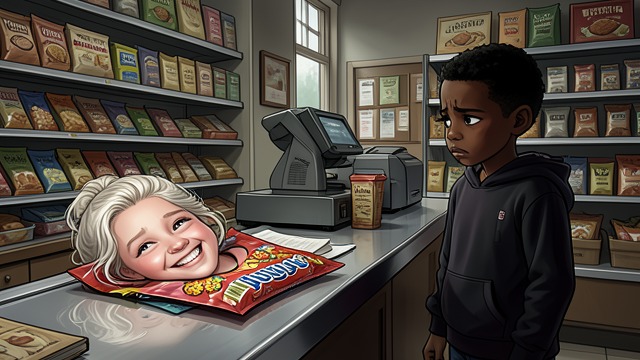
Consuming an Image
The candy wrapper
At the grocery counter, the storekeeper’s refusal to meet the child with ordinary human recognition deepens her sense of racial exclusion. Outside, the candy’s wrapper presents a smiling white girl with blond hair and blue eyes. Its image offers a portable version of the comfort and approval denied in the encounter at the counter.
A private identification
The child eats the candy and imagines that consuming it lets her consume the pictured girl’s beauty. The moment is intimate and painful: a commercial image becomes a temporary route toward a self she believes the world would welcome. What appears to be pleasure also records how thoroughly the standard has entered her imagination.
The scene turns an everyday purchase into evidence of a social hierarchy. Its force comes from the contrast between the image’s easy invitation and the storekeeper’s actual dismissal.
The Prayer for Blue
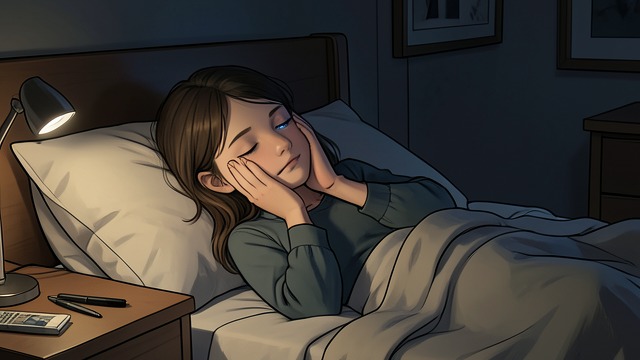
Beauty as Rescue
A wish repeated
After encounters with rejection at school and in public, Pecola’s belief that beautiful eyes could make life different gathers into a nightly prayer. Blue eyes become more than a preference: she imagines they might change the way her parents treat her and prevent the cruelty that surrounds her.
The narrowing of possibility
The wish gives her a way to explain suffering without naming the systems and family conditions that produce it. If her appearance is the problem, then a miraculous alteration seems like a solution. That logic leaves the surrounding world unchallenged while making the child responsible for becoming acceptable to it.
The prayer therefore marks both longing and danger. The beauty ideal promises recognition, but its promise directs her hope away from the possibility that she already deserves recognition as she is.
The Unseen Miracle
Fulfillment Without Recognition
The false gift
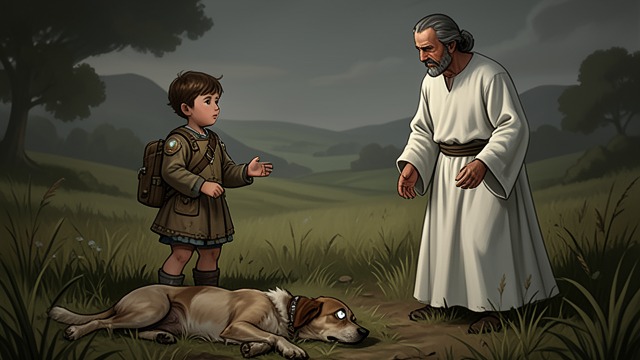
Soaphead Church arranges the death of an old dog and frames its behavior as a divine sign that the child’s wish has been granted. The supposed miracle gives the longing an answer while concealing the violence and manipulation behind it. No outward change occurs, but the child is left with a new explanation for the world’s silence.
A private standard made absolute
In the final conversations, the child insists that her eyes are blue and searches other people for proof that they are the bluest. The imagined transformation does not restore social belonging; instead, the belief isolates her further and becomes the structure through which she interprets every encounter.
The ending reveals the cruelty of treating beauty as the price of love. The delusion supplies momentary coherence, but it cannot alter the community that taught the child to want another face.
At the novel’s opening, before the 1941 autumn scenes
During Claudia’s early childhood, before Pecola’s first stay with the MacTeers
During Pecola’s 1941 autumn walk to Yacobowski’s store
During the winter section, as the child’s nightly wish becomes habitual
Near the end, after the child visits Soaphead Church
