
The Gaze That Makes a Child Invisible
The Bluest EyeThis flow follows the movement from everyday failures of recognition to communal rejection, showing how a child is made into both an object of judgment and a scapegoat.
increasing Bearing strength in each event
 decreasing
Bearing strength in each eventdecreasingA Child Outside
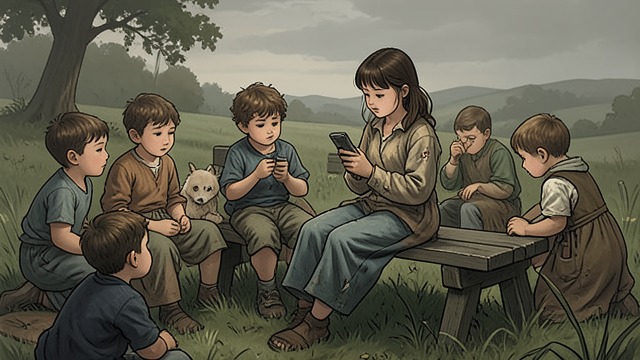
The Threat of Outdoors
A temporary refuge
After the Breedlove home burns and the family is scattered, Pecola arrives at the MacTeers’ house with no belongings. Claudia’s narration explains why being outdoors means more than being put out of one dwelling: it means having nowhere else to go. For a short time, the sisters try to keep their guest from feeling that absolute exposure.
Belonging under pressure
The household’s limited space and resources make refuge precarious, but the girls’ attention gives Pecola a brief place among them. Their kindness does not erase poverty or family danger; it interrupts the isolation those conditions threaten to impose.
This early welcome establishes what later exclusions destroy. The story asks readers to notice how material insecurity and social rejection combine to make a child’s need for shelter a test of the community’s humanity.
The Storekeeper’s Vacant Look
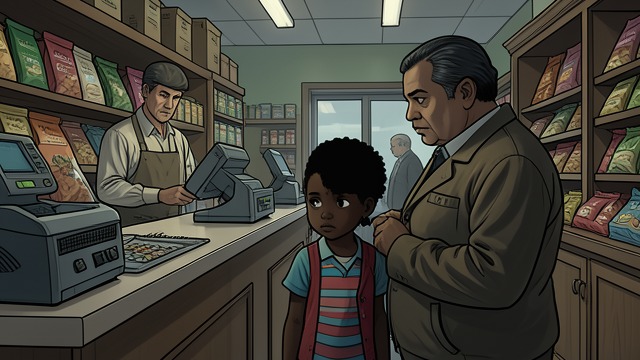
Seen as Nothing
The suspended glance
At the counter, the storekeeper’s eyes approach the child and then withdraw before genuine recognition occurs. The exchange is not a dramatic confrontation, but its quietness makes it revealing: the child experiences not curiosity or anger but a vacancy edged with distaste.
Internalizing the explanation
She interprets the encounter through the racial meanings already surrounding her. Rather than seeing the man’s indifference as a failure of his perception, she concludes that her blackness causes it. The exchange therefore turns a public slight into a private verdict about her own worth.
The scene shows invisibility as something imposed and then learned. A person can be physically present yet excluded from another’s field of human attention, and a child may mistake that exclusion for evidence about herself.
The Playground’s Scapegoat
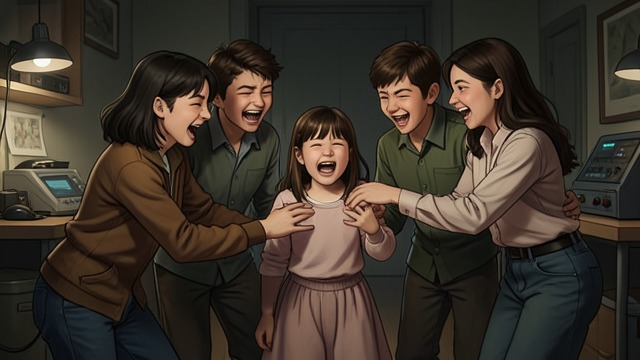
Contempt Passed Along
A chorus of insult
A group of boys circles Pecola and turns her skin and family into the material of a taunting chant. Their cruelty is not separate from the contempt they have absorbed; the narrator observes that the insult gains force from their own learned rejection of blackness.
Protection and its limits
Frieda and Claudia intervene, disrupting the circle and helping Pecola leave. Their action offers a moment of solidarity, but it cannot undo the humiliation or the broader school culture that permits the child to be isolated and mocked.
The episode traces how a community can transmit a hierarchy even among children who are themselves subjected to it. The targeted child becomes a convenient bearer of shame that others have been taught not to examine in themselves.
The Fisher Kitchen Rejection
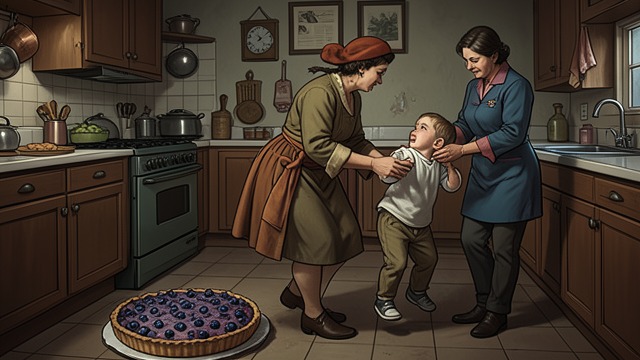
Care Divided by Class
The fallen pie
Pecola enters the ordered kitchen where her mother works and is burned when a blueberry pie falls. Pauline strikes her daughter and focuses on the mess, while the white child in the room receives soothing attention. The difference is immediate and embodied: the same adult who can be gentle in one relationship is harsh in another.
A hierarchy of tenderness
The kitchen makes visible how Pauline’s employment and emotional investment in the Fisher home have rearranged her loyalties. The beautiful, well-kept domestic space offers her a role and recognition that her own home does not, but its comfort is not extended equally to her daughter.
The incident is more than a family quarrel. It shows how social hierarchies can shape intimate attention, making one child worthy of comfort and another an obstacle to order.
A Town Cleaned on Her

The Community’s Convenient Victim
Shared judgment
After the pregnancy becomes public, neighbors respond with gossip, blame, and speculation rather than care. They judge the child and the unborn baby, converting an act of violence and a family crisis into a spectacle that allows the observers to feel morally separate from it.
Relief through contrast
Claudia later recognizes how the town used Pecola’s vulnerability as a measure of its own supposed goodness. People felt generous, healthy, and eloquent by comparison with the child they had abandoned. The narrator’s insight shifts responsibility from a single villain to the many people whose judgments helped make her isolation seem deserved.
The scapegoat’s role protects the community from confronting the conditions it has helped create. Pecola absorbs what others refuse to name, while the town mistakes its temporary self-satisfaction for innocence.
At the beginning of the autumn section, when Pecola is placed with the MacTeers
During Pecola’s autumn walk to the grocery store
During the winter section, when schoolboys surround Pecola
During spring, when Pecola visits Pauline at the Fisher home
Near the ending, after the baby’s death and Pecola’s withdrawal
