
Seeds, Soil, and Shared Responsibility
The Bluest EyeThis flow develops the marigolds as a measure of the girls’ hope and guilt, then widens their failure to grow into a judgment on the conditions that refused to sustain a child.
increasing Bearing strength in each event
 decreasing
Bearing strength in each eventdecreasingA Childhood Test of Care
Learning What Can Be Nurtured
Small acts of attention
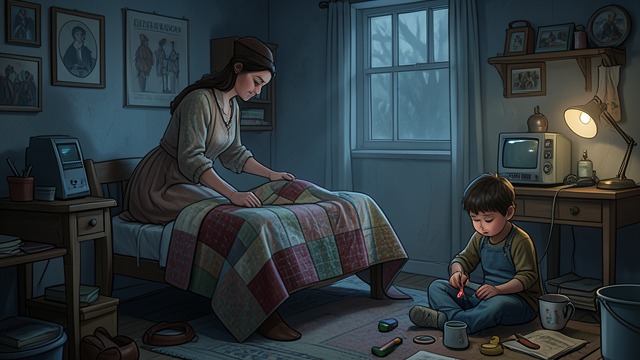
Claudia’s memories dwell on concrete sensations: cold rooms, illness, household work, and the touch of a mother who returns to adjust a quilt. Such details show that care can exist within hardship, even when adults have little time or softness to spare.
A fragile moral vocabulary
The children try to understand danger and affection with the explanations available to them. They infer meanings from gestures, voices, and household rules, often without grasping the larger forces shaping their lives. Their uncertainty is not a defect; it is part of childhood’s limited but serious effort to make a world intelligible.
The later planting of seeds grows out of this early habit of treating small acts as consequential. For the girls, tending something living becomes a possible way to answer suffering when adult explanations fail.
The News of the Pregnancy
A Story Heard in Fragments
Gossip becomes knowledge
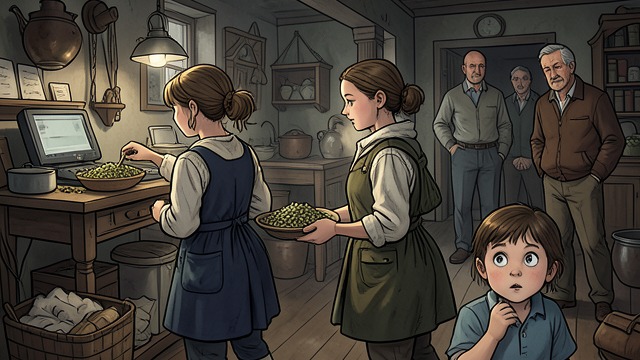
As Claudia and Frieda sell seeds, they overhear adult conversations and gradually realize that the gossip concerns Pecola’s pregnancy. Their understanding comes in pieces: the father is Cholly, the family may be judged, and the baby is expected to die or be rejected.
Refusing the town’s response
The girls hear the adults’ disgust, amusement, and blame, but they listen for someone to express concern for the child or the baby. Their failure to hear it becomes the emotional spur for action. They do not possess the power to change the family or the town, yet they decide that they can still make a promise and keep it.
The scene contrasts communal commentary with childhood responsibility. Where adults transform suffering into talk, the girls search for a direct act that might express care.
The Buried Seed Money
Hope Given a Form
A costly promise
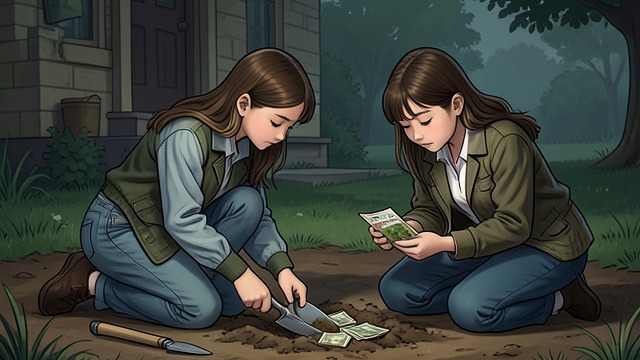
The sisters decide to give up their bicycle money and plant seeds, making their sacrifice part of a plea that Pecola’s baby survive. Their plan is childlike but not trivial: they give up an imagined reward in exchange for a chance to influence an outcome they cannot control.
Faith in visible evidence
They choose the earth near their home and imagine that the seeds’ growth will show them that everything is all right. This turns nature into a witness. A sprout would not merely be a plant but confirmation that their hope and their effort had mattered.
The ritual reveals both the strength and limits of the girls’ agency. They can make a promise, bury money, and tend soil; they cannot command a society or guarantee another person’s survival.
The Seeds Fail to Sprout
The Earth’s Silence
Waiting for an answer
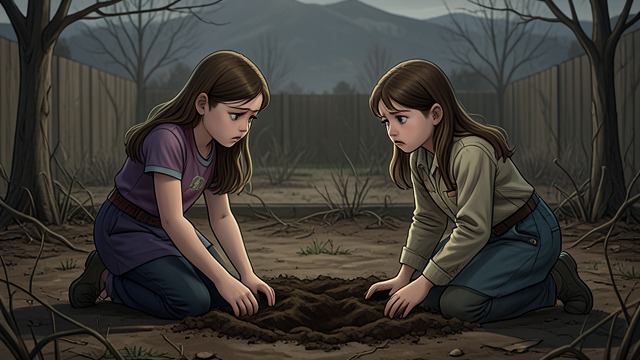
Claudia and Frieda watch for signs of growth and treat the seeds’ fate as bound to the baby’s. When nothing emerges, they first struggle to explain what they did wrong. The narrator remembers the children accusing one another and feeling guilty for having planted the seeds too deeply.
A larger cause considered
In retrospect, Claudia recognizes that their plot was not the only place where marigolds failed to grow. The failure belonged to a wider season and landscape, not merely to the girls’ imperfect technique. That recognition complicates their self-blame without making the child’s death less painful.
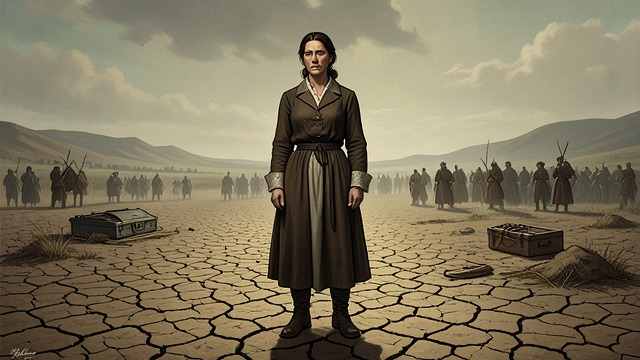
The barren earth becomes an image of conditions that deny life nourishment. The girls’ small garden cannot be separated from the social world surrounding it, even though they do not yet have language for that connection.
The Land’s Final Indictment
Beyond Personal Blame
The narrator revises her guilt
Claudia revisits her childhood belief that she planted the seeds too deeply. She now recognizes how readily a child takes responsibility for a failure that exceeds her power, especially when adults and institutions offer no account of the surrounding damage.
An ethical landscape
The final reflection imagines a land hostile to certain flowers and certain kinds of life. This does not excuse the people who failed Pecola, but it makes clear that individual choices occurred within a larger environment shaped by racial contempt and neglect. The earth becomes a figure for a society that withholds the conditions required for flourishing.
The closing image resists treating the child’s ruin as natural or inevitable. It asks readers to question any explanation that calls a victim unworthy of life after the world has denied her the means to live safely.
During Claudia and Frieda’s autumn and winter childhood memories
During the summer seed-selling visits, before the girls plant their seeds
During the summer, after Claudia and Frieda decide to help the unborn baby
In the summer of 1941, after the seeds are planted
In the closing pages, years after the girls’ planting
