
The Beauty Hierarchy Turns Inward
The Bluest EyeThis thread traces how a racialized hierarchy of beauty becomes a conflict among children and ultimately teaches Pecola to turn rejection into self-erasure.
increasing Bearing strength in each event
 decreasing
Bearing strength in each eventdecreasingThe Doll’s Imposed Beauty
The Gift That Becomes an Accusation
A prescribed ideal
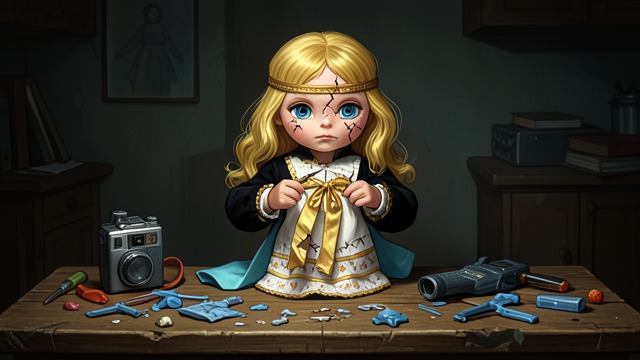
Claudia receives blue-eyed, yellow-haired dolls that adults assume every girl must cherish. Their confidence in the doll’s beauty makes her resistance seem like a personal defect rather than a refusal of somebody else’s measure.
Resistance and its target
Claudia dismantles the dolls to discover what makes them lovable, but finds only manufactured parts. Her anger begins as a challenge to an ideal she cannot understand; it later shifts toward white girls, whose appearance draws the affection she believes the dolls have monopolized.
The episode establishes a conflict between a child’s sensory judgment and a culture that presents one racialized appearance as universally beautiful. Claudia can destroy the object, but cannot yet challenge the approval surrounding it.
Maureen’s Favored Arrival
Beauty Gains Social Power
A visible advantage
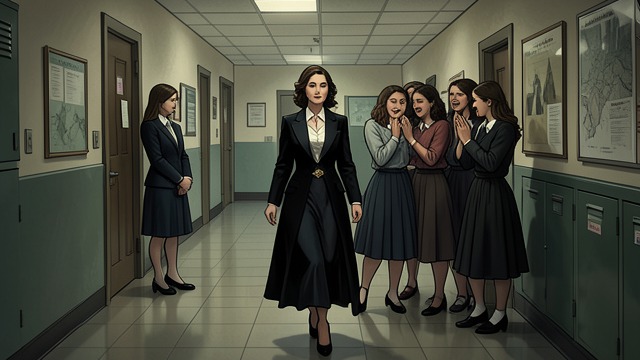
Maureen Peal enters school in fine clothes and receives warmth from students and teachers alike. Her welcome makes beauty appear not merely decorative but socially consequential: people defer to her before they know her.
The comparison sharpens
Claudia and Frieda search for imperfections and privately rename her, but their jokes cannot cancel the attention she commands. Pecola, already isolated, watches Maureen move through a world that seems to open for her.
Maureen’s presence intensifies a conflict the girls cannot yet name. Their resentment attaches itself to a child, while the more powerful source is the hierarchy that distributes approval unevenly and teaches them to measure themselves against it.
The Playground Insult
Self-Contempt Becomes a Weapon
A chorus against Pecola
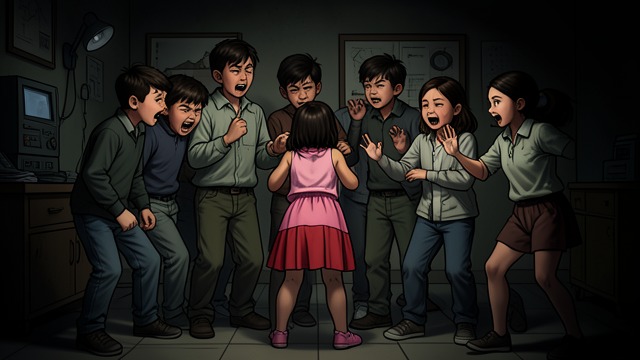
A group of Black boys encircles Pecola and mocks her skin and family. Their taunts expose a contradiction: they use Blackness as an insult while sharing it, drawing force from contempt they have absorbed rather than from any difference between themselves and their target.
Protection gives way to injury
Frieda intervenes, Claudia joins her, and Maureen’s presence helps interrupt the boys’ harassment. For a moment the girls act together. Later, however, Maureen turns on Pecola and declares herself cute and Pecola ugly, converting the same hierarchy into a personal verdict.
The confrontation leaves the sisters with a painful discovery: solidarity can break under the pressure of status, and a child can repeat a social judgment even after appearing to resist it. Pecola is left carrying the insult more deeply than the others.
The Shopkeeper’s Erasure
A Silent Rejection
Recognition withheld
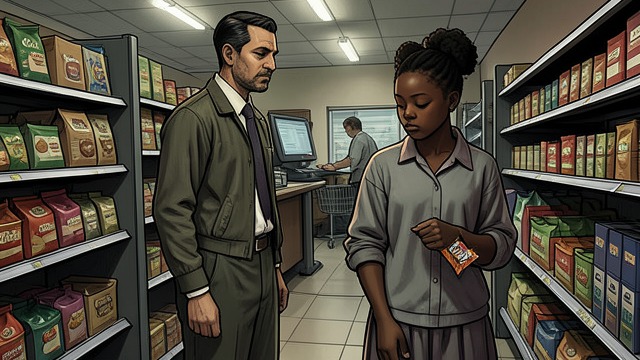
Pecola enters the grocery store hoping to buy candy. The shopkeeper’s eyes seem to pass over her rather than meet her; his impatience and reluctance to touch her make an ordinary purchase feel like a judgment on her presence.
Shame takes hold
Pecola reads the encounter as evidence that her Blackness produces disgust. Her anger briefly gives her a sense of reality, but it fades, and the Mary Jane candy offers a momentary fantasy of consuming the very image of beauty that excludes her.
The conflict is not a dramatic argument but a daily denial of recognition. Its quietness makes it difficult to contest, while its repetition helps persuade Pecola that changing herself—not confronting the gaze—is the only available escape.
The Blue-Eyed Retreat
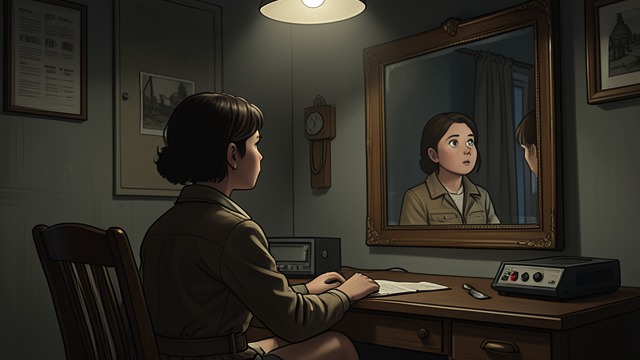
Rejection Becomes Delusion
A wish mistaken for rescue
Pecola has prayed for blue eyes as a way to change how other people treat her. Soaphead Church tells her that her wish has been granted, though the supposed miracle is deception rather than transformation.
A private refuge
Pecola comes to believe that she has blue eyes and that others avoid looking at them out of jealousy. Her imagined friend confirms the belief, allowing Pecola to reinterpret abandonment as envy and to evade, for a time, the unbearable meaning of her losses.
The retreat resolves no external conflict. Instead, it records its devastation: the world that denied Pecola recognition has helped make an inward reality feel safer than shared life. Her imagined beauty protects her from rejection only by deepening her isolation.
During Claudia’s early childhood Christmases
During the winter school term
A false spring afternoon during the winter term
During Pecola’s autumn walk to Yacobowski’s store
After the premature death of Pecola’s baby
