
The Cat and the Household Boundary
The Bluest EyeThis thread follows Junior’s cruelty, Pecola’s attempt to respond with tenderness, and Geraldine’s decision to protect her household’s respectability by expelling the wrong child.
increasing Bearing strength in each event
 decreasing
Bearing strength in each eventdecreasingJunior’s Divided Belonging
A Child Learns a Hierarchy
Respectability as a boundary
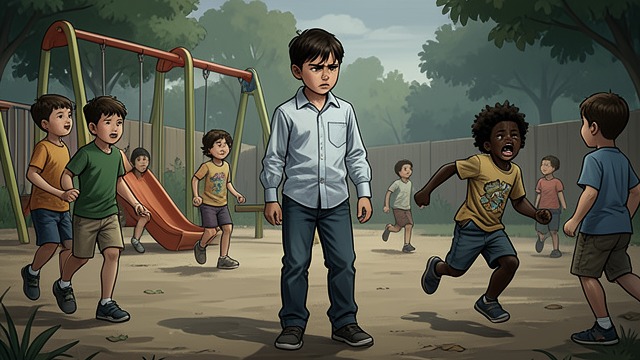
Geraldine teaches Junior to distinguish “colored people” from “niggers,” associating the first with neatness and quiet and the second with dirt and noise. Her instruction gives him a racialized vocabulary for ranking people, including Black children he secretly wants to join.
Power found in bullying
Junior’s isolation and resentment find an outlet in controlling the playground and frightening girls. He enjoys making them scream and run, gaining a temporary feeling of power by choosing weaker targets.
The household boundary does not eliminate Junior’s desire for connection; it redirects it. He learns to defend his supposed superiority while seeking relief from loneliness through acts that reproduce the rejection he has experienced.
The Kittens’ Invitation
An Invitation with a Trap
Pecola enters Junior’s house
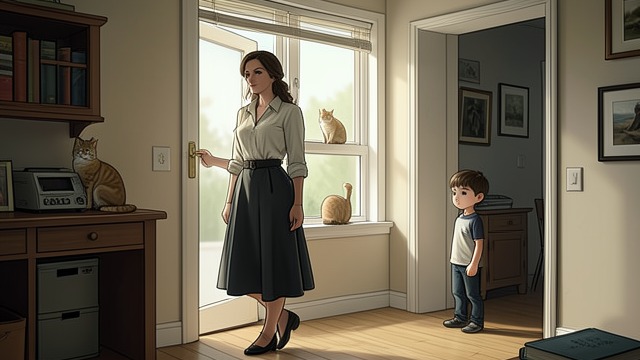
Junior calls Pecola into his home by promising to show her kittens. She steps into a room whose order, furnishings, and religious decorations seem beautiful to her, contrasting sharply with the crowded and neglected place where she lives.
Fear replaces hospitality
Junior throws the black cat toward Pecola and blocks her exit, turning his invitation into a means of control. When she begins to cry, the cat rubs against her, and its blue-green eyes hold her attention.
Pecola’s curiosity and gentleness momentarily interrupt Junior’s game. The encounter exposes the difference between the orderly home’s appearance and the aggression taking place inside it, while giving Pecola a brief connection that Junior cannot tolerate.
The Cat Against the Window
Junior’s Control Turns Destructive
Possession asserted
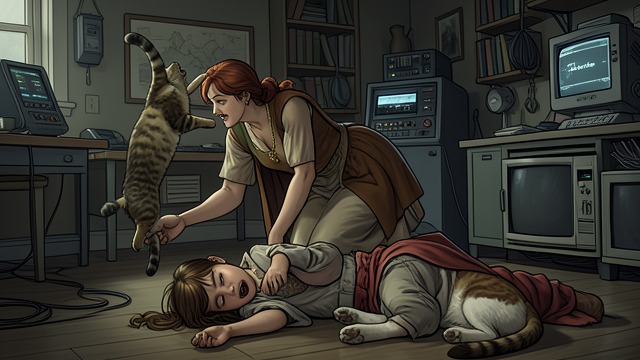
Seeing Pecola stroke the cat, Junior demands it back and swings it by one hind leg. The animal’s terror makes the earlier playfulness impossible to mistake for care; Junior’s need to control the scene now threatens the creature he claims as his own.
A fatal struggle
Pecola reaches for Junior’s hand. They fall, and Junior releases the cat, which crashes against the window and lands on the radiator. It shudders and becomes still, leaving Pecola beside the dead animal and the child who caused its death.
The death intensifies the conflict because Junior can turn the consequences of his act into an accusation against Pecola. His violence has produced a victim, but his account will determine who is treated as guilty.
Geraldine’s Verdict
Protection Reserved for the Household
Appearance used as evidence
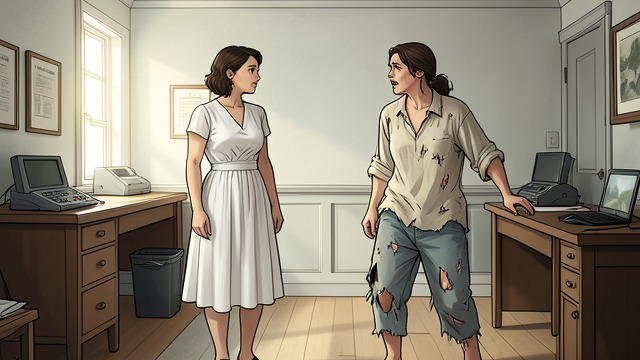
Geraldine arrives, sees her dead cat, and accepts Junior’s claim that Pecola killed it. She studies Pecola’s torn clothes, loose braids, and worn shoes as signs of the kind of child she already despises, making poverty itself appear to prove culpability.
Expulsion and humiliation
Geraldine calls Pecola a degrading name and orders her out. Pecola backs away from the house, looking at the woman who seems beautiful and secure while hearing a rejection that confirms she has no place there.
Geraldine protects the image of her clean, respectable home rather than investigate what happened. The conflict reveals how social status and racialized judgments make Pecola an easy target, even when the adult’s own son initiated the violence.
The Door Left Closed
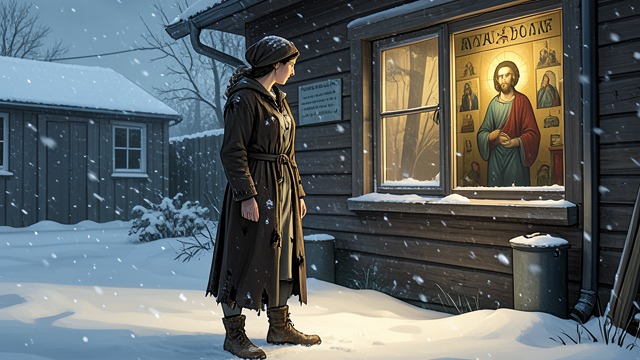
Rejection Extends Beyond the Room
A child sent back outside
Pecola retreats from the orderly house into the cold. She notices the image of Jesus inside and the snow falling outside, but neither offers comfort or protection from the adult who has just expelled her.
The insult becomes a social fact
The expulsion is not only a response to one dead cat. It repeats the larger division between children considered proper and children marked as dirty, unwanted, or dangerous. Pecola must carry the judgment away without a chance to answer it.
The household’s boundary becomes part of Pecola’s wider social isolation. Geraldine’s choice teaches her that affection and shelter can be withheld not because she has been heard and found responsible, but because other people have already decided what she represents.
During Junior’s childhood beside Washington Irving School
A spring day before Geraldine returns home
Moments before Geraldine enters the house
Immediately after the cat dies
As Pecola leaves Geraldine’s house
