
The Neighborhood’s Failure to Protect
The Bluest EyeThis thread traces how everyday exclusion, gendered vulnerability, and community judgment converge around Pecola, leaving the child increasingly isolated and making social harm appear normal.
increasing Bearing strength in each event
 decreasing
Bearing strength in each eventdecreasingA Segregated Horizon
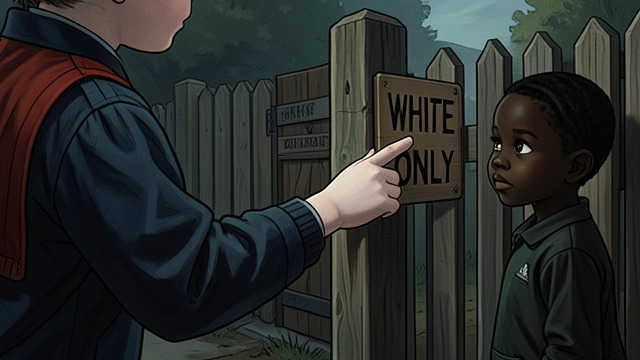
Exclusion Shapes the Map
Unequal places
Pecola and the MacTeer girls know that Lake Shore Park is reserved for white people. Its beauty and apparent welcome make the prohibition more powerful: the children can imagine a place that their community is not allowed to enter.
Rejection made ordinary
Across their town, social boundaries appear in public spaces, classrooms, stores, and the treatment of children. Pecola’s school isolation and the indifference she encounters are not isolated accidents; they occur within a world that repeatedly tells her she does not belong.
The conflict is built into ordinary geography and routine. Because exclusion is distributed across many encounters, it can seem natural to its beneficiaries and nearly impossible for a child to challenge.
The Friendly Roomer
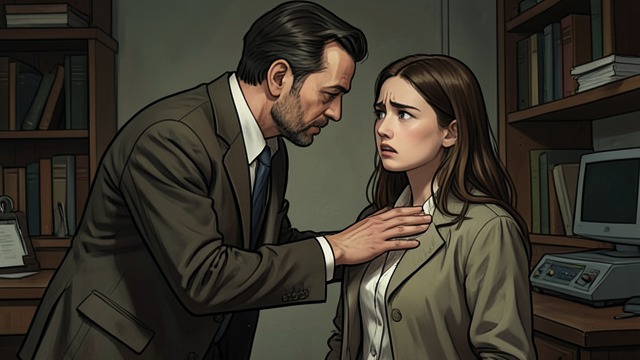
Trust Meets a Hidden Threat
A lodger welcomed
Mr. Henry arrives at the MacTeer home and treats Claudia and Frieda warmly. His jokes and small magic trick delight the girls, who welcome him into their family’s daily life and see him as a friendly adult.
A boundary violated
That trust gives way when Mr. Henry touches Frieda without her consent. Frieda tells Claudia what happened, and the sisters understand that the lodger’s presence has changed from reassuring to dangerous.
The shift shows how vulnerability can grow inside a familiar household. The girls are forced to recognize that an adult who seemed kind may still exploit his access to them, and that protection depends on whether other adults take their report seriously.
The MacTeers Confront Henry
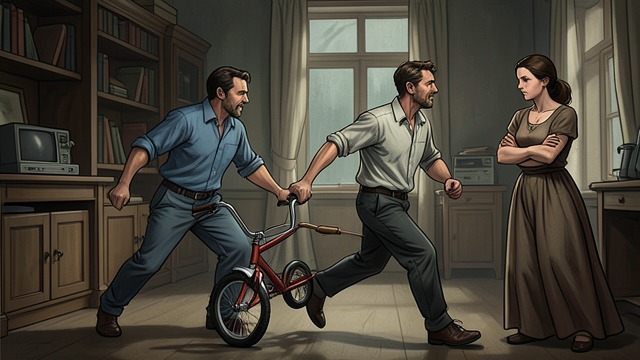
The Household Rejects the Abuser
Frieda speaks and is believed
After Mr. Henry touches her, Frieda tells her mother. The family returns home, and the parents confront him when he appears, turning the household’s earlier welcome into a clear demand that he answer for his conduct.
Violence and flight
Mr. MacTeer throws a tricycle at Henry and later fires a gun as Henry runs away. Mrs. MacTeer also rebukes him, while Frieda experiences the confrontation through fear, shame, and uncertainty about whether the assault has ruined her.
The response is forceful and imperfect, but unlike the silence surrounding Pecola’s later abuse, Frieda is believed and defended. The episode makes visible the difference that adult intervention can make without suggesting that punishment erases the child’s distress.
A Search for Protection
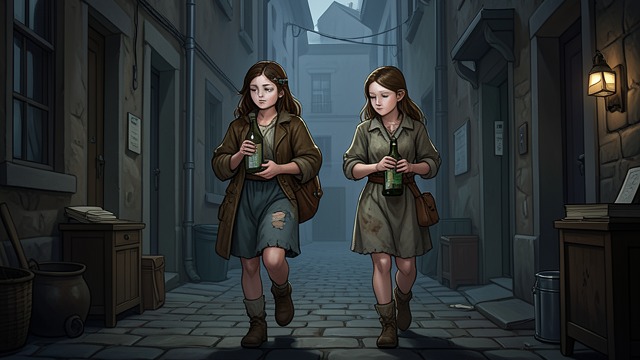
The Girls Seek a Remedy
Fear becomes a practical problem
Frieda worries that she has been ruined, using the adults’ condemnation of sexual women to imagine a future she does not understand. Claudia tries to comfort her but has no reliable explanation for the assault or its consequences.
An improvised plan
The sisters decide to find whiskey, believing it might prevent the fate they fear. They go to Pecola’s home because Cholly is known to drink, carrying their private anxiety into another household already marked by instability.
Their plan shows how children inherit fear without receiving dependable guidance. The search is not a solution to the harm done to Frieda; it is an attempt to regain control using the fragments of adult knowledge available to them.
The Community’s Absent Pity
Judgment Replaces Care
The story circulated
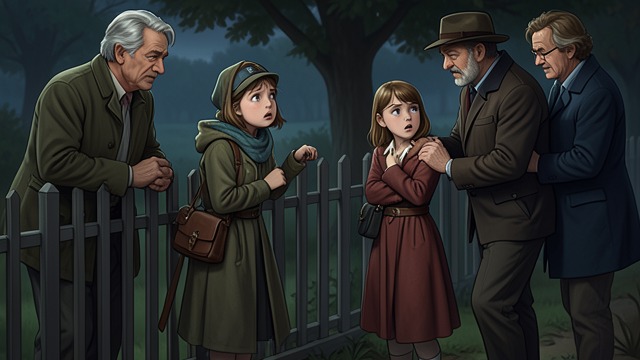
As they sell seeds, Claudia and Frieda overhear adults discussing Pecola’s pregnancy by her father. The speakers speculate about blame, survival, and appearance, turning the child’s assault and pregnancy into a topic of neighborhood conversation.
A silence noticed by children
The sisters listen for compassion for Pecola and her baby but hear no sustained defense. Their distress stands apart from the adults’ disgust, amusement, and curiosity, revealing how a community can recognize a scandal while refusing the person harmed.
The conflict extends beyond the perpetrator to everyone who treats the harm as someone else’s business. The girls’ response does not undo the community’s abandonment, but it exposes the gap between knowing what happened and taking responsibility for the vulnerable child.
During Pecola’s childhood in Lorain
During the autumn before Mr. Henry’s attack on Frieda
The spring day Frieda tells her parents
Immediately after the confrontation with Mr. Henry
During the summer seed-selling conversations of 1941
