Being outdoors (homelessness)
The Bluest EyeBeing outdoors (homelessness) names more than the loss of a home: it is the condition of having nowhere else to go. Claudia’s account makes that distinction decisive. When Cholly Breedlove burns the family’s house and attacks his wife, the family is left outdoors, and their displacement becomes both a material crisis and a measure of the precariousness imposed on people already living at the edge of social life.
Meaning and Distinction
The novel separates being put out from being outdoors. A landlord may put a tenant out, an unfortunate consequence of poverty and an income a person cannot control; but being put out still allows the possibility of going somewhere else. Being outdoors means that no such destination exists. It is an irrevocable physical condition, not merely a change of address, and Claudia presents it as the end of something.
That distinction gives the word its force. Outdoors is not a neutral location beyond the house. It marks the point at which shelter, security, and the expectation of a place in the world have failed together. Claudia connects this physical fact to a metaphysical condition: the family’s exposure makes visible a vulnerability that had already shaped their lives as a minority in both caste and class.
The Breedloves’ Displacement
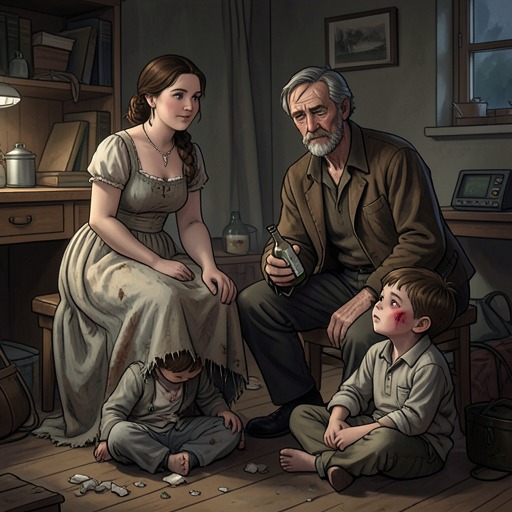
The condition enters Claudia’s household before Pecola arrives. Two days earlier, Mama tells the children that a county “case” is coming: a girl with no place to go. The county places Pecola with the MacTeers for a few days while it decides what to do, or, more precisely, until the family is reunited. Mama instructs the children to be kind and not to fight with her. The temporary placement brings the consequences of the Breedloves’ crisis into the MacTeer home, where Pecola must sleep between the sisters.
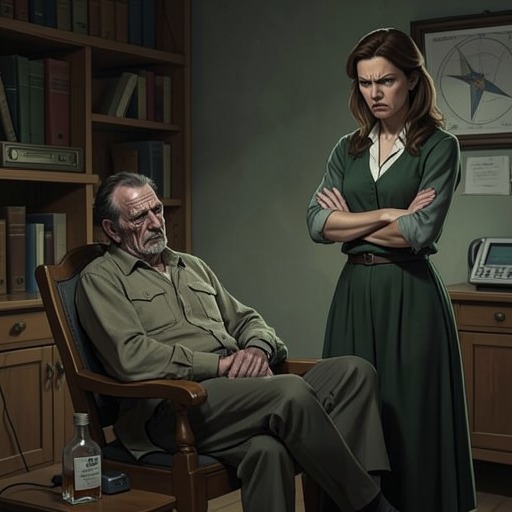
The explanation for that crisis is stark. Cholly has burned up the family’s house and gone “upside” his wife’s head; as a result, everyone is outdoors. Claudia’s account does not treat the family’s homelessness as an isolated misfortune detached from violence. The loss of shelter follows Cholly’s destructive conduct, and the children’s placement with the MacTeers is one immediate consequence. Pecola’s presence in another family’s house makes the abstract difference between a home and no place to go intimate and practical.
The narrator’s account of sympathy also reveals the community’s moral vocabulary. When a son is outdoors, sympathy may remain with him regardless of what he has done; he is exposed, and, as Claudia puts it, his own flesh has done it. But to put one’s own kin outdoors is treated as criminal. The distinction turns on more than the hardship of losing shelter: it separates misfortune suffered from harm inflicted, and makes family responsibility part of how the community judges the crisis.
Property, Poverty, and Social Precarity
Knowing that outdoors exists breeds a hunger for property. Claudia names what that desire gathers around: a yard, a porch, a grape arbor. These are concrete signs of a place one can firmly possess, in contrast to the exposure of having nowhere to go. The desire for property is therefore not simply acquisitiveness. It answers the threat of being permanently displaced by seeking a stable, bounded place in which life can continue.
That hunger is sharpened by the conditions of poverty. People save, scrape, and pile away what they can in rented hovels while looking toward the day when they might own property. The contrast between present rental and hoped-for ownership makes security feel hard-won and deferred. For people with little control over income, being put out by a landlord is already a danger; outdoors is the more absolute terror because it removes even the next place to go.
Claudia locates that terror within a broader social vulnerability. The family is not described as approaching the edge of life only because of one domestic catastrophe; the narrator says that, as a minority in both caste and class, they move along its hem already. The Breedloves’ displacement makes that precariousness physical and visible. The possibility of being outdoors is thus both a particular housing crisis and a looming condition that gives the desire for ownership its urgency.
Consequences and Significance
For Cholly’s family, being outdoors carries a consequence beyond the immediate loss of shelter: it drives them beyond what Claudia calls the reaches of human consideration. The narrator says that Cholly, a renting Black man who has put his family outdoors, has joined the animals. This dehumanizing judgment registers the severity of the community’s condemnation of making one’s kin homeless; it also shows how exposure can be imagined as a fall outside the protections and regard that make a person socially recognizable.
Claudia’s account holds two judgments in tension. It acknowledges the force of poverty and the limited control people have over income, yet it distinguishes eviction from the act of putting one’s own family outdoors. Cholly’s conduct is not excused by the structural insecurity around him. At the same time, the narrator’s account of the Breedloves’ fate shows why the loss is so terrifying: for people already moving at society’s margins, having no place to go makes a precarious position seem final.
As a recurring idea, outdoors converts housing insecurity into a test of belonging. Its opposite is not simply a better house but a firm possession of place, imagined in the yard, porch, and grape arbor. Its deepest significance lies in the way it joins a concrete fact—no shelter and nowhere to go—to the felt possibility of social death. The Breedloves’ displacement makes that possibility immediate, while Claudia’s distinction between being put out and being outdoors gives the condition its finality.