Cholly Breedlove's alcoholism
The Bluest EyeCholly Breedlove's alcoholism is a recurring condition of life in the Breedlove household, not simply a private habit. His whiskey, drunkenness, and volatility structure the family's expectation of violence; at the same time, his drinking helps Mrs. Breedlove define herself through opposition to him. The household's pattern exposes how harm can become both an immediate threat and a grim organizing principle for the people forced to live with it.
Presence in the Household
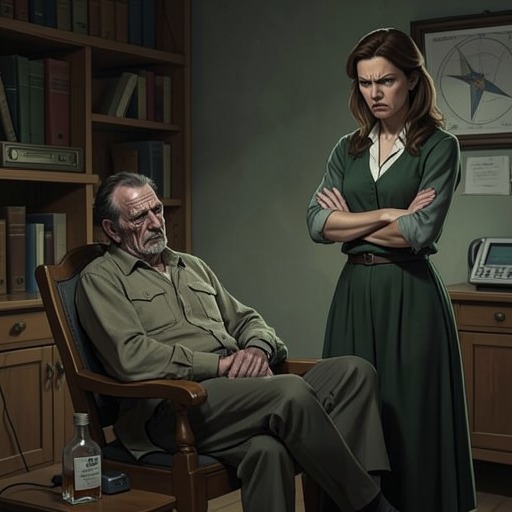
One morning, Pecola lies staring at the dead coal stove while Cholly thrashes in bed and then falls quiet. She can smell his whiskey from where she lies. The apparent pause offers no reassurance: sounds from the kitchen are hollow, but the threats they imply are not. Pecola anticipates what may follow by tightening her stomach muscles and rationing her breath. Cholly has come home drunk, but because he was too drunk to quarrel during the night, she expects the disturbance to erupt that morning instead. His drinking thus marks time through postponed danger, making even a quiet interval feel like a prelude.
The strain is not confined to what Cholly does while drunk. The narrative says that his habitual drunkenness and ornery behavior provide Mrs. Breedlove and the children with material for their fights, which lend their lives a degree of zest and apparent reason. Their conflicts become a way of making life tolerable, even as the conditions that generate them remain damaging. Alcoholism therefore operates as a household routine: it produces fear and quarrels, but also a pattern around which the family has learned to organize its responses.
Mrs. Breedlove's Response
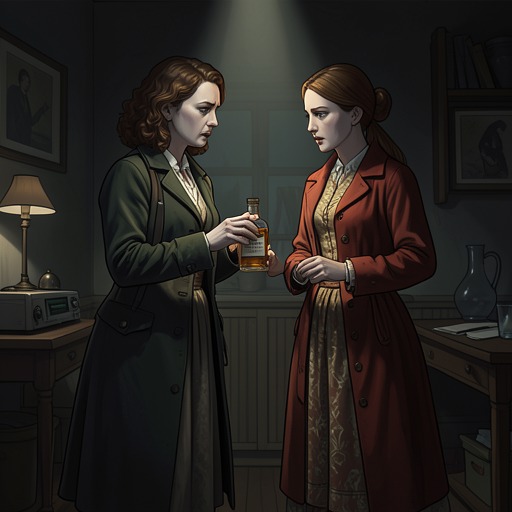
Mrs. Breedlove's relation to Cholly's drinking is marked by contradiction. She calls on Jesus to get him, yet the narrative states that if Cholly stopped drinking, she would never have forgiven Jesus. She needs Cholly's sins, because the further he sinks into drinking and irresponsibility, the more splendid she and her task appear to her. Her religious appeal is consequently entangled with the continuing behavior she condemns: Cholly's drinking sustains the moral role from which she can judge and oppose him.
That dependence does not remove the danger in the home. In one confrontation, Mrs. Breedlove sneezes, runs into the bedroom carrying a dishpan full of cold water, and throws it in Cholly's face. He sits up choking and spitting, then leaps from the bed naked and ashen. The scene makes the household conflict physical and immediate, while also showing that his drunkenness draws others into its volatile aftermath. The attempt to rouse or confront him does not turn the home into a place of safety; it is another beat in a cycle of threat and reaction.
Effects on Pecola
Pecola's response to the household's danger is expressed through a wish to disappear. She whispers a prayer for disappearance, squeezes her eyes shut, and imagines parts of her body fading away: first her fingers, then her arms to the elbow, and then her feet. The passage does not reduce this wish to Cholly's drinking alone, but it places it amid the fear and instability of the Breedlove home. Her imagined retreat from bodily presence gives form to a child's attempt to escape circumstances she cannot control.
The narrative also places Cholly's drinking alongside the sexual violation of Frieda. When Claudia asks what Mr. Henry did, Frieda says that he touched her; Claudia compares the episode to Soaphead Church. This is a separate act of abuse, not an effect that can simply be attributed to alcoholism, but it belongs to the wider world of adult conduct and vulnerability the children must navigate. The novel's episodes make clear that harm reaches children through distinct relationships and actions, while the instability of the household forms part of the atmosphere in which their fears take shape.
Narrative Echoes and Significance
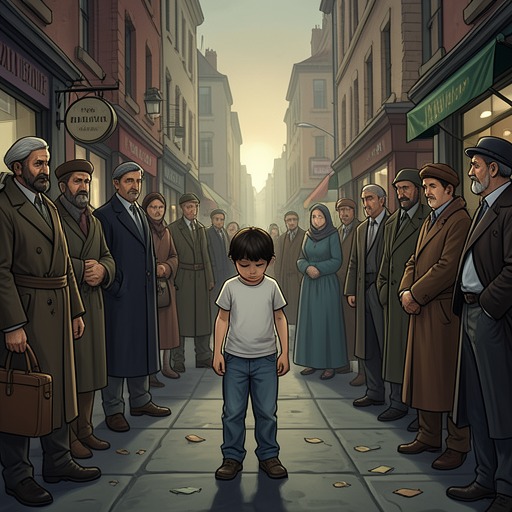
The novel's fragmented Dick-and-Jane refrain appears beside a scene in which a child tries to connect pain between her legs with her mother's face looming over her. Later, Pecola's days are described as a repeated walk up and down, her head jerking to a drummer only she can hear, while adults look away and some children laugh. These passages trace forms of suffering and isolation within the book's broader portrait of the Breedlove family and community. They should not be mistaken for a direct account of alcoholism's sole consequences; rather, their placement alongside the family's domestic violence and neglect emphasizes how private distress can persist into social abandonment.
Against the image of families who preserve food through summer to fill their cupboards and shelves, the Breedlove home is presented through a dead stove, the smell of whiskey, and an expectation that conflict may break out. That contrast locates Cholly's drinking within material hardship and strained domestic life, without making poverty or alcohol a complete explanation for every injury in the novel. Its significance lies in the way a repeated private condition becomes part of a larger pattern: threat shapes daily expectation, conflict supplies an unstable sense of purpose, and a child tries to escape by imagining that her own body can vanish.