Cholly and Pauline’s marriage
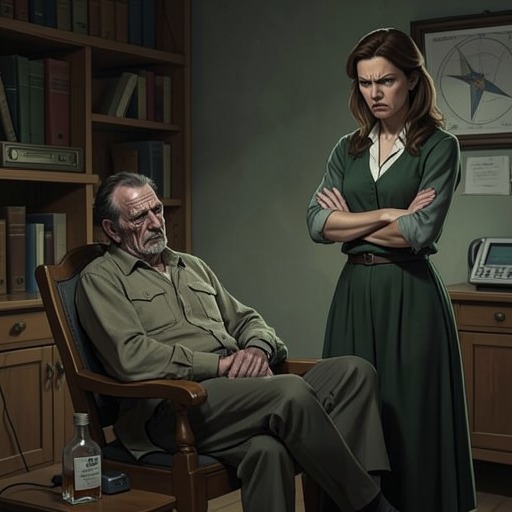
The Bluest EyeCholly and Pauline’s marriage is a relationship that begins in attraction and the desire to make a home, then is strained by Cholly’s inability to endure marital routine or assume responsibility for children. Its significance lies in the way an initially hopeful bond gives way to emotional withdrawal and unstable, momentary reactions: the household’s harm is not separate from the marriage but takes shape within it, including in Cholly’s response to his daughter at the kitchen sink.
Meeting and the Promise of Home
Cholly meets Pauline Williams in Kentucky. She is leaning over a fence, scratching herself with a broken foot; what catches his attention is not simply the circumstance but the combination he perceives in her: neatness, charm, and the joy he awakens in her. That response makes him want to nest with her. The image of nesting gives their early connection a domestic promise, even as the narrative sets it against the isolation and appetite that have come to define Cholly’s life.
The change associated with meeting Pauline is described through a comparison to the flashlight: marrying her does what the flashlight could not. The passage does not explain this comparison further, but it marks marriage as a consequential turn in Cholly’s life, not merely a continuation of his earlier solitude. The desire to build a home is real at the beginning. The eventual destruction of that desire is also stated, though its cause is not developed in this evidence; Cholly has yet to discover what destroyed it, and does not dwell on that question.
Marriage and the Weight of Sameness
The ongoingness of married life becomes oppressive to Cholly. Its constantness and varietylessness, the sheer weight of sameness, drive him toward despair and freeze his imagination. He finds the expectation of sleeping with the same woman forever curious and unnatural, and resents the expectation that he should revive enthusiasm for familiar acts and routine ploys. The account locates the fracture in his response to repetition: what marriage asks of him as continuing intimacy, he experiences as an intolerable demand for renewed feeling without change.
This reaction contrasts sharply with the first desire to nest with Pauline. His early pleasure in her neatness, charm, and delight gives way to a life in which nothing seems to interest him. He wonders at the female, but the narration does not turn that judgment into an account of Pauline’s own perspective. Instead, the marriage is rendered through Cholly’s declining capacity for curiosity and connection. His question is no longer how to sustain his initial desire but what happened to the curiosity he once felt.
Children and Cholly’s Withdrawal
The appearance of children further confounds Cholly. He has no idea how to raise them and has never watched anyone do so; the evidence therefore presents his failure as rooted, in part, in an absence of knowledge and example, rather than in any considered method of parenting. He does not establish a steady relationship with the children. He reacts to them, and his reactions depend on what he feels at the moment. That moment-to-moment pattern makes the household’s emotional climate unpredictable: the children encounter not a consistent parental response but the immediate force of Cholly’s shifting feelings.
Cholly’s remaining escape is drink. He has become alone with his own perceptions and appetites, which are the only things that interest him. Alcohol briefly brings a break, described as a floodlight; when that effect closes, it leaves oblivion. The sequence underscores how little capacity for sustained attention remains in his life. The marriage’s estrangement is paired with this narrowing of interest, while the children’s presence—rather than drawing him into a durable family attachment—meets a man who does not know how to care for them and responds according to the feeling of the instant.
The Kitchen Scene and the Limits of the Bond
The consequences become visible in a Saturday-afternoon scene in the thin light of spring. Cholly staggers home reeling drunk and sees his daughter in the kitchen, washing dishes, her small back hunched over. The scene brings his drinking, the children’s domestic labor, and his unstable emotional life into the same room. Rather than describing an established tenderness, the narration follows a sudden sequence in him: revulsion, guilt, pity, then love. His first response is revulsion at his daughter’s young, helpless, hopeless presence; the other feelings follow as that response shifts.
The order matters. Love appears, but it does not erase the revulsion or the guilt that precedes it, and the scene does not establish that this moment changes Cholly’s conduct or repairs the family bond. It shows that his response to his daughter is not emotionally simple: feeling can move from rejection toward pity and love, yet it arises within the same unreliable, moment-driven pattern that defines his relations with the children. The marriage that began with a wish to nest thus stands against a household in which neither the hoped-for constancy of married life nor the presence of children has enabled Cholly to sustain a secure attachment.