Cholly’s sexual assault of Pecola
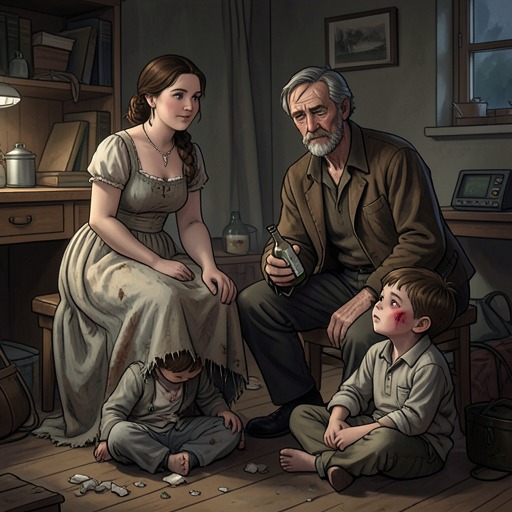
The Bluest EyeCholly’s sexual assault of Pecola is a turning point in their father-daughter relationship and in Pecola’s life. Set in the Breedlove kitchen on a Saturday afternoon in spring, the episode shows how Cholly’s momentary tenderness and guilt become inseparable from violence. Its aftermath leaves Pecola injured and unconscious, while the family’s failure to offer her safety deepens the isolation that surrounds her.
Background and Setting
The scene begins with Cholly returning home drunk and finding Pecola washing dishes. The narration has just considered his inability to stand between himself and the children: he responds to them according to what he feels in the moment, rather than providing dependable protection. The thin spring light and the ordinary kitchen task establish a domestic setting, but the home offers no security for Pecola.
Cholly sees his daughter’s hunched back and reads her misery as an accusation. He wonders why a child should be so unhappy and what he could give or say to her. His questions express guilt and helplessness, but they do not become a means of protecting her. Instead, his inability to imagine care that would meet her needs becomes part of the scene’s danger.
The Assault
Cholly’s response is contradictory. The narration describes tenderness and protectiveness, recalling that he had once startled Pauline into laughter by gently nibbling at her foot. He repeats that gesture toward Pecola, then kneels beside her. The remembered form of affectionate play is transferred into a father-daughter encounter in which it cannot be separated from the power and danger Cholly brings to it.
That tenderness does not restrain him. The narrative makes clear that his desire becomes sexual and that a veneer of politeness surrounds his intent. His attempt to frame the assault as tenderness collapses into violence. Pecola makes no sound beyond a hollow intake of air; she does not speak or consent. The scene therefore rejects any equation of Cholly’s confused feelings with care: his sensations and self-justifications do not alter the coercive reality of what he does to his daughter.
Immediate Aftermath
After the assault, Cholly withdraws from Pecola and sees her lying unconscious. Hatred and tenderness remain tangled in him: hatred prevents him from lifting her, while tenderness leads him to cover her. He puts a heavy quilt over her, leaving her on the kitchen floor. This limited act of covering does not repair the harm or restore the protection a parent should provide.
When Pecola regains consciousness, she is still on the floor. She tries to connect the pain between her legs with the face of her mother looming over her. The narration ends the episode through Pecola’s effort to make sense of what has happened, without giving her an explanation or a safe adult response. Her mother’s presence does not resolve that confusion; the child is left to join pain and family presence in a single, bewildering scene.
Family Relations and Significance
The assault gives brutal form to the failure of Cholly and Pauline’s household to protect Pecola. Cholly’s guilt and tenderness coexist with his violence, but neither feeling offers Pecola safety. The contrast between his remembered gentleness toward Pauline and his conduct toward his daughter shows how a gesture can lose its meaning when it is imposed within an unequal and coercive relationship.
The episode also places Pecola’s isolation inside the home, not only in the wider world. She is a child engaged in domestic work when Cholly returns, and afterward she is left to understand her pain without a clear explanation. The scene’s close attention to her limited perspective makes the assault a rupture not just in the father-daughter relationship but in the possibility of home as refuge.