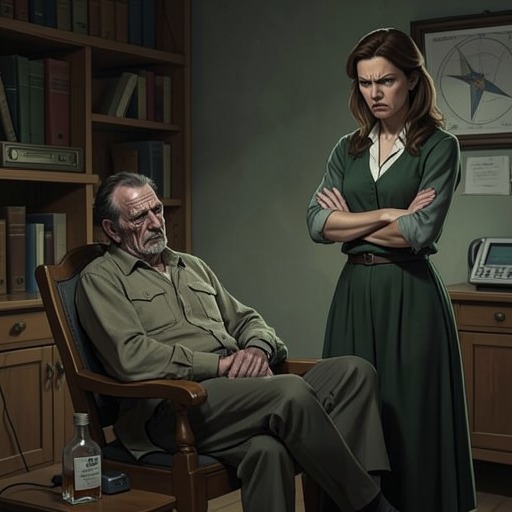
Cholly's alcoholism
The Bluest EyeCholly's alcoholism is a recurring escape from a life in which curiosity and interest have largely vanished, but the relief drink offers is temporary and does not undo the damage surrounding him. The novel places his drinking beside domestic violence and the fear and injury borne by others, making intoxication both a symptom of his deadened existence and part of a destructive family pattern.
Numbness and Escape
Cholly's inward life is described through absence: nothing interests him, neither himself nor other people. Drink is the exception. It gives him a brief break, figured as a floodlight that opens suddenly; when that light closes, oblivion follows. Alcohol therefore does not restore sustained connection or purpose. It interrupts numbness only long enough for it to return.
That pattern helps explain why drinking functions as more than a habit in the account of his life. It offers temporary relief from a vacancy that otherwise governs his attention, but the relief is inseparable from the loss of awareness that follows. The movement from a short-lived opening to oblivion makes escape itself part of the cycle.
Marriage and Violence
The account of Cholly and Pauline's marriage sets his drinking within a household shaped by violence. Pauline recalls that she once meant to leave after he tried to set the house on fire, but something held her back; she can no longer remember what it was. Her uncertainty does not erase the danger she describes. The threat of fire marks a crisis severe enough to make departure seem decided, even as the reasons she remained have become inaccessible to her.
Pauline also describes a change in Cholly's sexual behavior. In an earlier recollection, he sleeps beside her with a leg thrown over her, and she says she does not want to move. She then contrasts that former closeness with the present: he is often thrashing inside her before she wakes. The passage records unwanted sexual violence within the marriage, not simply marital estrangement. His alcoholism belongs to this broader history of harm, but the text does not make drink an excuse for it.
Care, Vulnerability, and Harm
Cholly is also described as free to be gentle when Pauline is sick and to mop her floor. That tenderness exists alongside his drinking and violence, rather than canceling them. The contrast resists reducing his conduct to one consistent posture: he can offer practical care, yet the relationship remains unsafe and marked by coercion.
The same account notes that Cholly could drink himself into helplessness. His history of hard labor, imprisonment on a chain gang, and a bullet wound is given as part of the circumstances surrounding that vulnerability. These details do not establish that hardship caused his alcoholism, nor do they absolve his actions; they show the bodily and social burdens in the life from which drink provides a brief escape.
Consequences and Significance
Alcohol's immediate consequence is a temporary break in Cholly's indifference, followed by oblivion. Its wider significance emerges from its coexistence with the marriage's fire-setting threat, unwanted sex, and intermittent care. The novel presents no lasting recovery or reconciliation in the evidence surrounding this state. Instead, drinking remains one element of a damaged domestic life: a narrow refuge for Cholly that does not protect Pauline from harm or transform the conditions they inhabit.