Jim Crow racial order
The Bluest EyeThe Jim Crow racial order is the system of racial hierarchy and exclusion that shapes the characters’ ordinary choices, encounters, and sense of worth. Rather than appearing only as an explicit rule, it operates through poverty, social boundaries, commercial indifference, and standards of beauty and respectability that can be absorbed within Black communities. The novel’s episodes show how structural inequality is reproduced in both public life and intimate relationships.
Material and Social Conditions
The Breedloves’ residence in a storefront is not presented as a temporary setback caused by cutbacks at the plant. They live there because they are poor and Black, and remain there because they believe themselves ugly. Their poverty is described as longstanding and stultifying, though not unique. The explanation links material deprivation to internalized judgment: the conditions imposed by racial and economic hierarchy become entangled with the family’s sense of who they are.
The hierarchy also divides people within Black society. Maureen Peal, a wealthy, light-skinned new girl with long brown hair, green eyes, and a complexion described in seasonal terms, is welcomed and admired at school. Teachers encourage her, and other children do not subject her to the hostile treatment that marks the school experience of less privileged children. Her reception shows how color and class mediate the effects of racism: unequal regard is visible not only across the Black-white divide, but also in distinctions made within the Black community.
An older generation in Soaphead Church’s family passes its Anglophilia to children and grandchildren, cultivating habits and preferences that would have pleased absent in-laws. The family’s tendency to marry “up,” with occasional exceptions, places aspiration and social standing within a hierarchy shaped by proximity to white norms. The account presents this preference as inherited practice rather than an isolated personal taste.
Everyday Exclusion and Racial Looking
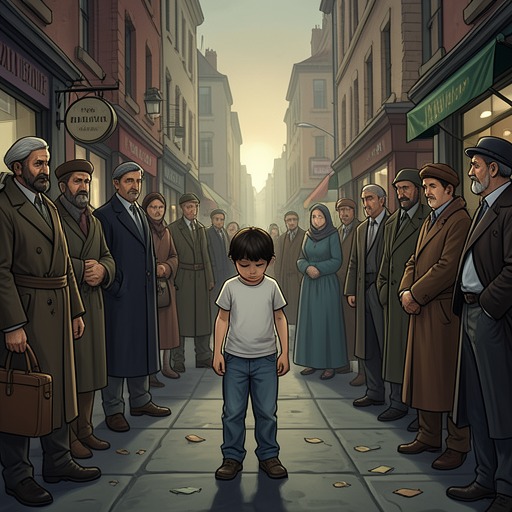
At the store, Pecola approaches the counter with three pennies taken from her shoe. The white immigrant storekeeper’s eyes momentarily register her, then withdraw; he does not see her because, in his perception, there is nothing to see. The episode makes racial exclusion an act of looking and withholding attention. No formal announcement is needed: the ordinary exchange itself communicates that Pecola does not merit recognition.
The school’s treatment of Maureen supplies a sharp contrast. Her wealth and appearance bring smiles from teachers and protect her from the routine hostility directed at other children. The disparity makes social standing legible through small, repeated interactions, not simply through declared beliefs. In this way, the racial order assigns different value to children before they have power to contest the judgments imposed on them.
A white child is taught by his mother not to play with Black children. She explains a distinction between “colored people” and “niggers,” assigning the former traits such as neatness and the latter a degraded status. The episode shows racial classification being taught as ordinary family knowledge: prejudice is transmitted through instruction that presents hierarchy as an obvious way to identify and sort people.
Coercion, Labor, and Bodily Vulnerability
Cholly and Darlene’s encounter with white hunters exposes the coercive force behind the everyday hierarchy. Two armed white men interrupt them; one directs a flashlight at them while the other orders Cholly to continue. Cholly tries to make himself presentable and asks for clarification, but the men’s guns and commands leave him unable to refuse safely. The incident is not an equal encounter between individuals: racial power is enforced through threat, humiliation, and control over what the couple may do.
The episode’s significance also lies in its consequences for Cholly’s experience of helplessness. The threat of armed white men converts a private moment into an imposed spectacle, while Darlene turns her gaze away. The scene establishes a history of racial coercion that informs Cholly’s later life without making that history an excuse for the harm he causes others.
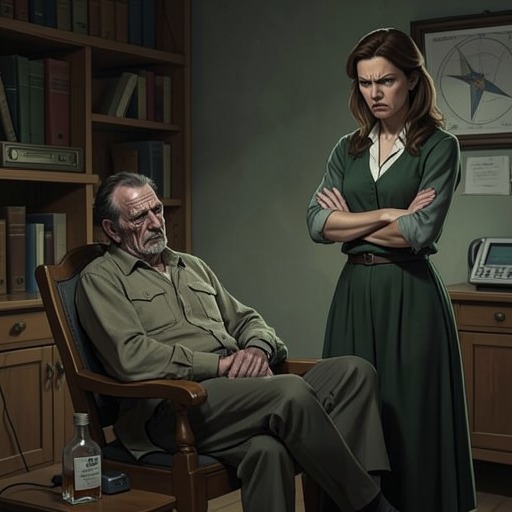
The novel also places racial hierarchy within gendered vulnerability. When Pecola spills juice, Mrs. Breedlove enters carrying a laundry bag and knocks her to the floor. The incident connects domestic violence to the household’s broader conditions without equating a mother’s violence with the racial violence represented elsewhere. It shows how a child can be exposed to harm at home as well as to disregard and exclusion beyond it.
A recollection of childbirth describes an old man teaching younger women about babies. He claims that the women being discussed deliver quickly and without pain, comparing them to horses. The account reduces women to reproductive bodies and treats their pain as negligible. Its comparison exposes a racialized assumption about whose suffering counts, especially when the speaker’s teaching is directed toward young women learning about childbirth.
Beauty, Conduct, and the Order’s Afterlife
Pauline’s memories of going to the movies connect romantic love and physical beauty with ideas that the narrative identifies as among the most destructive in human thought. The movies introduce her to an ideal of beauty that can shape desire and self-evaluation. The importance of this recollection is structural: racial hierarchy is not sustained only by direct force or exclusion, but also by images that teach people which forms of beauty deserve admiration.
The disciplined conduct associated with respectable Black women provides another measure of how norms are lived. The women described curl their hair in paper, cover their heads with printed scarves while sleeping, and keep their hands folded across their stomachs. They do not drink, smoke, or swear; they still use the euphemism “nookey,” sing second soprano in the choir, and are never selected to sing solos despite their clear, steady voices. Their self-restraint and exclusion from public recognition reveal how proper conduct can coexist with limited opportunity and silenced distinction.
The novel finally links these varied encounters to the community’s treatment of Pecola. The narrating sisters acknowledge that they had learned to defend themselves against everything and everybody, to treat speech as a code and gestures as objects of close scrutiny. They suggest that their response to Pecola’s social position may have been known without being consciously remembered. The racial order thus shapes not only the direct actions of white people or powerful institutions, but also the habits of perception through which a community protects itself, judges its members, and leaves a vulnerable child isolated.