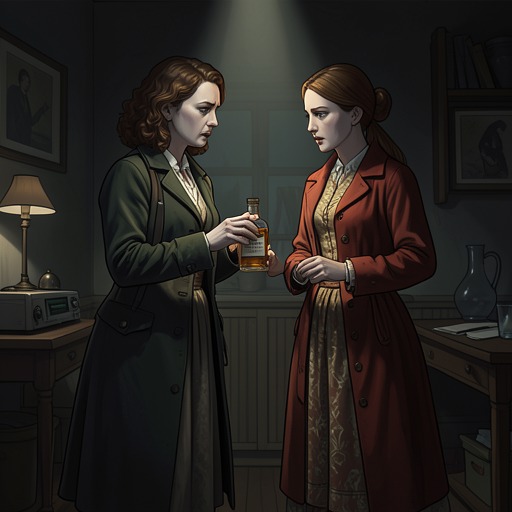
Pauline and the Fisher family
The Bluest EyePauline and the Fisher family are joined by a domestic employment relationship that becomes much more than a source of wages: in the Fishers’ home, Pauline finds the order, recognition, and material comfort missing from her own life. The arrangement gives her a name and a domain in which her work is admired, while leaving a sharp divide between the care she provides for the Fisher child and the conditions of her own family.
Employment and the Fisher Household
Pauline finds permanent work in the home of a well-to-do family whose members are described as affectionate, appreciative, and generous. The stability and approval of this job matter in a life otherwise marked by hardship. Within the household, Pauline’s work is not treated merely as routine labor: she is praised for maintaining the home, and her skill gives her authority over its domestic space.
The household’s comforts are tangible. Pauline cares for the little Fisher girl in a porcelain tub with plentiful hot water, dries her with fluffy white towels, and dresses her for bed. The well-appointed rooms and abundant supplies stand in contrast to the Breedloves’ storefront home. For Pauline, the Fishers’ linen, silk draperies, embroidered pillow slips, and neatly ordered rooms make domestic beauty part of the working environment she tends each day.
Work, Recognition, and a Private World
Pauline becomes what the narration calls an ideal servant. The role meets many of her needs: in the Fisher home she finds cleanliness, order, beauty, and praise. Mr. Fisher’s approval is expressed through his remark that he would rather sell her blueberry cobblers than real estate. The compliment registers both her cooking and the esteem her work earns within the household. The Fishers also give her the nickname Polly, a form of recognition she had not previously received.
At the end of the day, Pauline takes pleasure in surveying the kitchen and the results of her labor. The description presents her not simply as a worker performing tasks, but as someone who has created a protected sphere through those tasks. The house’s order gives her a position and a measure of control; the domestic work that could be invisible elsewhere becomes, in the Fishers’ home, the basis for praise and status.
The Divide Between the Fishers and Pauline’s Family
Pauline keeps this ordered, beautiful world for herself at work rather than bringing it into the Breedlove home. Her children are directed toward respectability, but they do not receive the same domestic care and tenderness she gives the Fisher child. The distinction is made especially clear when Pecola enters the Fisher household carrying laundry. After juice spills on Pecola, Pauline knocks her down and turns her attention to the Fisher girl, soothing her and worrying over her dress. Pecola is sent away with the laundry while Pauline remains with the child she serves.
The scene makes the household relationship legible through a contrast in treatment. Pauline’s skill and concern are present, but they are invested in the employer’s child and home; toward Pecola, the same moment brings rejection and physical punishment. The Fishers’ comfort is not shown as something Pauline transfers to her own family. Instead, the separation between her workplaces and her home gives material form to the unequal distribution of her labor and affection.
Significance of the Relationship
The Fisher household offers Pauline an enclave of order and appreciation, but that refuge depends on her position as a domestic worker. Her competence is recognized there, and the nickname Polly marks a social identity shaped by the work. Yet the beauty she maintains remains bounded by the employer’s home: she does not introduce it into the storefront where she lives with her children. The relationship therefore joins genuine recognition to a painful division, showing how a valued role in one household can coexist with neglect and hardship in another.
That divide also clarifies the consequences for the children. Pauline’s attentiveness to the Fisher girl is visible in the care of bathing, towels, clothing, and reassurance; Pecola’s encounter with the same household ends with her being knocked down and made to leave. The contrast is not simply between two homes but between two allocations of care. Through Pauline and the Fishers, the novel connects domestic labor, class difference, and the unequal distribution of tenderness without treating Pauline’s competence as a guarantee of safety or affection for her own children.