Pecola as the community’s scapegoat
The Bluest EyePecola as the community’s scapegoat is the role through which the novel reveals a collective moral evasion: people make Pecola bear the ugliness and distress they refuse to confront in themselves, then use her suffering to feel wholesome by comparison. Her isolation and the community’s treatment of her expose how social judgments about race, appearance, poverty, and vulnerability become shared instruments of exclusion.
Social Isolation and the Making of a Scapegoat
Pecola’s isolation precedes the community’s final response to her crisis. She studies her face in a mirror, trying to discover what makes her seem ugly and why teachers and classmates ignore or despise her. At school she is the only pupil sitting alone at a double desk. The account locates the source of ugliness not in a feature that can be identified, but in conviction: the judgments people carry shape what they see and how they treat her. The resulting exclusion makes Pecola appear to confirm the very verdict imposed on her.
The contrast with other Black women also reveals how narrow respectability can become a measure of worth. Women who do not drink, smoke, or swear, and who still call sex “nookey,” are presented as disciplined and proper, yet their clear choir voices are never selected for solo parts. Respectable conduct does not secure recognition; social judgment continues to determine who is permitted visibility and distinction.
The Scapegoat in Everyday Encounters
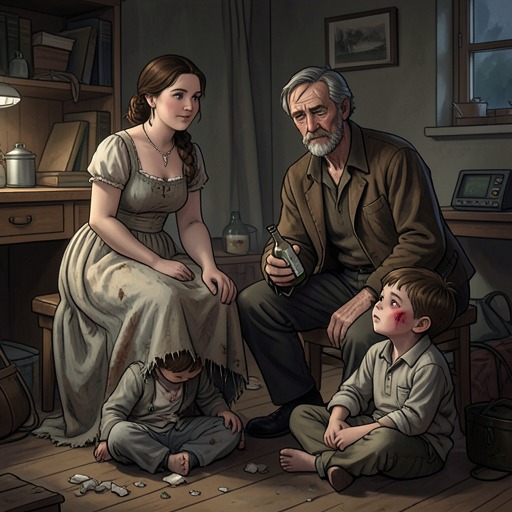
The treatment of Pecola is enacted in ordinary encounters as well as in public ridicule. When a spill from the blueberry pie burns Pecola’s legs, Mrs. Breedlove enters carrying a tightly packed laundry bag and knocks her to the floor. The moment places Pecola’s distress alongside the household’s competing demands and shows how little protection she receives. The community’s scapegoating is not only an abstract prejudice: vulnerability is met with further harm rather than care.
A remembered account of childbirth makes the same logic visible in a different setting. An older man tells women that they deliver immediately and without pain, “Just like horses.” The comparison reduces women’s bodies to a supposedly uncomplicated function, even as the young women look toward a pregnant woman. Such language helps establish a world in which others define vulnerable people through degrading categories rather than attend to their experience.
Projection, Gaze, and Displacement
The novel connects Pecola’s social fate to a broader structure of projection and unequal looking. During Cholly’s encounter with two white men, their arrival changes the immediate situation; afterward, his memory fixes on the flashlight, muscadines, and Darlene’s hands. The image of a space left by a newly pulled tooth conveys the lasting vacancy of that memory without making it a simple explanation for what happens to Pecola. It forms part of a wider history of injury and displacement, while the novel keeps responsibility for harm from disappearing into that history.
The narrator also recalls a community trained to interpret speech and gestures as codes, and to defend itself against what it encounters. That defensive habit helps explain how people can recognize Pecola’s suffering without answering it with protection. In the closing reflection, the narrator places children’s looks at Pecola beside their looks at Meringue Pie, suggesting a repeated social gaze that marks certain figures for scrutiny and contempt.
Aftermath and Collective Complicity
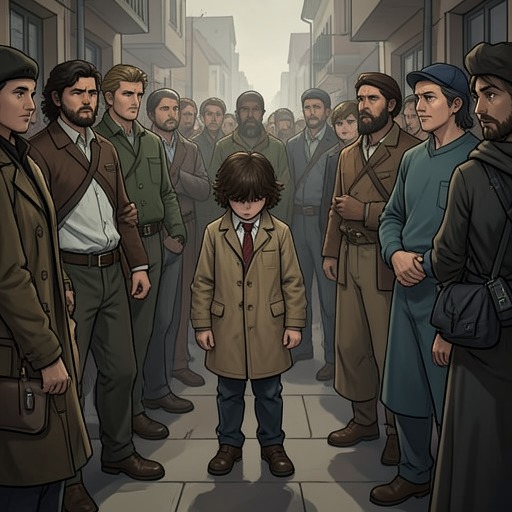
After Pecola’s baby comes too soon and dies, gossip and the slow wagging of heads accompany her visible sadness. Adults look away; children who are not frightened by her laugh openly. The account calls the damage total and describes Pecola as spending time in waking dreams. Her catastrophe does not produce communal solidarity. Instead, other people respond by distancing themselves, making her suffering another occasion for judgment.
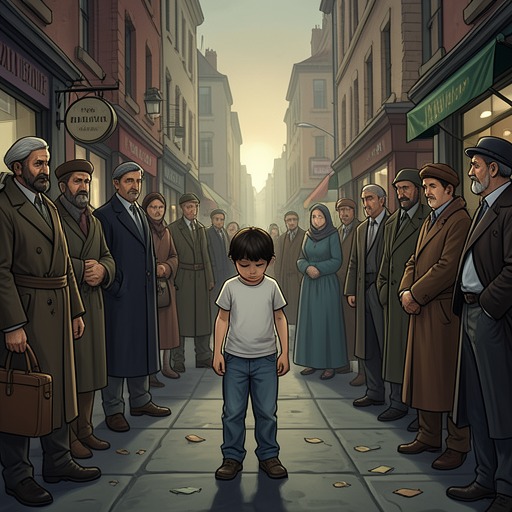
The closing passage names the exchange at the heart of the scapegoat role. The community dumps its waste on Pecola, while the beauty it had denied her is described as having belonged to her first and as something she gave back. People feel wholesome after cleaning themselves on her: her pain makes them glow with health, her awkwardness lets them imagine themselves humorous, and her poverty lets them feel generous. Even her waking dreams become material with which they silence their own nightmares. Their apparent strength depends on her imposed frailty, so the narrator overturns the community’s self-image: its members were not strong, only aggressive; not compassionate, but polite; not good, but well behaved. Pecola’s scapegoating is thus both a personal devastation and an indictment of the collective that uses her to conceal its own failures.