Pecola's social isolation
The Bluest EyePecola’s social isolation is not simply a matter of having no companions; it is a pattern of being ignored, singled out, and treated as though she does not merit attention or protection. The novel traces that pattern from the classroom and neighborhood into public encounters and the community’s response to her pregnancy and loss. Pecola’s isolation exposes how racialized standards of beauty and social belonging make a child’s exclusion seem ordinary, while also implicating those who witness it and fail to intervene.
School and the making of an outsider
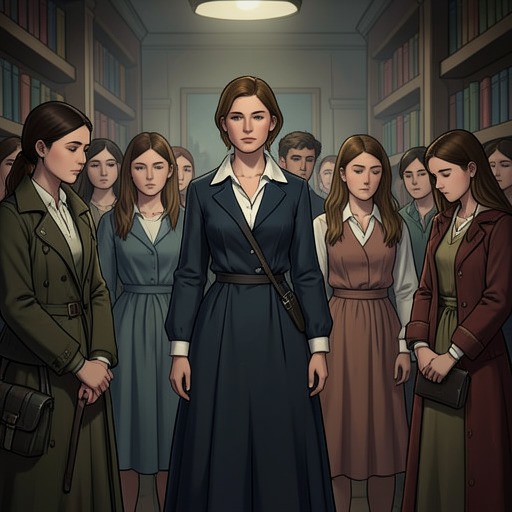
Pecola longs to belong to the people around her, but she has come to believe that she must remain with them because of how she looks. She sits for long hours before a mirror, trying to discover what makes her ugly and therefore ignored or despised. At school, she is the only pupil in her class seated alone at a double desk. Her surname places her at the front of the room, yet the seating arrangement makes her unequal treatment visible: a girl seated in front of her shares a desk with a boy.
Her teachers reinforce the distance. They try not to glance at Pecola and call on her only when the entire class is required to respond. The attention she does receive from classmates is more often a means of humiliating her: girls use her name to provoke boys, turning her into a taunt rather than addressing her as a peer. The difference between being overlooked and being noticed as a joke is central to her isolation; neither gives her ordinary recognition or companionship.
The book contrasts Pecola’s treatment with the welcome given to a popular girl at school. Teachers smile encouragingly at that girl, and other children do not subject her to the routine hostility Pecola faces. This contrast shows that acceptance is distributed according to a racialized beauty hierarchy, rather than granted equally to the children who share the same school.
Exclusion in public and among children
Pecola’s isolation appears outside the classroom as well. When she approaches the counter of a shopkeeper, he does not meet her as a customer deserving attention. His glance withdraws, and the narration describes him as sensing that there is no reason to spend the effort of looking at her. The encounter renders social invisibility concrete: Pecola is physically present, but the adult’s attention excludes her from the human exchange taking place at the counter.
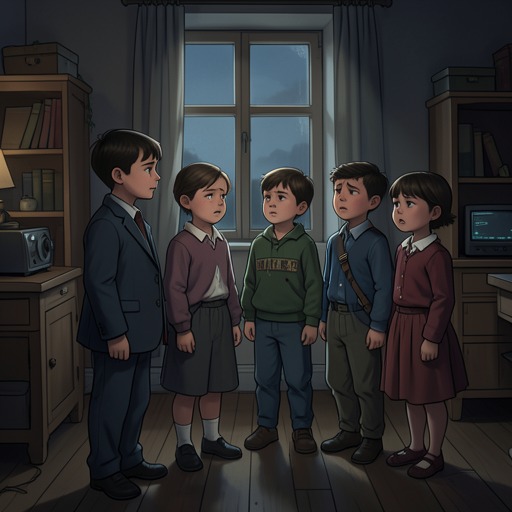
A playground scene makes her vulnerability equally public. A group of boys circles her and holds her at bay while Claudia and Frieda are nearby. Pecola edges around the circle crying, her notebook dropped and her hands covering her eyes. The sisters watch, afraid the boys might turn their attention toward them. Their fear helps explain their hesitation, but it also shows how the scene isolates Pecola even among children who can see that she is being targeted.
The pattern is not limited to one cruel exchange. A boy who sees Pecola taking a shortcut through a playground remembers that she is always alone at recess and that nobody plays with her. He assumes her appearance explains this exclusion. That judgment turns an observed social fact into a supposed personal defect: the children’s refusal to include Pecola is made to look like evidence that she deserves to be refused.
Belonging, judgment, and the cost of looking
The novel connects Pecola’s ostracism to a wider process of judgment. The narration describes people who appear ugly not because their features reveal a single cause, but because of a conviction that others perceive and read into them. Pecola’s school isolation gives that insight social force: repeated disregard teaches her to search her own face for the reason other people exclude her, rather than to identify their behavior as a choice.
That treatment also contrasts with the way adults and children respond to other girls. In one account, a set of women are described through their careful routines and strict respectability; they do not drink, smoke, or swear, and their voices are clear in the choir, though they are never selected to sing solo. Such details underscore how social approval and public recognition can be governed by narrow expectations, without implying that every excluded person experiences exclusion in the same way. For Pecola, being ignored and mocked compounds the vulnerability of a child already denied dependable social recognition.
Claudia and Frieda’s later narration revisits their own response to Pecola’s mistreatment. They recognize that they had learned to defend themselves by treating speech as a code and gestures as things to scrutinize, but that awareness does not erase their earlier failure to act. Their recollection places the burden of the playground scene beyond the aggressors alone: fear kept the sisters from intervening, and their later understanding marks the limits of sympathy when it does not become protection.
Isolation after the loss
After Pecola’s baby comes too soon and dies, social exclusion hardens into a community-wide abandonment. Claudia and Frieda remember the gossip and the slow wagging of heads. Adults look away; children who are not frightened by Pecola laugh openly. The people around her respond to her devastation not with care but with avoidance, talk, and ridicule, leaving her exposed to the consequences of a crisis she cannot manage alone.
The narration calls the damage total and describes Pecola as profoundly sad to see. This ending does not present her isolation as a sudden change caused by one event. It completes the pattern already visible in the classroom, at the shop counter, and in the playground: people who have repeatedly failed to recognize Pecola continue to withhold recognition when she most needs support. Claudia and Frieda’s remembering makes that continuity an ethical question as well as a description of Pecola’s fate.
Narrative significance
Pecola’s social isolation reveals how exclusion can be built out of ordinary gestures: a teacher’s avoided glance, a desk left unshared, a name turned into a joke, a shopkeeper’s withdrawn attention, and bystanders’ fear. None needs to announce itself as a formal rule for its effects to accumulate. Across these settings, the same child is repeatedly treated as though she does not belong.
The novel also refuses to treat that exclusion as evidence that Pecola is inherently unworthy. Its account instead directs attention to the people who judge, ignore, mock, or leave her unprotected, and to the beauty standards that lend their judgments social authority. In the retrospective voice of Claudia and Frieda, recognition comes late: they can describe how the community abandoned Pecola, but their own memory also records that witnessing her suffering did not, at the time, ensure that she was defended.