Pecola's social ostracism
The Bluest EyePecola’s social ostracism is not a single rejection but a widening pattern: she is marked as ugly, ignored at school, and left alone by the community even after her pregnancy and the death of her baby. The novel shows this exclusion harming her, while also exposing how those who look away or laugh use her as a measure against which to reassure themselves of their own goodness and strength.
The Making of an Outsider
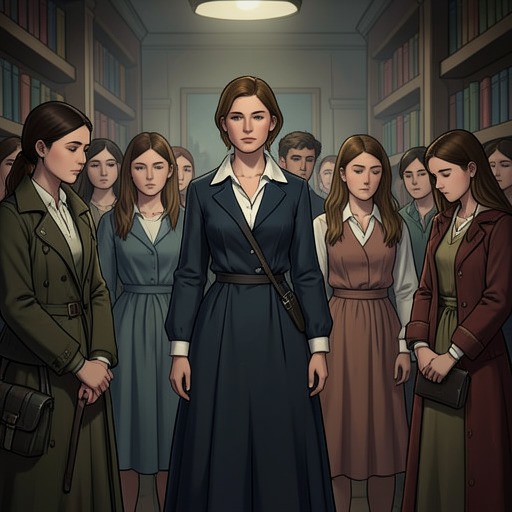
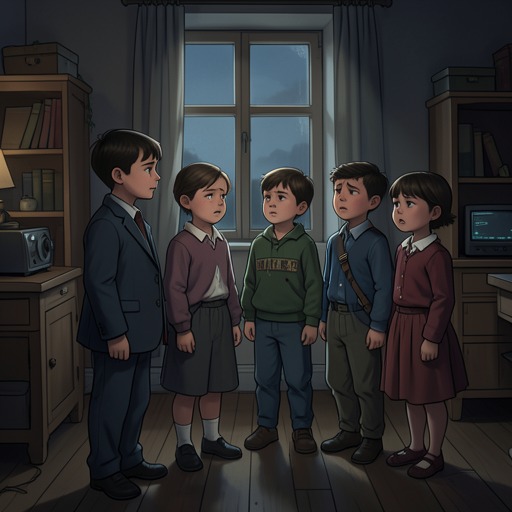
Pecola’s isolation begins in the ordinary setting of school. She spends long hours looking in a mirror, trying to find the source of an ugliness she believes makes her ignored or despised by teachers and classmates. She is the only pupil in her class seated alone at a double desk. The room’s arrangement gives social rejection a visible form: an empty place beside Pecola makes her exclusion part of the daily classroom landscape.
The narration connects that rejection to a broader judgment about appearance. In the aftermath of Maureen Peal’s words, Claudia and Frieda absorb the implication that if Maureen is cute, they must be lesser. The encounter shows how a hierarchy of beauty can turn comparison into a measure of social worth, while Pecola bears the harshest consequences of being treated as ugly. Her exclusion is not presented simply as a private insecurity; it is sustained by the judgments and habits of the people around her.
Humiliation and Abandonment
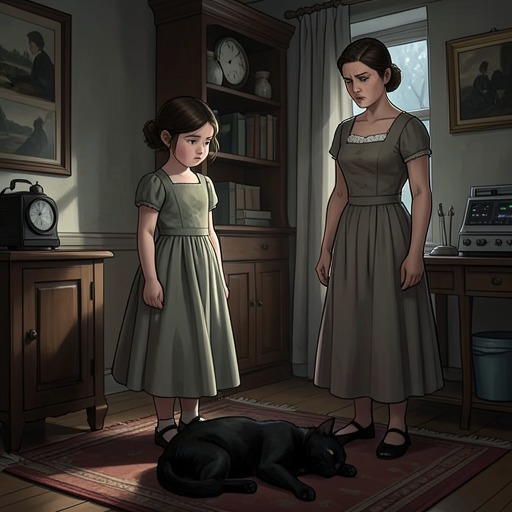
A scene at the Fisher household makes the unequal distribution of care stark. When juice spills onto Pecola’s legs, she cries out and hops about; Mrs. Breedlove enters carrying a tightly packed laundry bag and knocks Pecola to the floor with the back of her hand. The episode does not establish the wider community’s reaction, but it shows Pecola exposed to harm in a household where her distress does not bring protection. Her vulnerability is compounded by the lack of a dependable adult response.
The novel also places Pecola’s isolation against the conventions governing other women’s lives. The upstairs women are described as not drinking, smoking, or swearing, and as continuing to call sex “nookey”; they sing second soprano in the choir but are never chosen to sing solo. This detail is not evidence that they directly ostracize Pecola. Rather, it situates her story within a world where women’s conduct and voices are constrained and ranked, sharpening the contrast between the attention given to social expectations and the care denied to a vulnerable girl.
The Aftermath of Loss
After Pecola’s baby comes too soon and dies, the community’s response is gossip and the slow wagging of heads. Adults look away; children who are not frightened by her laugh outright. The sequence records not a recovery of social bonds but their further collapse. Her loss becomes public knowledge, yet being seen does not mean being met with care.
The narration describes the damage as total and depicts Pecola as fixed on a blue void she cannot reach or even see, though it fills the valleys of her mind. The image conveys the depth of her withdrawal without making her suffering into a spectacle. Claudia and Frieda sometimes see her, but they try to see her without looking and never go near. They explain their distance not as disgust or fear, but as knowledge that they have failed her. Their admission makes the girls’ regret part of the account of ostracism: even those who recognize their failure do not cross the distance to reach her.
Community Complicity and Meaning
The retrospective voice broadens the charge beyond those who openly mock Pecola. The narrators recall having defended themselves since childhood against everything and everybody, treating speech as a code and gestures as something to examine carefully. That wary posture helps explain how children can understand a social scene while still failing to act against its cruelty. Knowing what is happening does not automatically produce solidarity.
The novel finally describes Pecola as the person onto whom the community deposits its waste, while claiming the beauty it had once been hers to give. Those who knew her feel wholesome after cleaning themselves on her; her simplicity decorates them, her guilt sanctifies them, and her poverty allows them to feel generous. They even use her waking dreams to quiet their own nightmares. The account reveals ostracism as a social transaction: Pecola is made to carry shame and damage so that others can imagine themselves as innocent and admirable.
That transaction also explains the narration’s sharp distinction between strength and aggression. The community’s sense of superiority is a fantasy, built by standing astride Pecola’s perceived ugliness and honing its ego on her frailty. Her isolation thus exposes more than individual unkindness. It shows how collective self-esteem can depend on assigning one person the role of the rejected outsider, while recognition of that injustice arrives too late to restore the connection she needed.