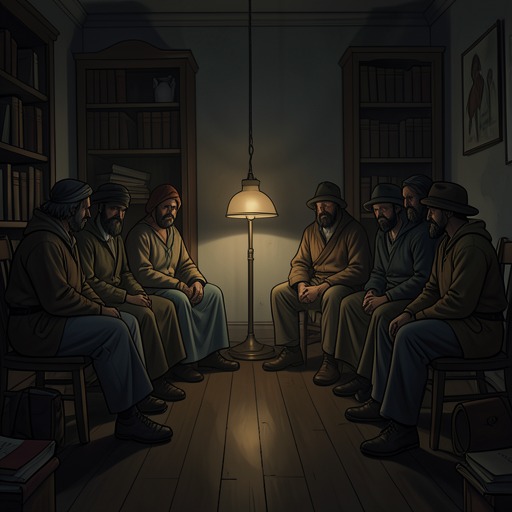
We were not strong, only aggressive
The Bluest Eye“We were not strong, only aggressive” names the difference between genuine strength and a defensive posture that harms someone more vulnerable. In Claudia’s retrospective account, the phrase belongs to a chain of self-corrections: the community called aggression strength, permission freedom, politeness compassion, and orderly behavior goodness. The reckoning turns the story of Pecola from an account of one girl’s suffering into an acknowledgment of the people who made her vulnerability useful to themselves.
The phrase in context
Claudia’s narration admits that the community made use of Pecola’s poverty and even her waking dreams, drawing comfort from them when they wanted to quiet their own fears. That use fostered a false sense of generosity: Pecola’s hardship let others imagine themselves as more humane and secure. The statement about aggression exposes the bargain beneath that self-image. The community’s apparent strength depended on a girl who had been left exposed, not on its ability to protect her.
The sentence’s force comes from its paired reversals. “We were not strong, only aggressive” is followed by “we were not free, merely licensed” and “we were not compassionate, we were polite.” The repeated corrections do not offer aggression, license, or politeness as virtues. They strip the group’s approving labels away from behaviors that look respectable or powerful from within, but fail the more demanding tests of freedom and care.
A collective confession
The first-person plural makes this a communal admission rather than an accusation aimed at one isolated individual. Claudia’s voice includes herself among those who used Pecola’s frailty to pad their own characters and hone their egos. Her account does not present the community as having simply misunderstood Pecola: it describes a relationship in which others benefited from treating her as a contrast that made them feel stronger.
The narration also distinguishes between how the community wanted to understand itself and what its conduct amounted to. It had called itself brave while courting death, and it had hidden from life; it had substituted good grammar for intellect and changed habits to simulate maturity. These contrasts extend the central phrase into a wider criticism of self-deception. A respectable appearance, a rehearsed manner, or a claim to courage cannot by itself establish that the underlying quality is present.
From rationalization to responsibility
The passage presents the group’s failures as a pattern of renaming and rearrangement. It switched habits and rearranged lies, then called the resulting pattern truth. That language connects the community’s treatment of Pecola to its account of itself: both depend on a story that makes existing behavior seem acceptable. The confession interrupts that story by naming the gap between the labels and the actions they disguise.
The conclusion contrasts the community’s aggression with Pecola’s withdrawal into madness. The narration says that her madness protected her from the others because it bored them, while her poverty had kept them generous. The contrast is severe: what had served the community as material for self-congratulation eventually placed Pecola beyond its interest. Rather than presenting this outcome as a recovery or rescue, the passage exposes the cost of a care that depended on Pecola remaining a usable object of comparison.
Narrative and thematic significance
Because Claudia speaks retrospectively as part of a “we,” the phrase carries both confession and implication. It does not let the narrating community occupy the position of an innocent witness to Pecola’s suffering; its members acknowledge their participation in the judgment and neglect that shaped how she was treated. The admission is powerful precisely because it does not turn recognition into proof that the damage has been repaired.
The phrase therefore works as a compact ethical measure for the novel’s late self-examination. Aggression can be mistaken for strength, just as permission can be mistaken for freedom and manners for compassion. By correcting those names, the narration identifies a central harm: Pecola’s vulnerability made other people’s self-image easier to maintain, even as she was left to bear consequences they could avoid acknowledging. The statement is not a claim of strength regained, but a recognition that the community’s former claim to strength was false.