White beauty standards
The Bluest EyeWhite beauty standards name the racialized ideal that makes white appearance seem universally beautiful and turns that claim into a measure of personal worth. In the novel, the standard is not simply a preference for one look: it is repeated by adults, girls, shops, magazines, newspapers, and signs, until a blue-eyed, yellow-haired, pink-skinned doll appears to embody what every girl is supposed to treasure. Its force lies in that apparent unanimity. A hierarchy made by society presents itself as natural, and those excluded from its ideal are left to interpret exclusion as a defect in themselves.
How the Ideal Is Taught
The doll is a concentrated lesson in looking. The narrator recalls wanting to take one apart, not because its beauty was self-evident, but to discover what others saw in it: the loveliness and desirability that seemed to have escaped her alone. The surrounding world had already agreed on the doll’s value. When the narrator destroyed white dolls, the more disturbing consequence was recognizing that the impulse to reject them could transfer to white girls. The episode distinguishes resistance to a manufactured ideal from the harm that can follow when its terms become part of a child’s way of seeing other people.
Movies provide another form of instruction. Pauline Breedlove goes to the cinema after a different kind of loneliness settles over her, and there her earlier dreams are renewed. The movies introduce her to romantic love and physical beauty as powerful ideals, which the narration describes as arising from envy and capable of deceiving the lover and constraining the beloved. Pauline’s moviegoing does not merely offer diversion: it trains her to sort faces according to a scale of absolute beauty, a scale she absorbs from the screen. Once learned, that ranking follows her beyond the theater into ordinary life.
The ideal also enters through social distinctions that appear to concern respectability or class rather than beauty alone. Maureen Peal arrives at school as a conspicuously affluent, high-yellow girl, with long brown hair braided into two braids. Her introduction of herself to Pecola includes a reference to the film Imitation of Life, where a character’s relation to her mother is framed through color and racial identity. Elsewhere, a mother instructs her son to distinguish “colored people” from “niggers,” linking cleanliness and social presentation to a racial ranking. The novel’s examples show how complexion, class, behavior, and appearance can reinforce one another rather than operate as separate standards.
Beauty as a Promise of Protection
Pecola imagines that looking different, perhaps beautiful, might change how her parents treat her. She wonders whether her mother and Cholly would stop doing bad things in front of her if they saw her as pretty-eyed. This hope makes beauty more than an aesthetic aspiration: it becomes a child’s imagined route to tenderness and safety. The cruelty of the standard is clearest here. Pecola is led to locate the cause of mistreatment in her appearance, as if changing her eyes could change the conduct of the adults responsible for her care.
The same racialized hierarchy surrounds the Breedloves’ living conditions, but the narration refuses to explain their poverty as a temporary setback. They live in a storefront because they are poor and Black, and remain there because they believe themselves ugly. Their circumstances and their self-image converge: material deprivation is joined to an internalized account of who deserves beauty and belonging. The novel therefore connects the standards imposed by the wider world to the way people may come to interpret and inhabit their own exclusion.
Family, Work, and Unequal Looking
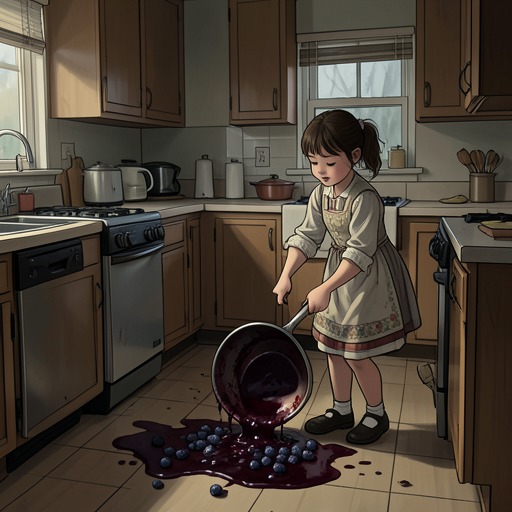
The standard has consequences in domestic life as well as in public images. When Pauline enters the kitchen while Pecola is hurt by spilled juice, she knocks her daughter down. The scene places Pecola’s vulnerability and her mother’s response within a household where care is unevenly distributed; it gives no basis for treating beauty as a remedy for the harm. Read alongside Pecola’s hope that pretty eyes might alter her parents’ behavior, the incident reveals the gap between the protective power she assigns to beauty and the safety she actually receives.
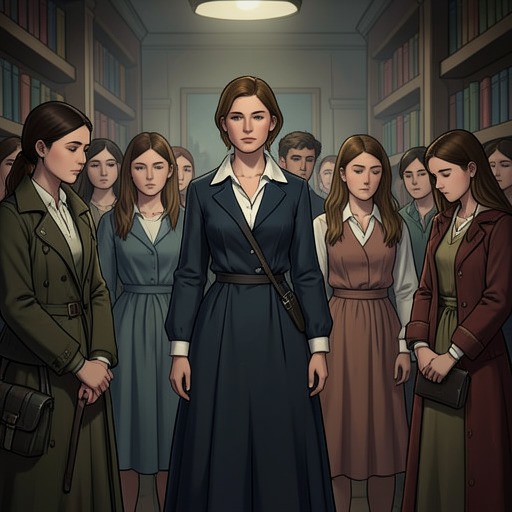
The novel also sets ideals of feminine conduct alongside the work and vulnerability of Black women. A group of women are described as not drinking, smoking, or swearing, as still using the word “nookey” for sex, and as singing second soprano in the choir without being chosen to solo. In a separate remembered account, a speaker recalls that women giving birth were compared to horses and said to deliver quickly and without pain. These details do not establish a single explanation for every woman’s circumstances; they show how respectability and racialized expectations can coexist with the denial of individuality, voice, and bodily vulnerability. Beauty standards belong to this larger field of judgment, in which Black women and girls are evaluated while their experiences are minimized.
Social Reproduction and Narrative Consequences
The ideal reproduces itself through more than direct instruction. A wealthy family’s Anglophilia is passed on to six children and sixteen grandchildren, and most of the children marry “up.” The detail shows inherited aspiration at work across generations: European cultural preferences and social elevation are cultivated as markers of status. In the schoolyard, too, racial categories are taught as if they were readily identifiable facts. Such scenes make hierarchy an ordinary lesson, carried by family, peers, popular culture, and institutions rather than confined to a single openly hostile encounter.
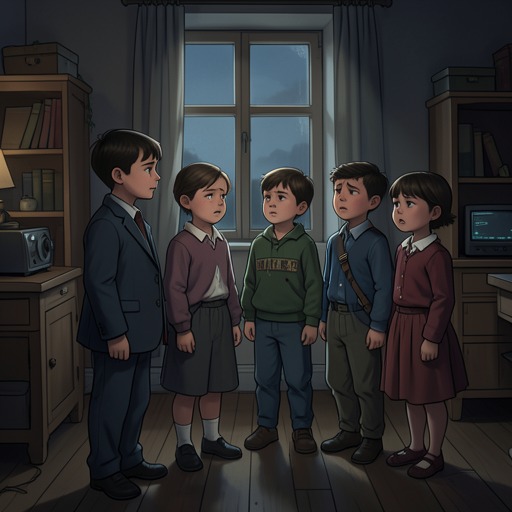
The first-person narration ultimately implicates the community in the same habits of looking. Recalling the children’s eyes on Pecola, the narrator admits uncertainty about what they remembered and says that they had learned to treat speech as a code and gestures as objects for scrutiny. The admission complicates the distinction between those who impose a standard and those who suffer under it: watching, judging, and interpreting are themselves shaped by the racial world around them. White beauty standards thus work as both an external hierarchy and an internalized way of seeing. Their deepest damage is not only that they declare white features beautiful, but that they make a child like Pecola hope that changing her appearance could make others recognize her, protect her, and treat her as worthy of love.