the Breedloves' poverty
The Bluest EyeThe Breedloves’ poverty is not a passing setback but a condition the novel connects to being poor and Black, and to a family’s conviction that it is ugly. It shapes the physical limits of their home and the emotional climate within it: even its coal stove seems to live independently of the people around it. Material hardship and internalized ugliness converge, making poverty both an imposed circumstance and a force that restricts how the family understands itself.
Material Conditions of the Home
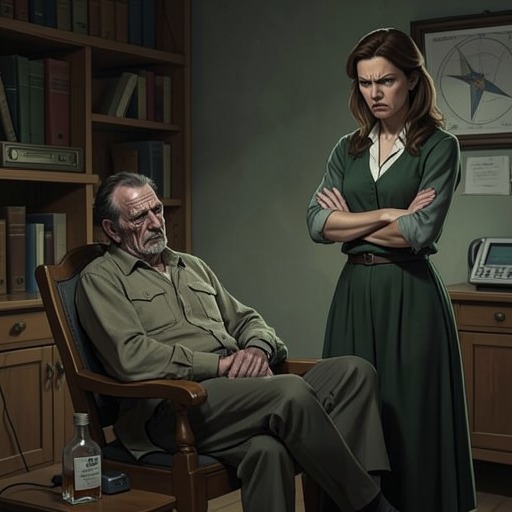
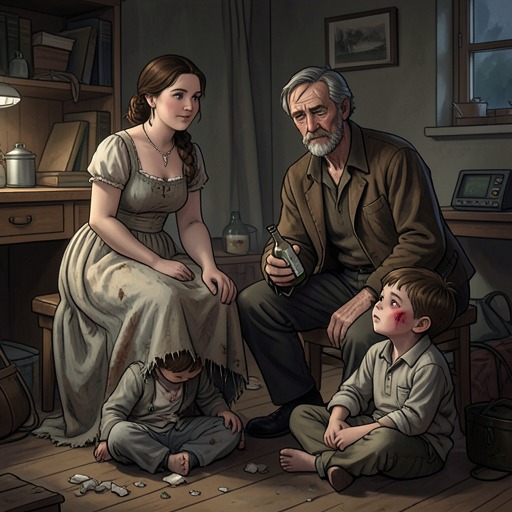
The family lives in a storefront rather than a conventional home. The room serving as the bedroom has a coal stove at its center to distribute heat; trunks, chairs, a small end table, and a cardboard wardrobe are arranged along the walls. The kitchen is a separate room at the back, and the apartment has no bathing facilities. The sparse furnishings and missing amenities give poverty a concrete domestic geography: the family’s space is organized around making do, not comfort or privacy.
The coal stove becomes more than a heating appliance. The narrative calls it the only living thing in the house, describing its fire as independently “out,” “banked,” or “up.” Its separate-seeming life emphasizes the household’s bleakness: a basic necessity appears to possess more autonomy than the people living around it. Poverty is thus registered not only through what the home lacks, but through the way its central object seems to govern the space on its own terms.
Poverty as an Entrenched Condition
The novel explicitly rejects the idea that the Breedloves’ storefront life is a temporary response to cutbacks at the plant. They live there because they are poor and Black, and remain there because they believe themselves ugly. The distinction matters: their circumstances are not explained as a brief economic interruption that better fortune would simply reverse. The family’s poverty is part of a racialized condition, while their belief in their own ugliness helps make the deprivation feel fixed and inescapable.
The text calls their poverty traditional and stultifying, yet not unique. This contrast places their hardship within a larger pattern rather than treating it as an exceptional misfortune. It also distinguishes material deprivation from the family’s sense of ugliness, which the narrative presents as uniquely and aggressively held. Poverty is ordinary in the social landscape around them; the conviction that they are irredeemably ugly is another injury, shaping how the family inhabits that landscape.
Contrasts in Domestic Life
Elsewhere, families work anxiously to secure and improve their homes. They preserve food through the summer, filling cupboards and shelves, and paint and tend to every corner of their houses. Against this effort to build domestic abundance, the Breedloves’ bare arrangement of trunks, chairs, and a cardboard wardrobe makes the limits of their household stark. The contrast does not make other families’ security effortless—those households fuss over hard-won homes—but it reveals how unevenly the labor of making a home is rewarded.
This disparity gives poverty a social as well as a material meaning. The Breedloves are not simply short of particular possessions; their living conditions mark them as excluded from the domestic stability that neighboring households try to create. The storefront, lack of bathing facilities, and sparse furniture make that exclusion legible without needing to reduce it to a single explanation or incident.
Effects Within the Family
Poverty operates alongside the Breedloves’ belief that they are ugly. The narrative refuses to make the family’s material condition and self-image interchangeable: it names racialized poverty as a cause of their storefront life, then identifies belief in ugliness as a reason they stay. That distinction gives the condition both an external and an inward dimension. Their circumstances constrain the home they can occupy; their self-understanding compounds that constraint.
The surrounding episodes show how vulnerability and deprivation meet in family life. When a child begs God to disappear, parts of her body seem to fade; another passage describes a child telling her sisters that a man touched her. After a later assault, a child’s pain is set against her mother’s looming face, while a fractured primer refrain interrupts the scene. These moments do not make poverty the sole cause of violence or distress. They place the family’s material insecurity beside experiences of fear, bodily harm, and a need for protection that the household cannot reliably provide.
Narrative Significance
By returning to the storefront and its objects, the novel makes poverty more than background. The coal stove, cardboard wardrobe, and missing bath facilities give deprivation specific forms, while the statement that the Breedloves remain because they believe themselves ugly exposes how social conditions can become entangled with self-perception. The home stands at once for constrained resources and for a family’s damaged sense of what it deserves.
The surrounding contrasts keep the condition from becoming an isolated portrait of one household. Other people labor over cupboards and houses of their own, but the Breedloves’ poverty is explicitly tied to being poor and Black, and the narration identifies it as part of a wider, stultifying pattern. Its significance lies in this combination: material hardship narrows daily life, racial exclusion helps determine the family’s position, and internalized ugliness deepens the sense of confinement.