
The Sword and Its Companion
The Book of Five RingsThis thread follows Musashi’s case for carrying and training with two swords as an expression of adaptability.
increasing Bearing strength in each event
 decreasing
Bearing strength in each eventdecreasingTwo Swords at the Belt
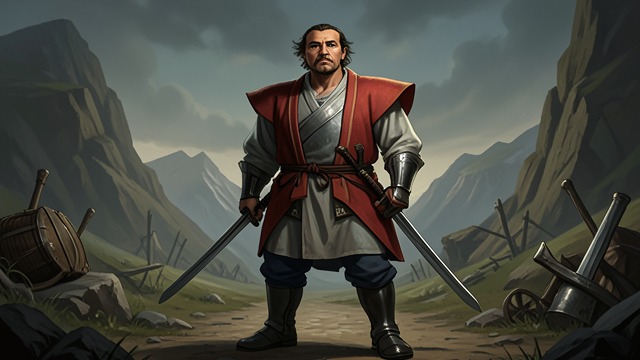
A Warrior’s Equipment
Long and Companion Swords
Musashi begins from the customary image of a warrior carrying two swords. He uses this familiar equipment to introduce a distinct strategic method.
More Than Custom
The presence of two weapons is not enough by itself. The learner must discover how their different reach and uses can work together.
One-Handed Handling
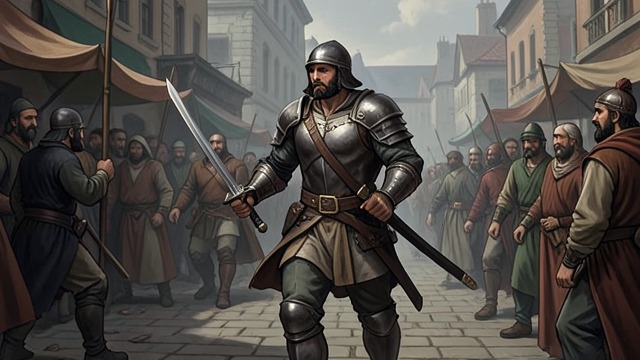
Freedom in the Hands
The Case for One Hand
Musashi argues that carrying the Long sword in one hand leaves the other available and makes movement less encumbered in varied terrain or crowds.
Training the Unfamiliar
He acknowledges that one-handed use is difficult at first. Practice with a sword in each hand is meant to make the capacity natural.
Training Both Hands
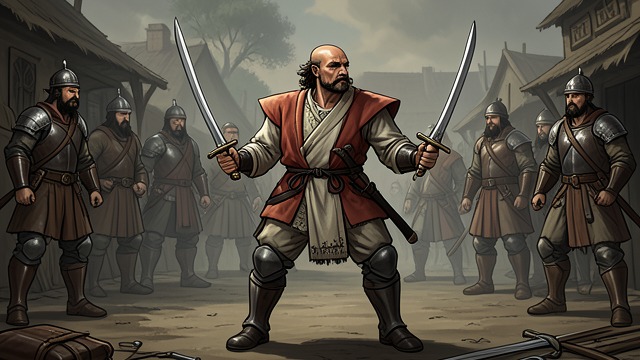
Difficulty as a Starting Point
Unequal Familiarity
The learner may initially find two swords awkward. Musashi compares this to other weapons that become manageable through repeated handling.
A Broader Capacity
The purpose is not novelty for its own sake. Practicing both hands gives the warrior more freedom to respond when one-handed use is advantageous.
Different Ranges
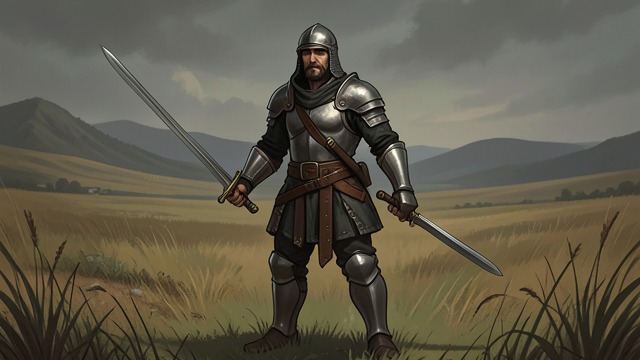
Long and Close
Complementary Use
Musashi says the Long sword should be wielded broadly and the Companion sword closely. Their roles differ according to distance and circumstances.
No Single Answer
The method teaches choice rather than dependence on one weapon. A strategist must understand when each tool contributes to victory.
Winning by Any Means

The Principle Behind the Pair
Tools and Purpose
Musashi extends the argument beyond two swords: one may win with a long or short weapon, provided the underlying strategic spirit is sound.
Adaptability Over Display
The method matters because it opposes narrow attachment. Its success is measured by practical response, not by spectacle.
During the Ground Book’s naming discussion
During the explanation of Niten Ichi-ryū
At the beginning of two-sword practice
During the Water Book’s weapon guidance
Near the end of the two-sword discussion
