
Learning Through the Five Books
The Book of Five RingsThis thread follows the reader’s passage through the five-part structure as a staged education in strategic judgment.
increasing Bearing strength in each event
 decreasing
Bearing strength in each eventdecreasingGrounding the Way
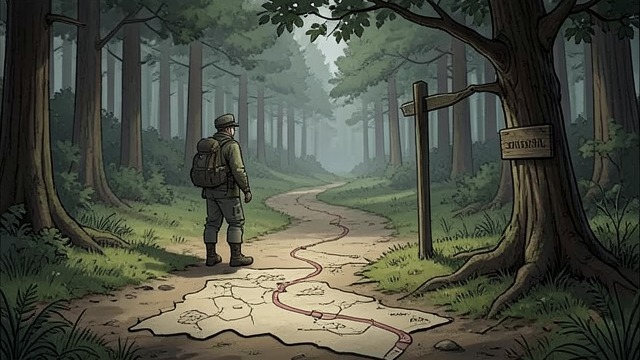
The Ground
A Straight Road
The Ground Book lays out the broad structure of Niten Ichi-ryū and establishes the terms needed for study. It presents strategy as a road whose smallest and largest features must both be understood.
Orientation Before Action
The book’s first task is to give the learner bearings. Without this foundation, techniques risk becoming disconnected movements.
Water’s Adaptability

The Water
Shape and Principle
Water changes according to its receptacle, and the Water Book uses that flexibility to frame sword practice. The learner must absorb the method rather than imitate a fixed outward form.
From One to Many
Musashi connects mastery of one encounter to the capacity to understand many. Adaptability becomes a practical route from individual technique to general strategy.
Fire and Conflict

The Fire
The Heat of Combat
The Fire Book turns explicitly to fighting. Like fire, conflict can be small or immense, and a strategist must perceive the difference without losing the underlying principle.
Decisions Under Pressure
Its emphasis on quick judgment makes training part of ordinary life. The learner is prepared to act amid changing conditions, not merely to recall rules afterward.
Wind and Comparison
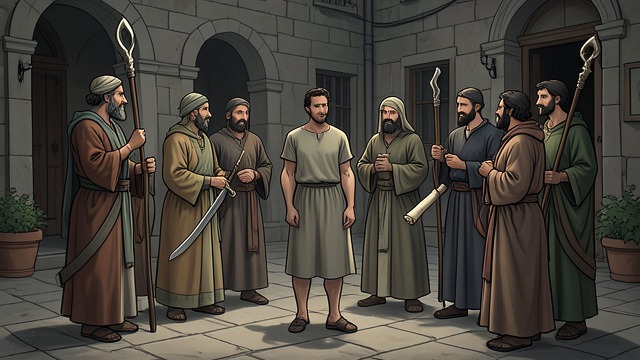
The Wind
Studying Other Schools
The Wind Book describes other traditions so the reader can recognize both their strengths and their limitations. Knowing one’s own approach requires awareness of alternatives.
Avoiding Side Roads
Comparison is not an invitation to copy every method. It is a way to identify when a practice has mistaken flourish or convention for the true Way.
Void and Completion

The Void
What Void Is Not
Musashi warns that confusion or lack of knowledge should not be mistaken for Void. The learner must first study fully and clear away misunderstanding.
A Mature Understanding
The book concludes with a principle that cannot be reduced to another technique. Void becomes intelligible through disciplined practice, clear judgment, and natural response.
At the beginning of the Ground Book
At the opening of the Water Book
At the opening of the Fire Book
At the opening of the Wind Book
At the opening and close of the Void Book
