
Perception Beyond the Eyes
The Book of Five RingsThis thread traces Musashi’s distinction between broad perception and narrow sight as a foundation for reading combat.
increasing Bearing strength in each event
 decreasing
Bearing strength in each eventdecreasingTwo Ways of Seeing

Perception and Sight
A Broad Gaze
Musashi distinguishes perception from sight, describing perception as strong and sight as comparatively weak. The practitioner should not confuse looking directly at detail with understanding.
Strategic Attention
The gaze must take in the situation broadly. A fighter needs to see what matters without becoming captive to each movement.
Near and Far Reversed

Correcting Distance
Seeing Across Scales
Musashi advises seeing distant things as close and taking a distant view of what is near. This paradox encourages a flexible sense of importance and range.
Avoiding Distraction
The fighter should know the opponent’s sword without being drawn into insignificant motions. Attention belongs to the whole action, not its most conspicuous detail.
Eyes Without Fixation

Looking Broadly
Both Sides at Once
Musashi says the practitioner should learn to look to both sides without moving the eyes. He warns that the ability cannot be mastered quickly.
A Stable Habit
The gaze should be used in ordinary life and not abandoned when circumstances change. Its value lies in keeping attention open under pressure.
Reading the Enemy’s Spirit
The Heart Behind Movement
Beyond Hands and Feet
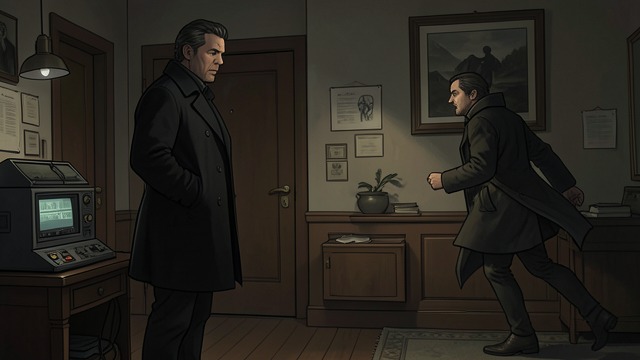
Musashi rejects fixing attention on a specific body part or weapon. Such narrow focus can bewilder the spirit and cause the fighter to miss important changes.
Appraisal Through Experience
After many encounters, the strategist can assess speed, position, and the enemy’s spirit more naturally. The gaze becomes informed by practice.
The Battlefield as a Whole
Seeing Formation and Change
The Enemy’s Strength
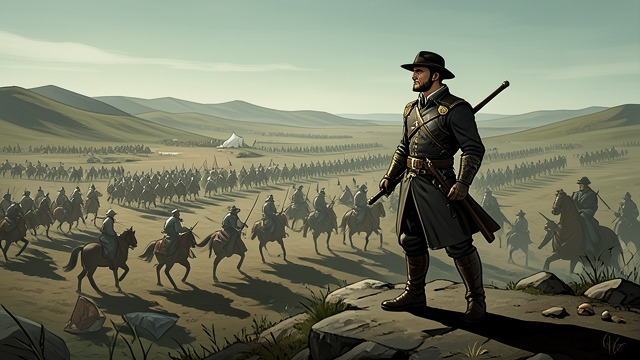
In large-scale strategy, perception concerns the enemy’s strength and the changing condition of the field. The strategist watches progress and shifting advantages.
A Route to Victory
Broad perception connects separate movements into a meaningful pattern. Victory depends on understanding what the entire situation is becoming.
During the Water Book’s gaze instruction
As the gaze instruction develops
During the Water Book’s instruction on peripheral vision
During the Wind Book’s critique of fixed gazes
When the discussion shifts to large-scale strategy
