
The Carpenter as a Model for Strategy
The Book of Five RingsThis thread traces the analogy between carpentry and command, from planning and materials to assigning work and judging a finished result.
increasing Bearing strength in each event
 decreasing
Bearing strength in each eventdecreasingThe House as a Campaign
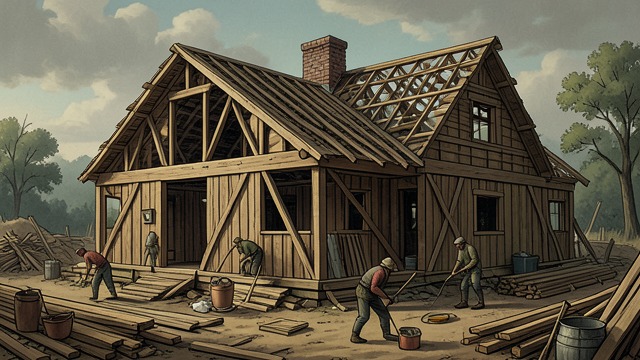
Building and Battle
A Shared Structure
Musashi compares strategy with carpentry because both involve plans, materials, roles, and outcomes. A commander must think beyond the moment of action.
Reading the Whole
Houses rise or decline according to how their parts are chosen and organized. The analogy makes strategy a craft of constructing conditions for success.
Choosing the Timber

Different Uses for Different Wood
Matching Material to Function
The carpenter selects straight, strong, fine, or imperfect timber according to where each piece will serve. Musashi treats discernment as more important than uniformity.
Strategic Application
People and tools also have varied strengths and limits. A strategist who understands those differences can use resources without demanding that they all be identical.
Allocating the Work
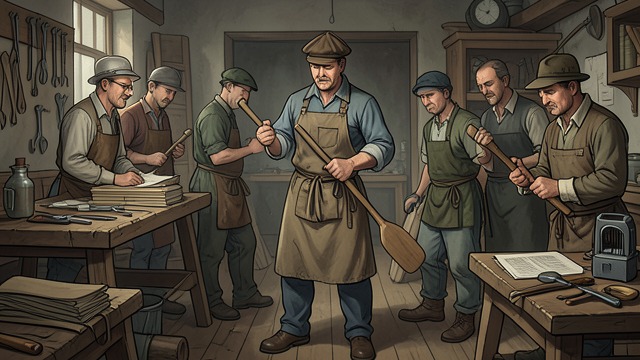
Work Suited to Ability
A Skilled Foreman
The carpenter’s foreman assigns complex and simple work according to the workers’ capacities. The finished structure depends on good judgment in delegation.
Command as Knowledge
Musashi asks the commander to circulate among subordinates and understand their morale. Leadership is practical attention to people, not an abstract claim to authority.
Tools in the Worker’s Hands

Preparation for Craft
Sharpening and Handling
The carpenter maintains tools and learns to use them for specific tasks. The trooper, likewise, must prepare equipment and develop reliable bodily skill.
From Worker to Mastery
Practice creates the possibility of broader responsibility. As the carpenter learns measures and craft, so the fighter’s experience can mature into strategic understanding.
A Sound Finished Work

Integrity of the Whole
Fit and Alignment
A good construction is not warped or misaligned and is not merely finished in disconnected pieces. Musashi uses this standard to describe integrated strategic attainment.
Careful Study
The learner is asked to examine each principle deeply and in sequence. Like craftsmanship, the Way is judged by the quality and coherence of what practice produces.
During the Ground Book’s first major analogy
During the account of material selection
During the foreman’s assignment of tasks
After the discussion of the foreman
At the end of the carpenter comparison
