
The Commander’s Responsibility
The Book of Five RingsThis thread follows strategy’s change from an individual skill into the work of directing people and preserving order.
increasing Bearing strength in each event
 decreasing
Bearing strength in each eventdecreasingA Commander’s Craft
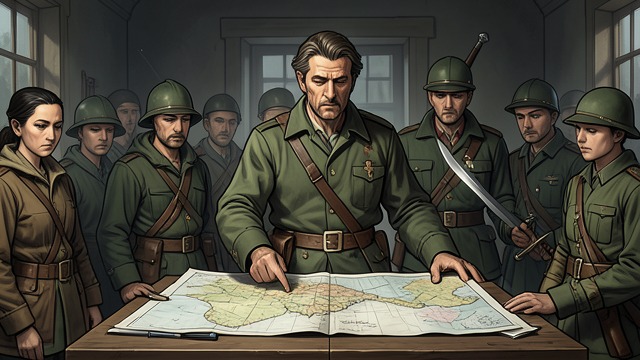
Strategy at the Top
Enacting the Way
Miyamoto Musashi says commanders must enact strategy, while troopers must know it. Leadership is not exempt from the discipline expected of the whole fighting force.
Judgment in Action
The commander’s role requires more than an impressive reputation. Strategic understanding must shape decisions under practical conditions.
Learning the House
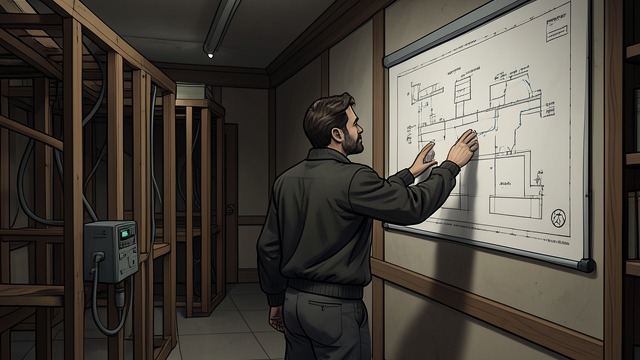
Understanding the Whole Structure
Rules and Plans
Like a foreman carpenter, a commander must know natural rules, local conditions, and the organization of the house. Planning precedes effective deployment.
Seeing Relations
The analogy asks leaders to understand how separate roles fit together. A force is not merely a number of individuals but a coordinated structure.
Assigning the Troops

Matching Work to Ability
Different Capacities
The foreman assigns tasks according to each worker’s skill and limitations. Musashi makes this an explicit model for directing people in strategy.
Morale and Trust
A leader must know the spirit of those under command, move among them, and encourage them when necessary. Effective command is attentive rather than mechanically demanding.
Reading the Field
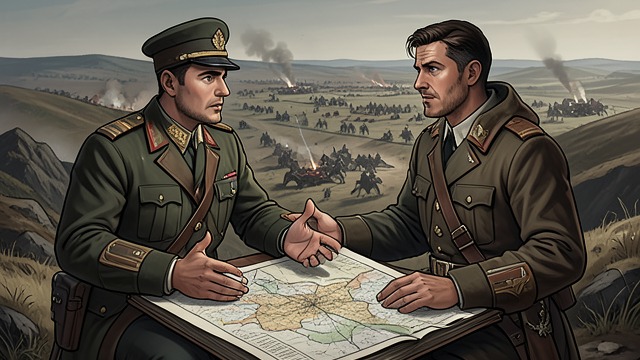
Judging Numbers and Position
Strategic Assessment
The commander observes the enemy’s numbers, strength, and battlefield position before deciding how to deploy. The scale of war requires disciplined perception.
Adapting the Plan
A sound plan is not fixed regardless of circumstances. Command depends on recognizing shifts in advantage and responding to them.
Governing Beyond Battle

The Broader Duty
Order and Preservation
Musashi connects large-scale strategy with managing subordinates, governing a country, and fostering the people. Strategic virtue extends beyond winning one engagement.
A Measure of Leadership
The commander’s achievement includes preserving discipline and gaining honor through a Way that avoids defeat. Authority is presented as an obligation, not merely a privilege.
At the opening of the Ground Book
During the carpenter comparison
During the account of carpenters’ work
During the Fire Book’s large-scale instruction
Near the end of the Ground Book
