
Form, Freedom, and the Unfixed Mind
The Book of Five RingsThis thread follows Musashi’s movement from necessary forms toward flexible action that is not confined by those forms.
increasing Bearing strength in each event
 decreasing
Bearing strength in each eventdecreasingLearning the Five Attitudes

Forms for Orientation
Five Attitudes
Musashi names Upper, Middle, Lower, Right Side, and Left Side attitudes. The divisions help the student recognize possible positions.
One Purpose
Despite their differences, all attitudes serve the purpose of cutting the enemy. A named form is useful only when it remains connected to action.
The Middle as Center

A Governing Position
The Middle Attitude
Musashi calls the Middle attitude the heart of the others. It provides an organizing center rather than another isolated pose.
The Commander’s Analogy
On a larger scale, the Middle is compared with the commander’s seat, while other attitudes follow. Form gains meaning through relation and hierarchy.
Changing According to Need
Movement Between Forms
Positions That Shift
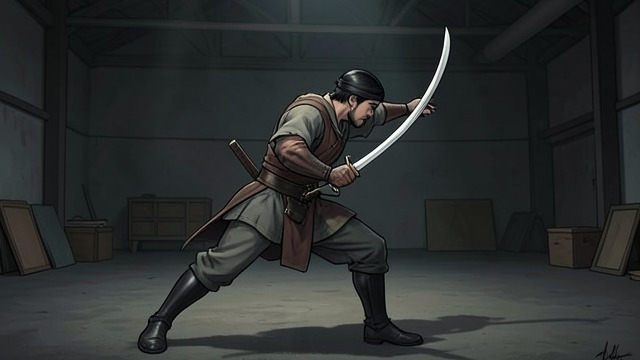
The sword can move from one attitude to another as the situation demands. Musashi warns against treating an initial position as a permanent rule.
A Living Hand
The practitioner must keep intention directed toward the opponent rather than become absorbed in maintaining a pose. Flexibility makes form functional.
Attitude-No-Attitude

Beyond Fixed Posture
Existing and Nonexisting
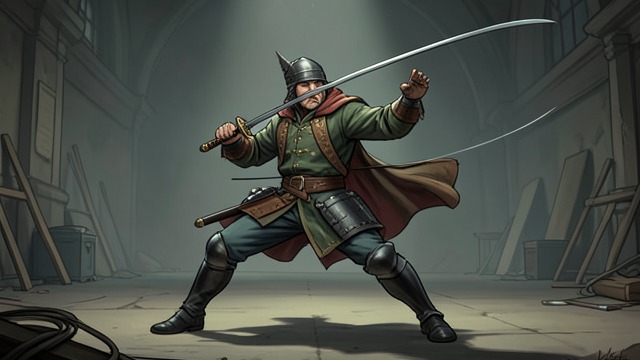
Musashi says that attitudes exist as ways of holding the sword, yet there is no need to become fixed on them. The apparent contradiction makes form subordinate to purpose.
Cutting as the Constant
Whatever the position, the primary intention remains to cut. The method can change without losing its strategic center.
A Living Application
Freedom from Convention
No Form as Refuge
Musashi criticizes fixed attitudes when they become a way to wait rather than take initiative. Forms should not protect the practitioner from responding to the actual opponent.
Principle in Motion
Mature strategy is neither rigid adherence nor random improvisation. It is the capacity to act according to the situation without losing purpose.
During the Water Book’s account of sword positions
After the five attitudes are introduced
During the account of attitude changes
After the Water Book’s five approaches
During the Wind Book’s attack on defensive habits
