
The Grand Inquisitor’s Challenge
The Brothers KaramazovThis flow traces Ivan’s imagined confrontation between freedom and authority and Alyosha’s response to its vision of human weakness.
increasing Bearing strength in each event
 decreasing
Bearing strength in each eventdecreasingChrist Returns to Seville
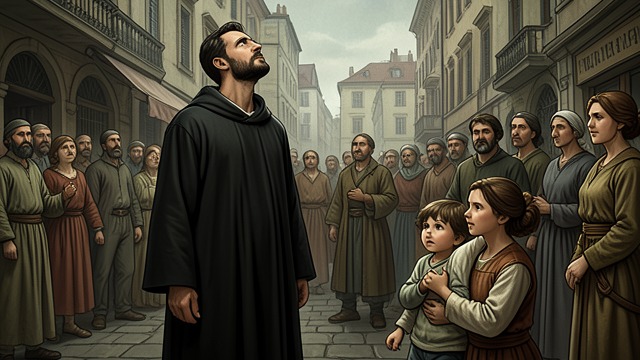
A silent return
A public miracle
In Ivan’s poem, Christ appears in Seville during the Inquisition, heals the sick, and raises a child. The crowd recognizes him, but the Grand Inquisitor orders his arrest.
A prisoner’s silence
The Inquisitor visits Christ in prison and argues that the Church must prevent his return. Christ offers no speech, leaving the old man to reveal his own theory of power.
Bread, Freedom, Authority
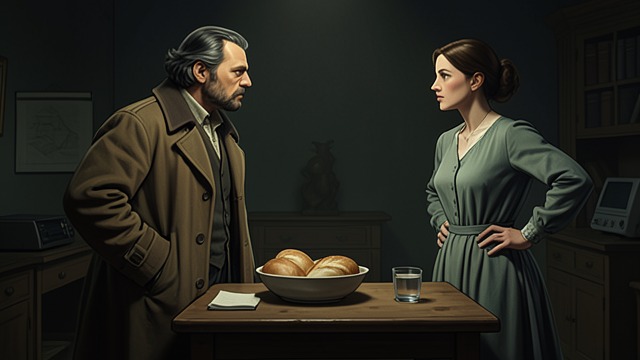
The price of security
Human weakness
The Inquisitor argues that people cannot endure freedom and will surrender it for bread, certainty, and authority. He claims that control can offer ordinary people a more stable happiness than demanding free choice.
A critique of rule
The speech exposes how institutions can use compassion as a justification for deception. Its force lies not only in condemning authority but in acknowledging why frightened people may long for it.
The Answer of the Kiss
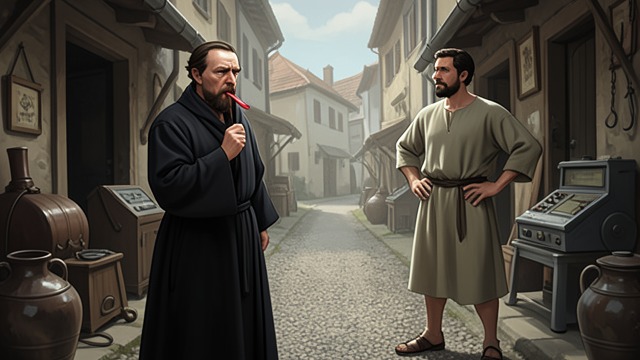
Love without argument
Christ’s reply
Christ approaches the Inquisitor and kisses his bloodless lips. The gesture answers the long accusation without defeating it in debate or taking away human freedom.
Alyosha’s response
Alyosha sees the poem’s power but rejects its account of the Church as a simple description of Christian faith. He answers Ivan with a kiss of his own, showing that affection can answer an idea without erasing disagreement.
the sixteenth-century setting of Ivan’s poem
the Inquisitor’s prison address to Christ
the conclusion of Ivan’s poem in Book V
